What Is a Gold IRA and Is It a Good Investment?

If you're looking to diversify your retirement portfolio beyond traditional stocks and bonds, a gold IRA might be worth considering. This self-directed retirement account allows you to hold physical p...
The Lifetimes America editorial team curates, fact-checks, and updates guides on personal finance, property, health, immigration, legal, business, and lifestyle topics relevant to Lifetimes America readers. Articles are produced with AI assistance and reviewed by the editorial team before publication.
If you're looking to diversify your retirement portfolio beyond traditional stocks and bonds, a gold IRA might be worth considering. This self-directed retirement account allows you to hold physical precious metals—gold, silver, platinum, and palladium—while enjoying the same tax advantages as a traditional IRA. But is it the right move for your retirement strategy? Let's explore what gold IRAs are, how they work, and whether they fit your financial goals.
What Is a Gold IRA?
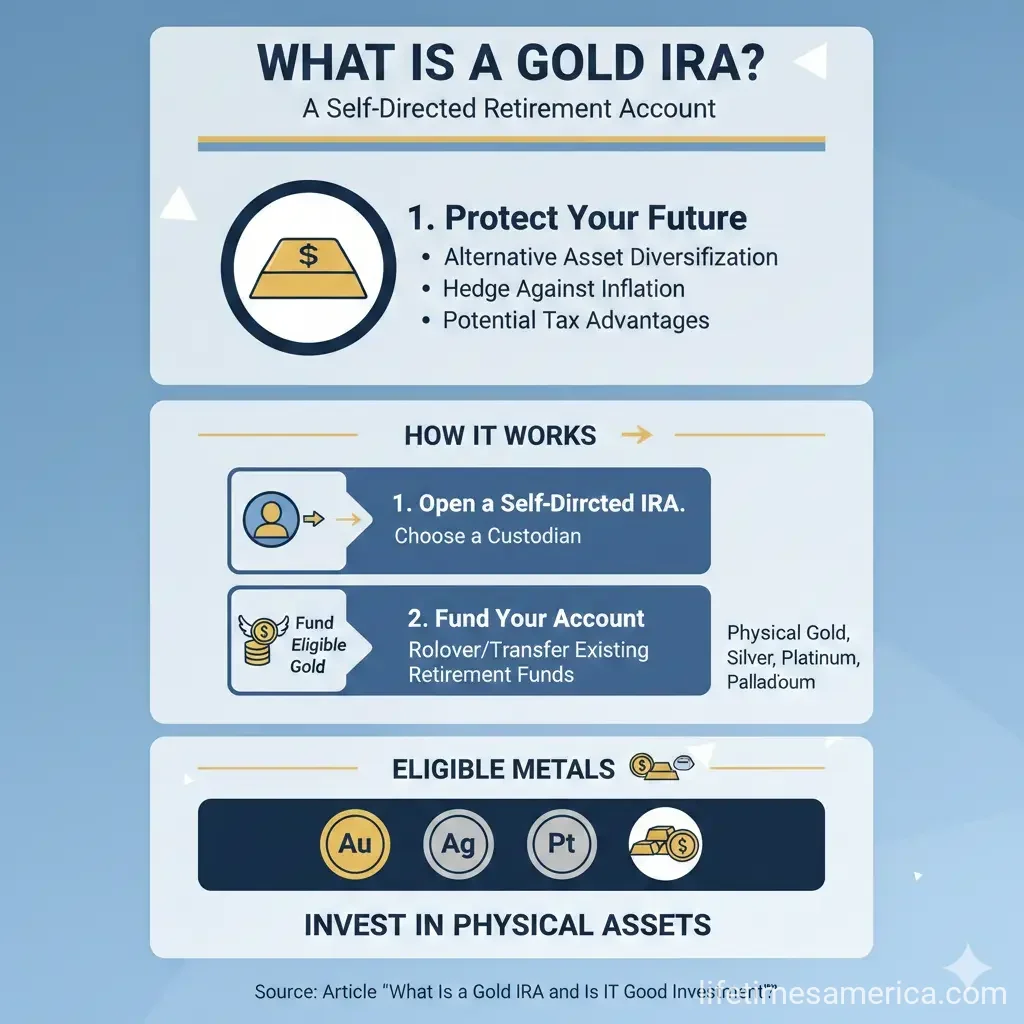
A gold IRA is a self-directed Individual Retirement Account (SDIRA) that lets you invest in physical precious metals instead of the typical paper assets like stocks and bonds. It preserves all the tax benefits of a regular IRA while giving you more control over your investment choices.
The metals you hold must meet specific IRS purity requirements:
- Gold must be .995 fineness or higher
- Silver must be .999 fineness
- Platinum and palladium also have minimum purity standards
- Coins and bars must be produced by an approved mint or refiner
- Collectibles and jewelry are not allowed
One critical rule that many investors overlook: you cannot store IRA metals at home or in a personal safe deposit box. The metals must be held by an IRS-approved custodian in a secure facility. This requirement ensures compliance with retirement account regulations and protects your investment.
How Gold IRAs Work
Setting up a gold IRA involves a straightforward process:
- Open a self-directed IRA with a custodian that specializes in precious metals
- Fund the account through a contribution, transfer, or rollover from an existing retirement account
- Direct your custodian to purchase IRS-eligible precious metals on your behalf
- The custodian arranges secure storage and handles all compliance requirements
When you're ready to retire, you have options. You can take an in-kind distribution of physical gold without penalty, meaning you receive the actual metal. Alternatively, you can sell the metals and take a cash distribution. The tax treatment depends on whether you have a Traditional or Roth gold IRA.
Traditional vs. Roth Gold IRAs
Like regular IRAs, gold IRAs come in two flavors:
Traditional Gold IRA: You contribute pre-tax dollars, which reduces your taxable income in the year of contribution. The metals grow tax-deferred, and you pay income taxes on distributions in retirement.
Roth Gold IRA: You contribute after-tax dollars, but qualified distributions in retirement are completely tax-free. This option is ideal if you expect to be in a higher tax bracket later.
Contribution Limits for 2026
The IRS sets annual contribution limits for IRAs. For 2026, you can contribute up to $7,500 annually ($8,600 if you're age 50 or older). These limits apply whether you're investing in traditional assets or precious metals.
If you have a SEP IRA (Self-Employed Persons IRA), you can contribute significantly more—up to $70,000 annually. This makes gold IRAs particularly attractive for self-employed individuals and small business owners looking to build retirement savings.
The Pros of Gold IRAs
Portfolio Diversification
Gold often moves independently of stocks and bonds, helping to smooth out portfolio volatility during market downturns. When the stock market struggles, gold frequently holds its value or even appreciates, providing a cushion for your overall portfolio.
Inflation Hedge
Historically, gold has retained its value when the purchasing power of the dollar falls. If you're concerned about long-term inflation eroding your retirement savings, precious metals offer tangible protection that paper assets can't match.
Tax Advantages
Gold IRAs offer the same tax benefits as traditional IRAs. By contributing pre-tax dollars to a Traditional Gold IRA, you reduce your taxable income for the year, potentially lowering your overall tax burden. For Roth accounts, you get tax-free growth and withdrawals.
Tangible Asset Ownership
Unlike stocks or ETFs, gold is a physical asset that holds intrinsic value. It's not subject to digital risk, third-party failures, or the performance of any single company. For investors who value owning something tangible with a proven track record spanning centuries, this is a significant advantage.
Easy Rollover Options
If you have an old 401(k) from a previous employer or an existing IRA, you can roll those funds into a gold IRA without triggering taxes or early withdrawal penalties. This flexibility allows you to consolidate retirement accounts while diversifying into precious metals.
The Cons of Gold IRAs
Higher Fees
Gold IRAs typically come with higher fees than traditional IRAs. You'll pay for custodial services, storage, and insurance—costs that don't apply to stocks or bonds held in a regular brokerage account. Some providers charge significant upfront fees or ongoing management costs that can eat into your returns.
No Passive Income
Unlike dividend-paying stocks or bonds that generate interest, gold produces no income. You're betting entirely on price appreciation. If gold prices stagnate, your investment won't generate returns through yield or dividends.
High Minimum Investments
Many gold IRA providers require substantial minimum investments to get started, which can be a barrier for younger investors or those with limited retirement savings.
Liquidity Challenges
Physical gold is the most difficult type of gold to liquidate quickly. If you need to access your money in an emergency, selling physical precious metals takes time and may involve transaction costs. ETFs and mutual funds offer much faster liquidity.
Strict IRS Compliance Requirements
Gold IRAs come with strict regulatory requirements, and violations can result in costly IRS penalties. You must ensure your custodian is IRS-approved, your metals meet purity standards, and storage follows all rules. One mistake can have serious tax consequences.
Is a Gold IRA Right for You?
A gold IRA makes sense if you're concerned about stock market volatility, inflation, geopolitical uncertainty, or the long-term stability of the U.S. dollar. It's particularly attractive for investors who:
- Want to diversify beyond traditional stocks and bonds
- Believe in gold's long-term value as a store of wealth
- Have substantial retirement savings to invest
- Are comfortable with higher fees in exchange for tangible asset ownership
- Plan to hold for the long term rather than trade frequently
However, gold IRAs aren't ideal if you're a beginning investor with limited funds, you need quick access to your money, or you prefer investments that generate passive income.
Next Steps
If you're interested in exploring a gold IRA, start by researching IRS-approved custodians that specialize in precious metals. Compare their fee structures, storage options, and customer reviews. If you have an existing 401(k) or IRA, ask about rollover options—this could be a tax-free way to get started.
Remember that a gold IRA works best as part of a broader retirement strategy. Rather than putting all your eggs in one basket, consider how precious metals might complement your existing investments in stocks, bonds, and other assets. The goal is to build a resilient portfolio that can weather economic uncertainty while growing your wealth over time.
Frequently Asked Questions
Sources & References
-
1
What Is a Gold IRA | Benefits of Investing in Gold — www.advantaira.com
-
2
IRA Investing in Gold: Avoid 2026 Hidden Costs — summitmetals.com
-
3
Gold IRA Pros and Cons: 2026 Guide — clutejournals.com
- 4
-
5
Precious Metals in 2026: A Retirement Saver's Guide — udirectira.com
Useful Tools
Related Articles

What Is a Self-Directed IRA and What Can You Invest In?
Imagine unlocking a retirement account that lets you invest in rental properties, precious metals, or even cryptocurrency—all while enjoying the same tax advantages as a traditional IRA. That's the po...

How to Protect Your Assets Before You Need Nursing Home Care
Imagine working a lifetime to build your nest egg, only to watch it vanish paying for nursing home care. In the United States, the average cost of a private room in a nursing home exceeds $100,000 per...

Best Online Brokers for Beginner Investors in the USA
Starting your investing journey doesn't have to be overwhelming. With the right online broker, you can build wealth through stocks, ETFs, and more—without hidden fees or complex tools holding you back...

Investment Property Loans: How to Finance a Rental Property
Imagine turning a spare $50,000 into a steady stream of rental income that builds your wealth over time. That's the power of investment property loans—they let you leverage borrowed money to buy renta...