The Best Family Cars of 2026: Safety; Value; and Fuel Economy
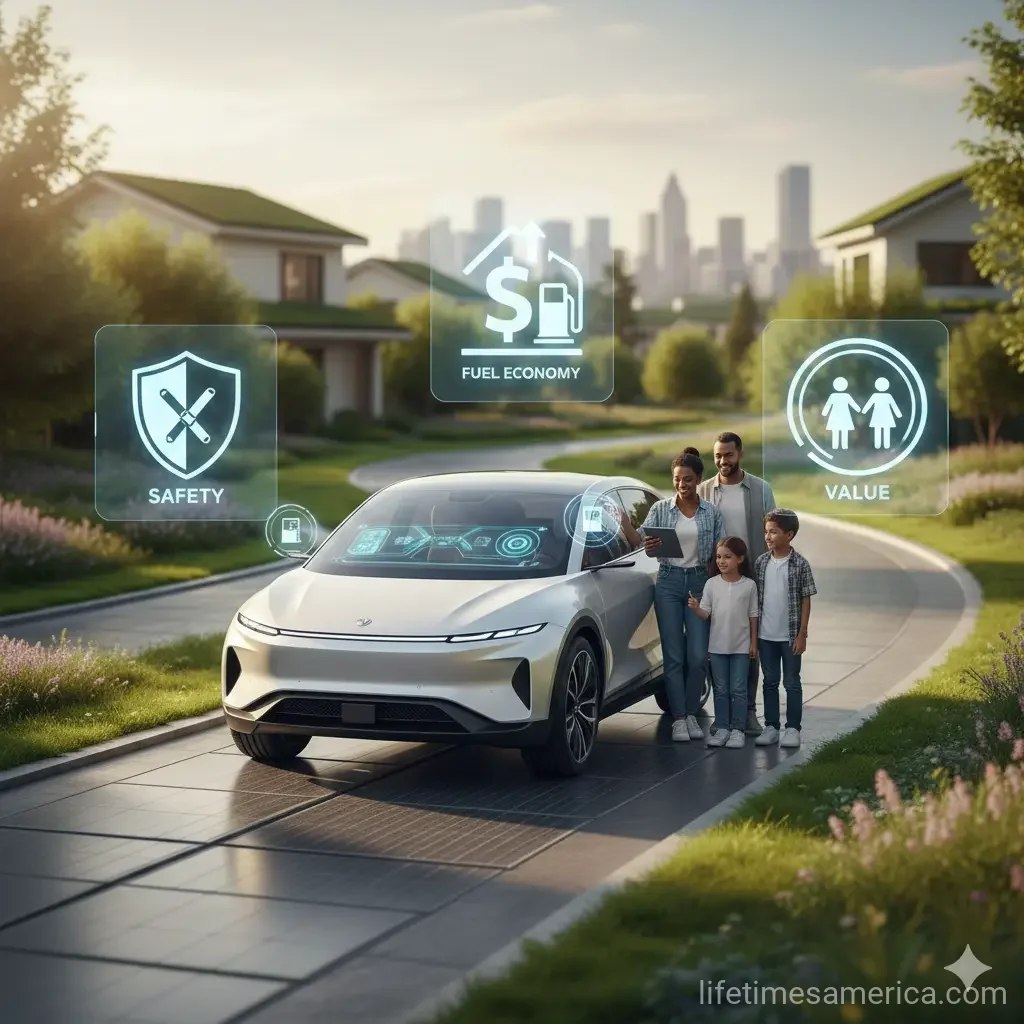
Choosing the right family car in 2026 means balancing three critical factors: safety features that protect your loved ones, fuel efficiency that won't drain your wallet, and overall value that makes f...
The Lifetimes America editorial team curates, fact-checks, and updates guides on personal finance, property, health, immigration, legal, business, and lifestyle topics relevant to Lifetimes America readers. Articles are produced with AI assistance and reviewed by the editorial team before publication.
Choosing the right family car in 2026 means balancing three critical factors: safety features that protect your loved ones, fuel efficiency that won't drain your wallet, and overall value that makes financial sense. Whether you're commuting daily, taking weekend road trips, or hauling kids to activities, today's vehicles offer more advanced safety technology, better fuel economy, and smarter designs than ever before. We've compiled a comprehensive guide to help you navigate the best options available right now.
Why Safety Should Be Your Top Priority
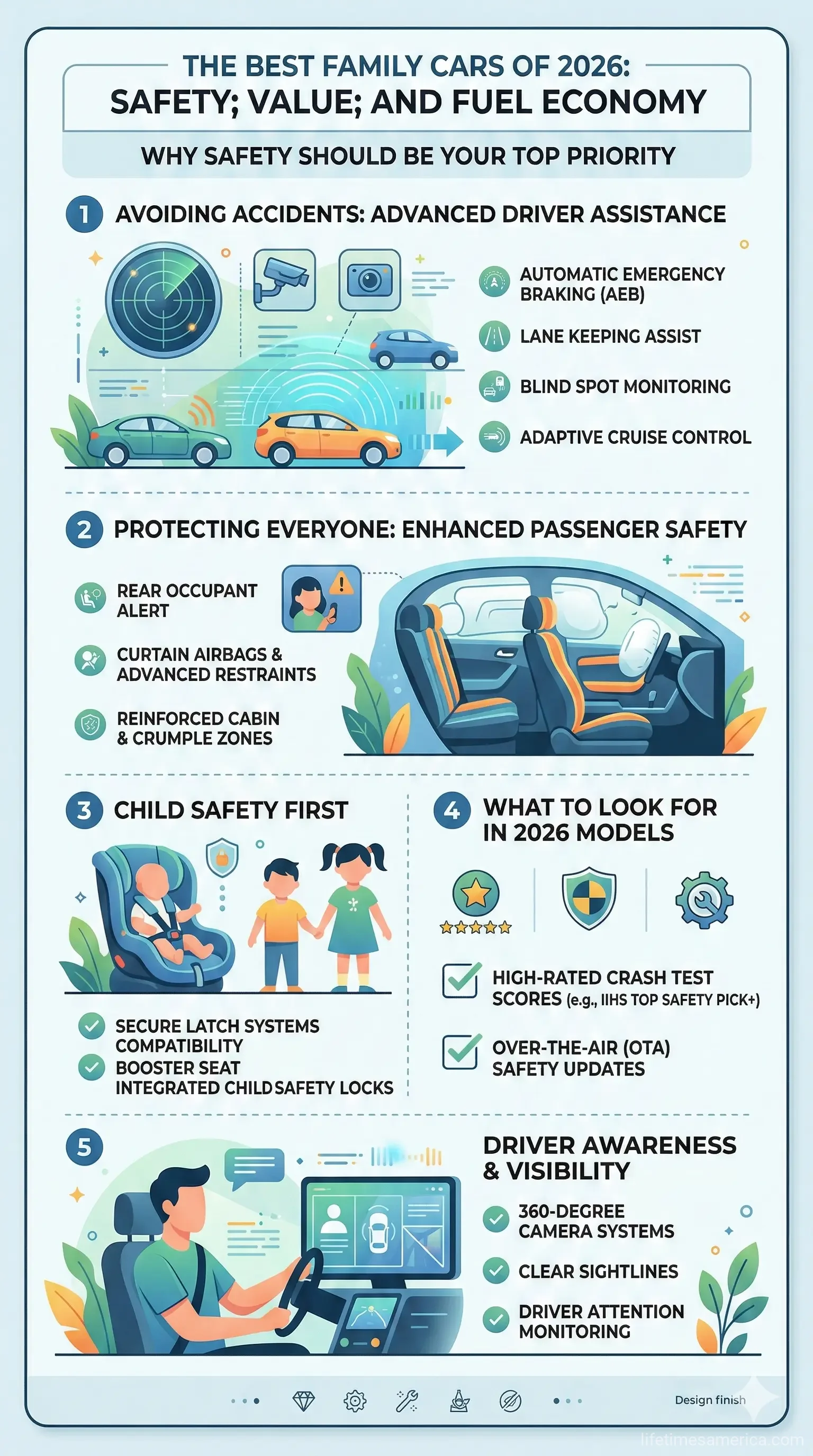
When it comes to family vehicles, safety ratings from trusted government agencies and independent organizations matter most. The National Highway Traffic Safety Administration (NHTSA) and the Insurance Institute for Highway Safety (IIHS) conduct rigorous testing to evaluate how vehicles perform in crashes and avoid accidents altogether. In 2026, automakers have raised the bar significantly with advanced driver-assist technology, improved crash protection, and smarter interior designs.
Look for vehicles that earn both a five-star NHTSA rating and an IIHS Top Safety Pick award. These designations mean the vehicle has passed the strictest safety standards and comes equipped with proven safety technology like automatic emergency braking (AEB) with pedestrian detection, blind-spot warning systems, and lane-keeping assist.
The Best Family SUVs for 2026
SUVs dominate the family vehicle market because they offer spacious interiors, higher seating positions for better visibility, and the flexibility families need. Here are the top performers:
Three-Row SUVs for Larger Families
Toyota Grand Highlander — If you need seating for seven and want proven reliability, the Grand Highlander delivers. This spacious three-row SUV offers excellent crash ratings and standard safety technology that makes it a standout choice for families prioritizing safety. Toyota's reputation for reliability means lower maintenance costs over time.
Kia Telluride — The Telluride continues to earn top marks for family comfort, reliability, and safety scores. It offers a refined interior, user-friendly technology, and strong resale value. The Telluride represents excellent value for families who want premium features without the luxury brand price tag.
Volvo XC90 — For families willing to invest in premium safety and design, the Volvo XC90 stands out with its three-row layout that prioritizes safety and Nordic design sensibilities. Volvo has a historic reputation for safety innovation, and the XC90 delivers with thoughtful amenities and composed road manners. The XC90 has earned the IIHS Top Safety Pick+ award.
Compact and Midsize SUVs for Flexibility
Subaru Forester — The Subaru Forester is the safest small SUV you can buy today. It comes with standard all-wheel drive, a low starting price around $30,000, and advanced driver-assist features as standard. The Forester has earned the IIHS Top Safety Pick+ award and excels in every component of rigorous safety tests. It's an excellent choice for families seeking proven safety on a practical budget.
Honda CR-V — A trusted compact SUV with excellent driver-assist features and strong reliability, the CR-V earns a perfect 10/10 safety rating from Car and Driver for 2026. It offers the right balance of size, safety, and practicality for most families. The CR-V's intuitive controls and comfortable seating make daily driving effortless.
Mazda CX-90 — This refined SUV offers advanced safety systems and roomy seating for families who want something slightly different from mainstream choices. Mazda vehicles are known for engaging driving dynamics and quality interiors, making the CX-90 appealing for families who enjoy the driving experience.
Hyundai Palisade — Good Housekeeping's pick for best midsize SUV, the Palisade offers three-row seating, a comfortable ride, and strong safety credentials. Hyundai's warranty coverage and competitive pricing make it excellent value for families.
Compact SUVs for Efficiency and Maneuverability
Volkswagen Tiguan — For families who want SUV versatility without excessive size, the VW Tiguan proves that compact crossovers serve family life well. With seating for five, a comfortable ride, and clever storage solutions, the Tiguan offers sedan-like drivability with SUV practicality. The available all-wheel-drive system provides confidence in varying weather conditions.
Honda HR-V — The HR-V has earned the IIHS Top Safety Pick+ award and offers excellent safety features in a compact package. It's ideal for families in urban areas or those who prioritize fuel efficiency and easy parking.
Best Sedans for Families
Honda Accord — For families that don't need three rows but want generous space and sensible performance, the Honda Accord stands out. Good Housekeeping notes that its roomy rear seats and spacious trunk make it compelling for daily routines and weekend getaways. The Accord's balance of comfort, fuel efficiency (especially in hybrid trims), and easy maneuverability make it attractive for suburban and urban driving alike.
Fuel Economy: Saving Money at the Pump
Fuel efficiency directly impacts your family budget. In 2026, you have more options than ever for vehicles that deliver excellent mileage without sacrificing space or safety.
Hybrid Models Lead the Way — Hybrid vehicles combine a gasoline engine with an electric motor, significantly improving fuel economy. The Honda Accord hybrid, Toyota RAV4 hybrid, and Hyundai Ioniq 5 all offer substantial fuel savings compared to traditional gasoline engines. Depending on your driving patterns, a hybrid can save thousands of dollars annually on fuel costs.
Electric Vehicles for Long-Term Savings — If you have access to charging at home or work, electric vehicles like the Tesla Model Y offer the lowest operating costs. While upfront purchase prices are higher, federal tax credits up to $7,500 (available through the IRS for qualifying vehicles) and state incentives can significantly reduce your net cost. Over the vehicle's lifetime, charging costs are substantially lower than gasoline.
Real-World Fuel Economy Matters — EPA estimates provide a baseline, but real-world driving conditions vary. Families with long commutes, frequent highway driving, or stop-and-go urban driving should research actual owner experiences. Consumer Reports and Edmunds provide real-world fuel economy data based on testing.
Safety Technology Now Standard on Most Vehicles
Features that were once luxury upgrades are now standard on most family vehicles:
- Automatic Emergency Braking (AEB) — Detects obstacles and applies brakes automatically to prevent or reduce crash severity
- Blind-Spot Monitoring — Alerts you to vehicles in your blind spots
- Lane-Keeping Assist — Helps keep your vehicle centered in its lane
- Rearview Cameras — Standard on all new vehicles, helping prevent backing accidents
- Forward Collision Warning — Alerts you to potential frontal impacts
These technologies work together to prevent accidents before they happen, making modern family vehicles significantly safer than vehicles from just a few years ago.
Value Considerations for Your Family Budget
Total Cost of Ownership — When evaluating value, look beyond the purchase price. Consider fuel costs, maintenance expenses, insurance rates, and depreciation. A slightly more expensive vehicle with better fuel economy and lower maintenance costs may be more economical over five years.
Warranty Coverage — Hyundai and Kia offer some of the industry's best warranty coverage, providing peace of mind for families. Toyota and Honda vehicles typically have lower maintenance costs due to parts availability and reliability.
Resale Value — Toyota, Honda, and Subaru vehicles typically hold their value well, meaning you'll recover more of your investment when you eventually sell or trade in the vehicle.
Insurance Costs — Safety ratings and vehicle type affect insurance premiums. Request insurance quotes before purchasing to understand the true cost of ownership.
How to Choose the Right Vehicle for Your Family
Start by honestly assessing your family's needs:
- Seating Requirements — Do you need three rows for regular use, or is two-row seating sufficient?
- Cargo Space — How much space do you need for sports equipment, groceries, and travel gear?
- Driving Patterns — Do you drive mostly highway miles, city streets, or a combination? This affects which fuel type makes sense.
- Budget — Determine your total budget including down payment, monthly payments, insurance, and fuel costs.
- Safety Priorities — Which safety features matter most to your family?
- Climate — Do you need all-wheel drive for snow and ice, or is front-wheel drive sufficient in your region?
Once you've identified your priorities, test drive multiple vehicles. Pay attention to visibility, ease of use for technology features, comfort for all passengers, and how the vehicle feels to drive.
Making Your Decision
Choosing the best family car for 2026 comes down to matching your specific needs with the right vehicle. Prioritize safety by selecting vehicles with top NHTSA and IIHS ratings. Consider fuel economy and total cost of ownership, not just the purchase price. Test drive multiple options and trust your family's comfort and preferences.
Whether you choose the practical Subaru Forester, the spacious Toyota Grand Highlander, the value-packed Kia Telluride, or another vehicle on this list, you're selecting from the safest, most reliable family vehicles ever built. Take your time with the decision, involve your family in the process, and you'll find the perfect vehicle for your needs.
Frequently Asked Questions
Sources & References
-
1
Best Family-Safe Cars of 2026 — United Faith Mortgage — www.unitedfaithmortgage.com
- 2
-
3
The Safest Compact and Subcompact SUVs for 2026 — Edmunds — www.edmunds.com
-
4
Safest SUVs for 2026 — Car and Driver — www.caranddriver.com
- 5
-
6
Good Housekeeping's Best Family Cars of 2026 — CarPro — www.carpro.com
-
7
Find the Safest New Car Using Consumer Reports' Safety Verdict — Consumer Reports — www.consumerreports.org
Useful Tools
Related Articles

The Rising Cost of Auto Parts: How Tariffs Impact Your Repair Bills
Have you noticed your last auto repair bill hitting your wallet harder than expected? You're not alone—tariffs on imported auto parts are driving up costs across the U.S., adding hundreds or even thou...
Buying a Used Car in the USA: The 2026 Inspection Checklist
Buying a used car is one of the biggest financial decisions you'll make, and getting it right means protecting yourself from costly repairs and hidden problems. Whether you're looking for your first c...

How to Get the Best Rate on a Used Car Loan
Getting a competitive rate on a used car loan can save you thousands of dollars over the life of your loan. With rates varying widely based on your credit score, the vehicle you're buying, and where y...

How to Get Out of a Car Lease Early without Penalty
Stuck in a car lease that's no longer right for you? Whether it's rising gas prices, a job change across states, or just wanting a different ride, getting out early without a massive penalty hit feels...