The Rising Cost of Auto Parts: How Tariffs Impact Your Repair Bills
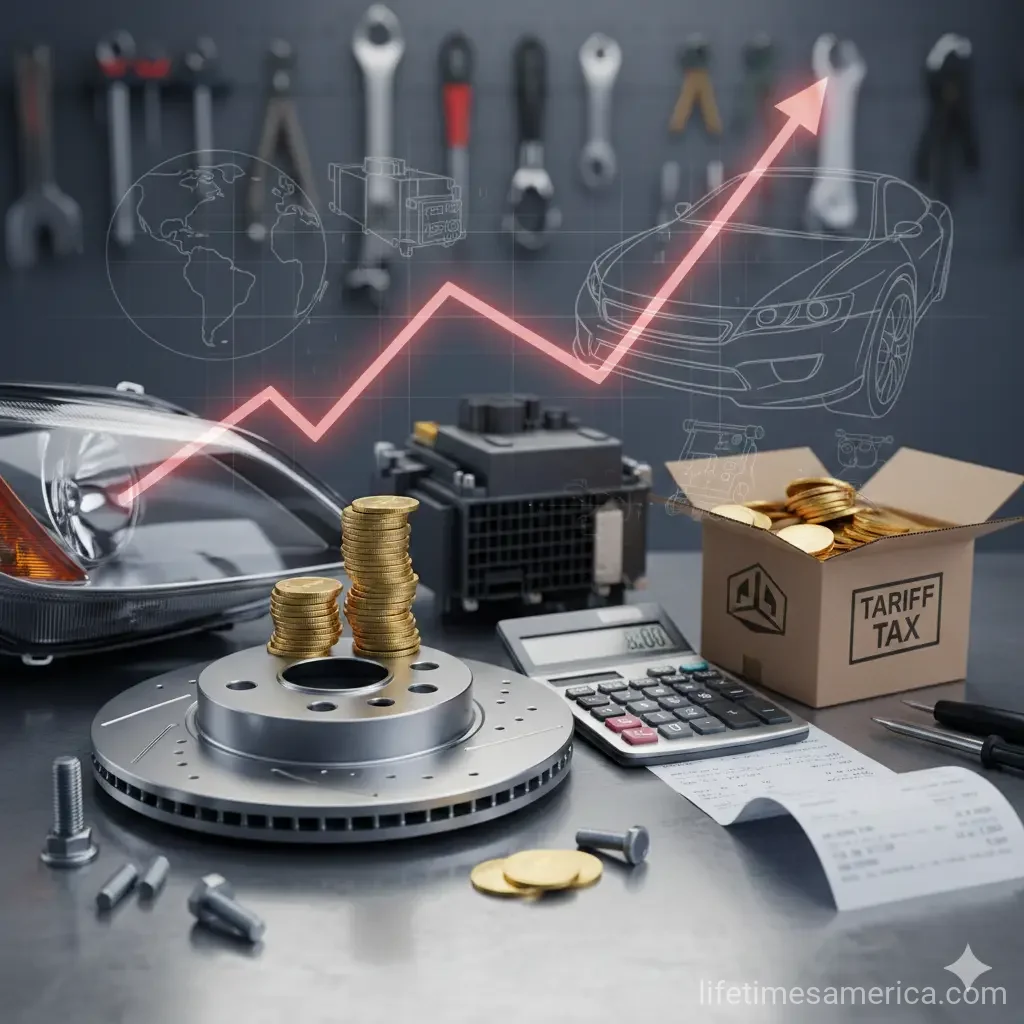
Have you noticed your last auto repair bill hitting your wallet harder than expected? You're not alone—tariffs on imported auto parts are driving up costs across the U.S., adding hundreds or even thou...
The Lifetimes America editorial team curates, fact-checks, and updates guides on personal finance, property, health, immigration, legal, business, and lifestyle topics relevant to Lifetimes America readers. Articles are produced with AI assistance and reviewed by the editorial team before publication.
Have you noticed your last auto repair bill hitting your wallet harder than expected? You're not alone—tariffs on imported auto parts are driving up costs across the U.S., adding hundreds or even thousands to vehicle maintenance and repairs in 2026.
These trade policies, implemented under Section 232 of the Trade Expansion Act of 1962, slapped 25% tariffs on automobiles and key parts like engines, transmissions, and electrical components starting in April 2025. What started as a push to boost domestic manufacturing has rippled through global supply chains, hitting American drivers where it hurts most: at the repair shop. In this guide, we'll break down how these tariffs work, their real impact on your bills, and practical steps to keep your costs in check.
Understanding the Tariffs: A Quick Timeline
The story begins in March 2025 when President Trump announced the 25% tariffs on passenger vehicles, light trucks, and critical auto parts. These went into effect on April 3, 2025, targeting imports from major suppliers like Mexico, Canada, Japan, and South Korea. While the United States-Mexico-Canada Agreement (USMCA) offers some relief—importers can apply tariffs only to non-U.S. content—many parts still face the full hit.
By 2026, escalations continued: tariffs on Canada jumped to 35% in August 2025 amid trade tensions with China. Europe saw rates drop to 15% after reciprocal agreements, but the overall burden remains heavy. An import adjustment offset helps U.S.-assembled vehicles—3.75% of MSRP through April 2026, then 2.5%—but it's limited to Section 232 duties on parts.
Key Tariff Rates in 2026
- 25% baseline on most auto parts from Mexico (with USMCA discounts), Japan (15% locked), and South Korea (15%).
- 35% on Canadian imports.
- 15% for compliant European parts.
- Potential expansion to more parts, per Commerce Department processes.
These aren't abstract numbers—they translate to real dollars flowing through to consumers.
The Direct Hit: How Tariffs Raise Auto Parts Prices
Auto parts make up about 30-40% of repair costs, and with 70% of U.S. parts imported, tariffs amplify every fix. J.P. Morgan estimates combined tariffs on vehicles and parts at $41 billion in year one (2025), rising to $45 billion in year two and $52 billion by year three. That's roughly $2,580 extra per vehicle in year one, climbing to $3,258 by year three—or 5.8% to 7.3% of average retail prices.
| Year | Total Tariff Impact | Cost Increase per Vehicle | % of Average Retail Price |
|---|---|---|---|
| 1 (2025) | $41 billion | $2,580 | 5.8% |
| 2 (2026) | $45 billion | $2,806 | 6.3% |
| 3 (2027) | $52 billion | $3,258 | 7.3% |
Data from J.P. Morgan Global Research.
The Center for Automotive Research (CAR) paints an even starker picture: a uniform 25% tariff could cost all U.S. automakers $107.7 billion, with the Big Three (Ford, GM, Stellantis) facing $41.9 billion and a 6.8 million vehicle production drop. Even domestic giants aren't spared—Ford lost $1 billion to tariffs in 2025, GM $3.5-4.5 billion. In 2026, expect more pass-through to parts prices as companies balance affordability and profits.
Everyday Impact on Your Repair Bill
Consider a typical brake job: pads and rotors often come from Mexico or China. A 25% tariff adds $50-100 to a $400 repair. Transmissions or engines? Hundreds more. Cox Automotive predicts new vehicle sales contraction in 2026 as these costs filter down, but repairs feel it first since parts turnover is faster.
"For the most part, we see automakers and consumers paying the year one $41 billion tab." — Ryan Brinkman, Head of U.S. Autos & Auto Parts, J.P. Morgan.
Who Bears the Cost? Automakers, Suppliers, and You
Global supply chains mean even "American" cars rely on foreign parts. Tariffs disrupt this, forcing choices: absorb costs (hurting profits), raise prices, or shift production. In 2025, most ate the hit—Ford and GM slashed earnings forecasts. But 2026 brings balance: offsets help U.S. assembly, yet suppliers pass 60-80% to repair shops.
Consumers face broader effects too. Yale's Budget Lab notes tariffs hike overall prices, with motor vehicles among the hardest hit commodities. Unemployment could rise 0.3% by end-2026, shrinking the economy by 0.1% long-term ($30 billion annually). Yet proponents argue tariffs spur investment: Stellantis pledged $13 billion, Toyota $10 billion in U.S. factories.
Practical Tips to Combat Rising Repair Costs
You can't dodge tariffs entirely, but smart strategies help. Here's actionable advice for American drivers:
Shop Smart for Parts and Repairs
- Opt for USMCA-compliant parts: Look for labels certifying high U.S. content to avoid full tariffs. Check the National Highway Traffic Safety Administration (NHTSA) database at nhtsa.gov.
- Buy domestic or rebuilt: Remanufactured parts from U.S. suppliers often cost 30-50% less and qualify for offsets.
- Compare multiple shops: Use apps like RepairPal or AAA-approved mechanics for quotes—tariff impacts vary by sourcing.
Leverage Incentives and Protections
- Check for offsets: If your vehicle was U.S.-assembled post-April 2025, dealers may apply the 3.75% MSRP credit to parts duties.
- Use credit cards with rewards: Many offer 3-5% back on auto repairs; pair with 0% intro APR for big jobs.
- Extend warranties: Factory or aftermarket plans cap repair costs—shop via consumerreports.org for best value.
Preventive Maintenance Saves Big
Regular upkeep dodges major part replacements. Follow your owner's manual: oil changes every 5,000-7,500 miles, tire rotations quarterly. The U.S. Department of Energy estimates this cuts repair bills 20-30% long-term (energy.gov).
FAQ: Common Questions on Tariffs and Repair Bills
Will tariffs make my car insurance go up? Indirectly, yes—higher repair costs could nudge premiums 5-10% in 2026 as insurers adjust. Shop annually via usa.gov.
Are electric vehicle parts affected? Yes, batteries and electronics from Asia face 25%+ rates, though USMCA EVs get partial relief. Expect 10-15% hikes.
How do I know if a part is tariffed? Ask your mechanic for origin details or use the American Automobile Labeling Act (AALA) data at nhtsa.gov.
Can I get tariff refunds? No direct consumer refunds, but USMCA certification reduces importer duties—passed savings may appear in pricing.
What's the outlook for 2027? Offsets drop to 2.5%, but new factories may stabilize supply. Watch Commerce Department updates.
Do tariffs apply to used parts? Generally no, as they're not "imports," but verify with salvage yards via bls.gov industry reports.
Next Steps to Protect Your Wallet
Start today: audit your vehicle's maintenance schedule, get 2-3 repair quotes for pending work, and explore USMCA parts options. Track policy changes via official sites like ustr.gov or commerce.gov. By staying proactive, you can offset tariff pain and keep your car running affordably amid these trade shifts. If repair costs keep climbing, consider fuel-efficient models qualifying for federal incentives at fueleconomy.gov.
Related Articles

The Best Family Cars of 2026: Safety; Value; and Fuel Economy
Choosing the right family car in 2026 means balancing three critical factors: safety features that protect your loved ones, fuel efficiency that won't drain your wallet, and overall value that makes f...
Buying a Used Car in the USA: The 2026 Inspection Checklist
Buying a used car is one of the biggest financial decisions you'll make, and getting it right means protecting yourself from costly repairs and hidden problems. Whether you're looking for your first c...

How to Get the Best Rate on a Used Car Loan
Getting a competitive rate on a used car loan can save you thousands of dollars over the life of your loan. With rates varying widely based on your credit score, the vehicle you're buying, and where y...

How to Get Out of a Car Lease Early without Penalty
Stuck in a car lease that's no longer right for you? Whether it's rising gas prices, a job change across states, or just wanting a different ride, getting out early without a massive penalty hit feels...