The Best US States for "Home Schooling" Families: Costs and Laws
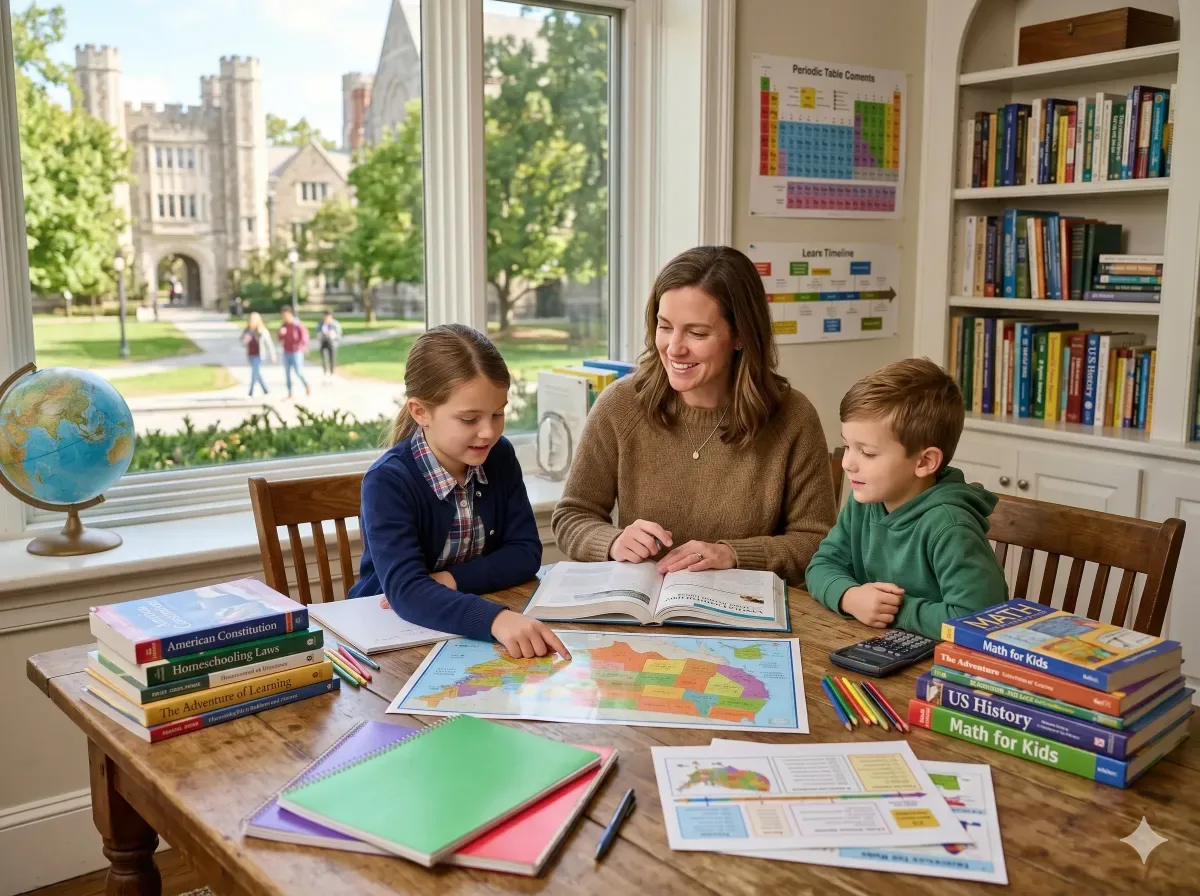
Homeschooling has become an increasingly popular educational choice for American families, but the experience varies dramatically depending on where you live. Some states welcome homeschooling familie...
The Lifetimes America editorial team curates, fact-checks, and updates guides on personal finance, property, health, immigration, legal, business, and lifestyle topics relevant to Lifetimes America readers. Articles are produced with AI assistance and reviewed by the editorial team before publication.
Homeschooling has become an increasingly popular educational choice for American families, but the experience varies dramatically depending on where you live. Some states welcome homeschooling families with open arms and minimal requirements, while others impose strict regulations that can make homeschooling challenging. If you're considering homeschooling your children, understanding your state's laws and costs is essential to making the right decision for your family.
Understanding Homeschool Regulations Across the United States
The United States doesn't have a federal homeschooling law, which means each state sets its own requirements. These regulations fall into several categories: states with minimal oversight, moderate regulation, and high regulation.[1]
States with minimal or very low regulation trust parents to educate their children without state interference. These include Alaska, Idaho, Texas, Illinois, Michigan, Missouri, Oklahoma, and New Jersey.[2] In these states, you typically don't need to notify the state, submit curriculum plans, or have your children take standardized tests. This freedom appeals to families who want complete control over their homeschool approach.
States with moderate regulation require some level of documentation or testing but remain relatively flexible. Minnesota, Louisiana, Washington, Oregon, and North Carolina fall into this category.[1] These states might require yearly testing, attendance records, or portfolio reviews, but they generally support homeschooling families.
States with high regulation impose strict requirements including curriculum approval, standardized testing, and detailed record-keeping. New York, Pennsylvania, Massachusetts, and Rhode Island are among the most regulated states.[6] If you live in these states, you'll need to navigate more complex legal requirements.
The Best States for Homeschooling Families
Top Tier: Maximum Flexibility
Alaska offers some of the nation's most permissive homeschool laws. The state requires no notice, no tests, and no set subjects, giving parents complete autonomy over their children's education.[2] Additionally, Alaska provides up to $2,700 in state funding through educational programs to help offset costs.[1]
Idaho ranks as one of the most homeschool-friendly states with no notice requirement, no testing, and no mandatory subjects.[2] Parents have full freedom to design curricula and learning schedules without reporting or prior approval.[4]
Texas requires minimal regulation—parents only need to cover reading, spelling, grammar, math, and citizenship.[4] The state doesn't require notice or testing, though you'll need a written plan.[2] Texas also offers a $2,000 Education Savings Account (ESA) launched in 2025, providing financial support for homeschooling families.[1]
Oklahoma has very few requirements and offers a $1,000 refundable tax credit for homeschooling expenses.[1] Like other low-regulation states, Oklahoma doesn't require notice or testing.[2]
Strong Second Tier: Flexible with Support
Arizona leads the nation in Education Savings Accounts, providing approximately $6,500 or more in ESA funds that families can use for homeschooling expenses.[1] The state also offers tax credits and maintains a well-organized homeschool community.[1]
Indiana combines low regulation with strong financial support. The state offers a $1,000 state income tax deduction for homeschooling expenses and features active statewide and local co-ops.[1] Like most low-regulation states, Indiana doesn't require notice but does ask families to keep attendance records.[2]
Florida is one of the most homeschool-friendly states with clear guidelines and multiple educational paths. After filing a one-time notice of intent with your local school district, families maintain a learning portfolio and complete yearly evaluations through standardized testing or certified teacher assessment.[7] Florida also offers the Family Empowerment Scholarship and ESA funds for educational materials.[4]
Utah requires families to file only a one-time affidavit with their local district. There's no state testing, no mandatory subjects, and no hourly minimum.[7] Starting in 2025, Utah introduced the "Utah Fits All" scholarship program to help families with learning expenses.[7]
Tax Benefits and Financial Support for Homeschooling
Many states recognize the financial burden of homeschooling and offer tax credits or deductions to help families offset costs. Here's what's available in key states:
- Arizona: ESA funds (~$6,500+) plus tax credits[1]
- Indiana: $1,000 state income tax deduction[1]
- Illinois: K–12 expense credit up to $750[1]
- Louisiana: 50% deduction up to $6,000 per student[1]
- Minnesota: K–12 credit and subtraction options[1]
- Ohio: $250 non-refundable tax credit[1]
- Oklahoma: $1,000 refundable tax credit[1]
- Texas: $2,000 ESA (new in 2025)[1]
- Alaska: Up to $2,700 in state program funding[1]
If you're in New Jersey, tax credit bills are pending legislative approval as of 2025, so this state may soon offer additional financial support.[1]
Frequently Asked Questions
Sources & References
-
1
Best States for Homeschooling in the US: A Comprehensive Guide — www.tshanywhere.org
-
2
Easiest States to Homeschool In: Complete Ranking (2026) — homeschoolpicks.com
-
3
Top Homeschool-Friendly States — www.homeschools.org
-
4
Best States to Live in the U.S. 2025 - The School House — www.theschoolhouse.org
-
5
Homeschool Laws By State - HSLDA — hslda.org
-
6
Your Guide To State Homeschooling Laws & Regulations 2026 — graduatesacademy.com
-
7
Homeschool laws by state to help you get started - Bina School — www.thebinaschool.com
Related Articles
The Best "States" for Special Education Support and Funding
Every child deserves a quality education tailored to their needs, but for the 7.5 million students with disabilities in U.S. public schools, access to robust special education support can vary dramati...
The Cost of "Private Education" vs. "Home Schooling" in 2026
Parents across America are rethinking education options amid rising costs and a push for personalized learning. In 2026, with private school tuitions soaring and homeschooling gaining traction through...