How to Claim a Tax Credit for "Historic Home" Renovations
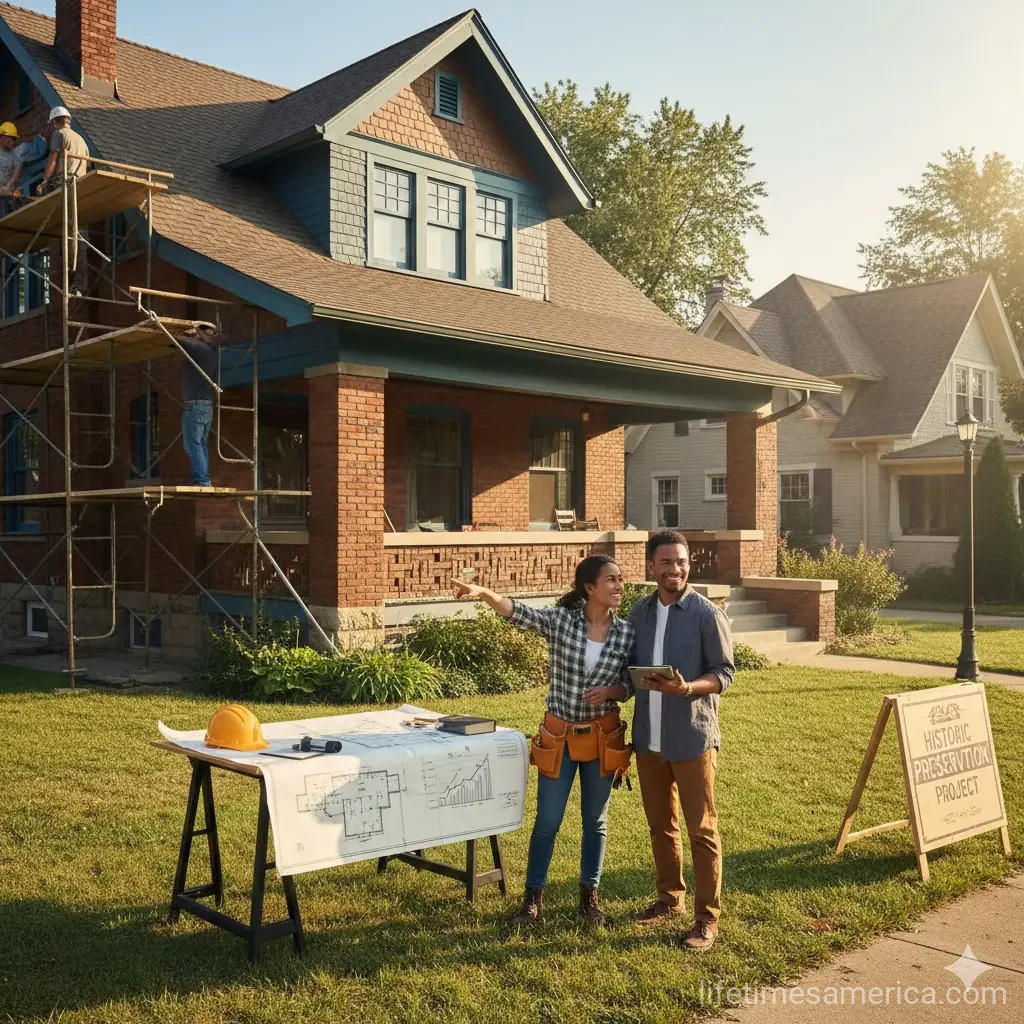
Imagine breathing new life into a charming Victorian home from the 1890s, preserving its ornate gingerbread trim and original hardwood floors while slashing your tax bill by thousands. That's the powe...
The Lifetimes America editorial team curates, fact-checks, and updates guides on personal finance, property, health, immigration, legal, business, and lifestyle topics relevant to Lifetimes America readers. Articles are produced with AI assistance and reviewed by the editorial team before publication.
Imagine breathing new life into a charming Victorian home from the 1890s, preserving its ornate gingerbread trim and original hardwood floors while slashing your tax bill by thousands. That's the power of the federal Historic Tax Credit, a game-changer for Americans restoring certified historic structures. If you're tackling renovations on a qualifying "historic home," this guide walks you through every step to claim your 20% tax credit in 2026.
What Is the Historic Tax Credit?
The Historic Tax Credit, governed by Internal Revenue Code (IRC) Section 47, offers a 20% credit on qualified rehabilitation expenses (QREs) for restoring certified historic buildings. This incentive encourages preservation of America's architectural heritage while providing real financial relief for property owners. Unlike deductions, this is a direct reduction in your federal tax liability, spread ratably over five years.
Key fact: The credit applies only to income-producing properties like rental units, commercial spaces, or apartments—not owner-occupied residences. For example, converting a rundown historic warehouse into loft apartments could yield a hefty credit if expenses hit $500,000, netting you $100,000 off your taxes.
Why Claim It in 2026?
With rising material costs and interest rates, the credit offsets up to 20% of your rehab budget. In 2026, no cap exists on total credits per project or annually, making it ideal for large-scale restorations. Pair it with state programs—like North Carolina's 15% credit for income-producing historic rehabs up to $10 million—for even bigger savings.
Eligibility Requirements for Historic Homes
Not every old house qualifies. Your property must meet strict federal criteria to unlock the credit. Here's what makes a "historic home" eligible:
- Certified Historic Structure: Individually listed on the National Register of Historic Places, a contributing building in a National Register historic district, or in a state/local certified historic district.
- Substantial Rehabilitation: Expenses must exceed the greater of $5,000 or the building's adjusted basis over a 24-month period (extendable to 60 months for phased projects).
- Secretary of the Interior’s Standards: All work must preserve historic character—no demolishing key features or creating "new" buildings that just look old.
- Income-Producing Use: Post-rehab, it must be depreciable (e.g., rentals) for at least five years. Private homes don't qualify federally.
- Physical Integrity: The building must retain enough original material; lost integrity can't be regained.
Real-world example: Mr. Jones spends $50,000 fixing a historic rental's roof, siding, wiring, and porch. If certified, he claims a $10,000 credit.
Qualified Rehabilitation Expenses (QREs)
Focus on costs that repair or improve structural/architectural features. Eligible items include:
- Hard costs: Roofing, windows, foundations, porches.
- Soft costs: Architect fees, engineering, construction management, developer fees, interest, and taxes during rehab.
Expenses must be incurred by you, the taxpayer. Non-qualifying: Acquisitions, expansions beyond the original footprint, or personal property like furniture.
Step-by-Step Guide: How to Claim the Tax Credit
Claiming requires certification from the National Park Service (NPS) via the Historic Preservation Certification Application—three parts, submitted sequentially. Start early; processing takes months.
- Part 1: Evaluation of Significance ($220 fee in 2026). Prove historic status with photos, maps, and history. NPS approves eligibility.
- Part 2: Description of Rehabilitation ($340+ fee). Detail plans, materials, "before" photos, drawings. Show compliance with Standards. Rehab can start after approval.
- Part 3: Certification of Completed Work ($340+ fee). Submit "after" photos, plans. NPS issues final certification.
- File Your Taxes: Attach NPS certifications to IRS Form 3468 with your 1040 or 1120. Claim 20% of QREs; carry forward unused portions.
- Maintain Compliance: Keep income-producing for five years or face recapture.
Pro Tip: For phased projects, define stages in Part 2 and amend as needed. Consult a tax pro for adjusted basis calculations.
State Tax Credits: Stack for More Savings
Many states sweeten the deal. Apply separately from federal:
| State | Credit Rate | Key Details |
|---|---|---|
| North Carolina | 15% (income-producing up to $10M) | Qualifies with federal; 5% Tier 1/2 bonus. |
| Missouri | 25% | For qualified rehabs. |
| Connecticut | 25% (conversions to residential) | $15M annual cap; $2.7M per transaction. |
Check your state's historic preservation office via usa.gov for 2026 programs.
Common Pitfalls and How to Avoid Them
Avoid denials with these tips:
- Document everything—photos, receipts, plans.
- Hire pros familiar with Standards (find via NPS Technical Preservation Services).
- Don't start major work before Part 2 approval.
- Budget for fees ($900+ total) and potential recapture if you sell early.
- For non-income homes, explore state credits like NC's 15% for residences (up to $22,500, $10K min. spend).
Practical Tips for Success
Maximize your credit:
- Assess Early: Use NPS's free pre-application review.
- Budget Smart: Track QREs meticulously; use software like QuickBooks.
- Partner Up: For affordable housing, combine with LIHTC.
- Get Help: Tax advisors, architects, and state offices streamline the process.
In 2026, with no credit caps, now's prime time for historic rehabs in growing markets like revitalizing downtowns.
FAQ
Can I claim the credit for my personal historic home?
No, federal credits require income-producing use. Check state programs like North Carolina's for owner-occupied rehabs.
What's the minimum spend?
QREs must exceed the greater of $5,000 or adjusted basis in 24 months.
How long does approval take?
Part 1: 4-6 months; Part 2/3: similar. National Register nomination adds 6-9 months.
Can I carry forward unused credits?
Yes, over five years federally.
Do states require federal approval first?
Often yes, like NC's program.
What's recapture?
If you stop income-producing use within five years, repay pro-rated credit.
Next Steps to Claim Your Credit
Ready to restore? Download the Historic Preservation Certification Application from nps.gov. Contact your state historic preservation office and a CPA specializing in credits. Start with Part 1 today—your historic home's revival (and tax savings) awaits. For IRS details, visit irs.gov.
Related Articles
The Pros and Cons of Solar Panel Financing for US Homeowners
Imagine slashing your electricity bills by thousands over the next 25 years while powering your home with clean, renewable energy—all without breaking the bank upfront. For US homeowners in 2026, sola...
The Cost of "Aging in Place": Modifying Your Home for Senior Living
Imagine staying in the home you've loved for decades, navigating it safely and independently as the years go by. That's the promise of aging in place, a choice over 77% of Americans over 50 want to ma...
How to Protect Your Home from "Title Theft" in 2026
Imagine waking up to find a stranger living in your home, or worse, discovering your property has been sold out from under you—all because a criminal forged your name on a deed. In 2026, "title theft"...