How to Start Investing with $100 or Less
Think you need thousands of dollars to dive into investing? Think again. In 2026, with just $100 or less, everyday Americans can start building wealth through accessible apps, fractional shares, and l...
The Lifetimes America editorial team curates, fact-checks, and updates guides on personal finance, property, health, immigration, legal, business, and lifestyle topics relevant to Lifetimes America readers. Articles are produced with AI assistance and reviewed by the editorial team before publication.
Think you need thousands of dollars to dive into investing? Think again. In 2026, with just $100 or less, everyday Americans can start building wealth through accessible apps, fractional shares, and low-cost funds—no fancy financial advisor required.
We've all heard the stories: someone who started small and retired rich. The truth is, starting to invest with $100 or less is easier than ever thanks to zero-minimum brokerages, robo-advisors, and innovative apps that round up your spare change. Whether you're saving for a house, retirement, or just financial freedom, that first $100 puts time and compound interest on your side. In this guide, we'll walk you through practical steps tailored for U.S. investors, from opening your first account to picking smart investments.
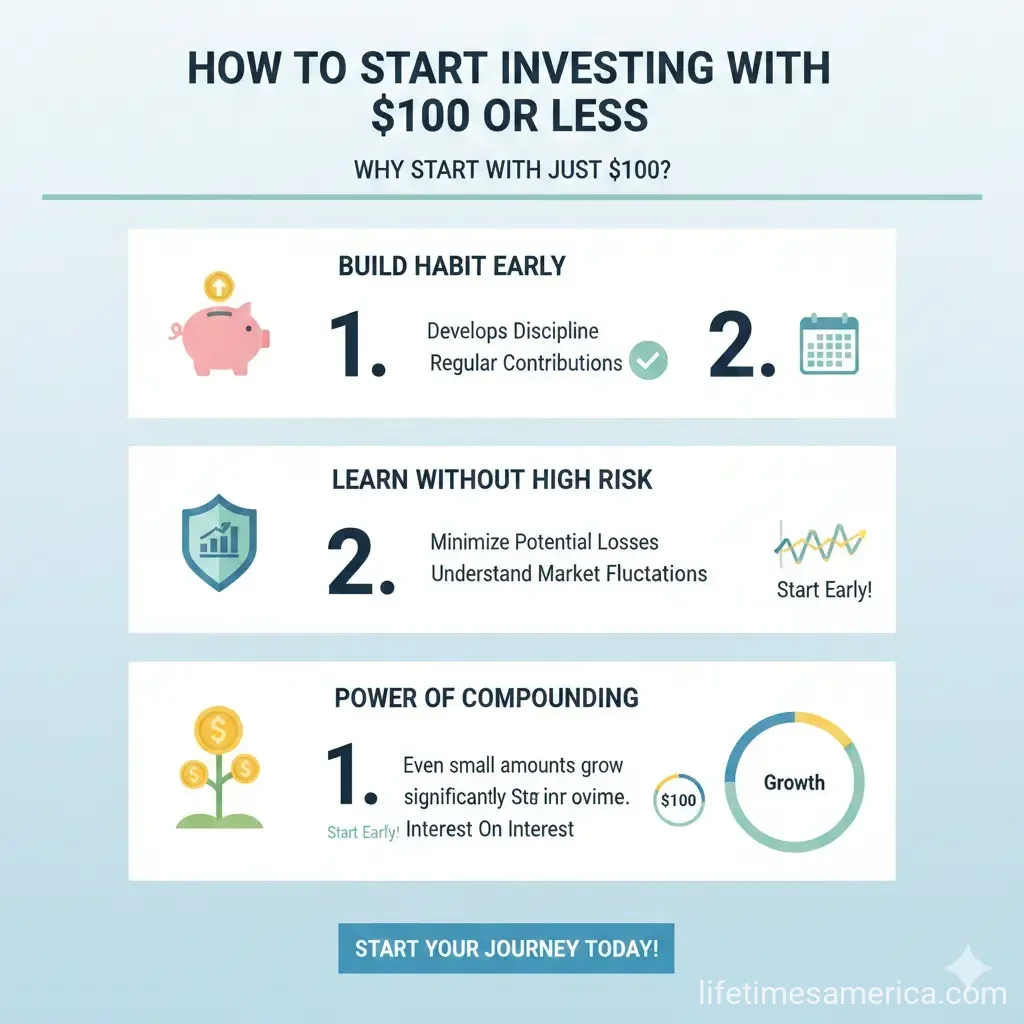
Why Start Investing with Just $100?
Investing isn't reserved for Wall Street pros or millionaires. Small, consistent investments harness the power of compounding, where your earnings generate more earnings over time. For instance, the S&P 500 has historically returned 7-12% annually on average, though past performance doesn't guarantee future results. Starting now with $100 means your money works harder for longer.
In the U.S., inflation erodes savings accounts—currently hovering around 2-3%—while stock market investments often outpace it. Plus, tax-advantaged accounts like IRAs let your $100 grow sheltered from Uncle Sam. Many brokerages have no minimums, so you can open an account today with pocket change.
The Power of Starting Small
- Builds habits: Just like gym routines, regular small investments create discipline.
- Time advantage: Dollar-cost averaging—investing fixed amounts regularly—reduces risk by buying more shares when prices dip.
- Accessibility: Fractional shares let you own slivers of pricey stocks like Apple for pennies.
Step-by-Step: How to Start Investing with $100 or Less
Ready to jump in? Follow this straightforward U.S.-focused roadmap. You'll need a smartphone, internet, and your $100—no excuses.
Step 1: Choose the Right Account Type
Begin with a brokerage account or IRA. Traditional brokerages like Fidelity or Charles Schwab offer $0 minimums and commission-free trades. For retirement, open a Roth IRA if your income qualifies—contributions grow tax-free, and 2026 limits allow up to $7,000 annually ($8,000 if 50+). Robo-advisors like Acorns or Betterment automate everything for beginners, often starting at $1-$5.
| Account Type | Best For | Minimum | Tax Perks |
|---|---|---|---|
| Taxable Brokerage | Flexible access | $0 | None |
| Roth IRA | Retirement | $0 at many firms | Tax-free growth |
| 401(k) | Workplace match | Check employer | Pre-tax contributions |
Step 2: Pick a Beginner-Friendly Platform
Top U.S. apps make it painless:
- Fidelity: Zero-fee index funds like Fidelity Zero Large Cap Index; easy ETF buys.
- Schwab: Schwab S&P 500 Index Fund with no minimum.
- Acorns: Rounds up purchases (e.g., $3.50 coffee becomes $4, invests 50¢).
- Robinhood or Webull: Free fractional shares of big names.
Sign up in minutes: Link your bank, verify ID (SSN required for U.S. tax reporting), and deposit via ACH transfer—free and instant.
Step 3: Fund Your Account
Transfer $100 from your checking account. Apps like Acorns invest spare change automatically, turning everyday spending into investments. Set up recurring deposits of $10-$25 weekly to build steadily without feeling the pinch.
Step 4: Select Your First Investments
Steer clear of single stocks at first—too risky. Opt for diversification:
ETFs and Index Funds (Top Choice for $100)
Exchange-traded funds (ETFs) bundle hundreds of stocks. Buy SPLG, SPY, or VOO (S&P 500 trackers) for broad U.S. exposure—under $100 per share. Low fees (0.03-0.09%) mean more money compounds.
Micro-Investing Apps
Acorns or Stash build portfolios automatically based on your risk quiz.
Money Market Funds
For safety, park in U.S. Treasury-backed funds yielding 4-5% in 2026—better than savings accounts.
Gold ETFs (Diversification Option)
Dollar-cost average into GLD or IAU with $100/month to hedge inflation.
Example Portfolio for $100:
- 50% S&P 500 ETF (e.g., $50 in SPY)
- 30% Total Market ETF ($30 in VTI)
- 20% Bonds or Gold ETF ($20 in BND or GLD)
Step 5: Automate and Monitor
Set auto-invest to dollar-cost average. Check quarterly, not daily, to avoid panic-selling. Use paper trading on platforms like Fidelity to practice risk-free.
Smart Strategies for Long-Term Growth
Dollar-Cost Averaging
Invest $100 monthly regardless of market highs/lows. Over 3 years, that's $3,600 invested, potentially much more with returns.
Avoid Common Pitfalls
- Don't chase "hot tips"—stick to index funds.
- Fees kill returns; choose zero-commission brokers.
- Emergency fund first: 3-6 months' expenses in a high-yield savings before investing.
U.S. Tax Considerations
Track capital gains; long-term holds (1+ year) get favorable 0-20% rates. Use IRS Form 1099 from your broker. Max employer 401(k) matches—free money!
Real-Life Examples: $100 Grows Big
Invest $100/month in an S&P 500 ETF at 8% average return:
- 10 years: ~$17,500
- 20 years: ~$50,000
- 30 years: ~$120,000
(Assumes compounding; markets fluctuate.) Apps like Acorns users report turning coffee change into thousands over years.
Your Next Steps to Invest $100 Today
1. Download Fidelity or Acorns and open an account (10 minutes).
2. Deposit $100 and buy an S&P 500 ETF.
3. Set weekly auto-deposits.
4. Learn more via IRS.gov for tax tips or Investor.gov for free education.
That $100 is your ticket to financial independence. Start small, stay consistent, and watch it grow. You've got this!
Frequently Asked Questions
Sources & References
-
1
How to start investing with $100: A beginner's guide — www.ssga.com
-
2
How to Start Investing With $100 or Less in 2026 — www.moneyrates.com
-
3
Starting From $0 in 2026? Here's How I'd Invest Step-by-Step — www.youtube.com
-
4
How to Invest in Stocks: 2026 Beginner's Guide — www.nerdwallet.com
- 5
-
6
The Only Investing Video You'll Ever Need in 2026 — www.youtube.com
-
7
10 Best Long-Term Investments In 2026 — www.bankrate.com
Related Articles

The Best "No-Fee" Brokerages for Fractional Shares in 2026
Imagine owning a slice of Amazon or Tesla without needing thousands of dollars upfront. That's the power of fractional shares, letting everyday Americans build diversified portfolios on any budget in...
The Best "Micro-Investing" Apps for Spare Change in 2026
Imagine turning your daily coffee run's spare change into a growing investment portfolio without lifting a finger. In 2026, micro-investing apps make it easier than ever for Americans to build wealth...
How to Hedge Against 2.8% Inflation: The Best Assets for 2026
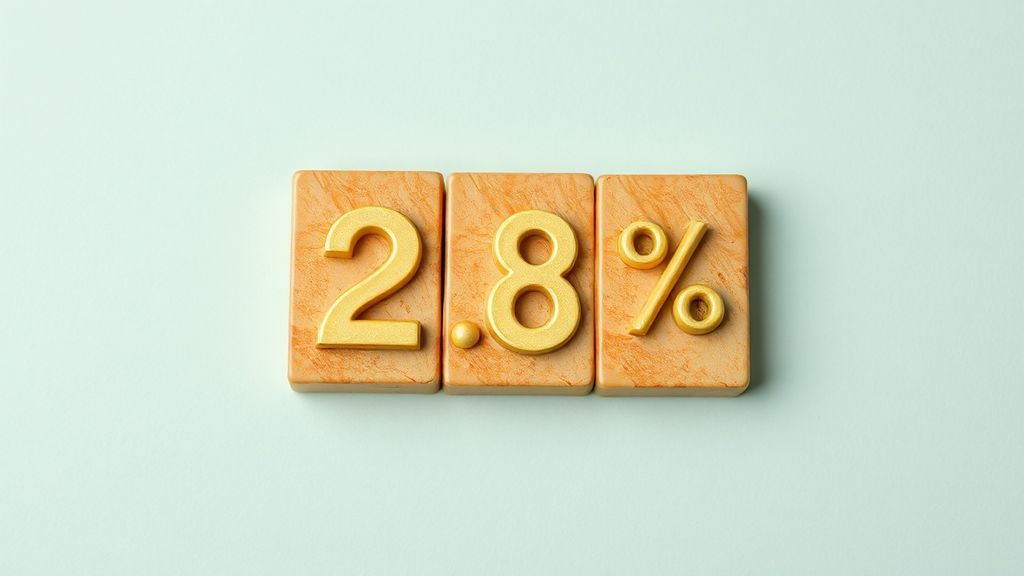
Inflation at 2.8% might not grab headlines like the 9% peaks of a few years back, but it's still quietly eroding your purchasing power—think higher grocery bills, pricier gas, and rent that just keeps...

How to Use "Series I Bonds" as a 2026 Inflation Hedge
If you're worried about inflation eating away at your savings, Series I bonds offer a straightforward way to protect your purchasing power while earning a competitive return backed by the U.S. governm...