The Best Budgeting Apps of 2026: YNAB vs. Mint vs. Empower
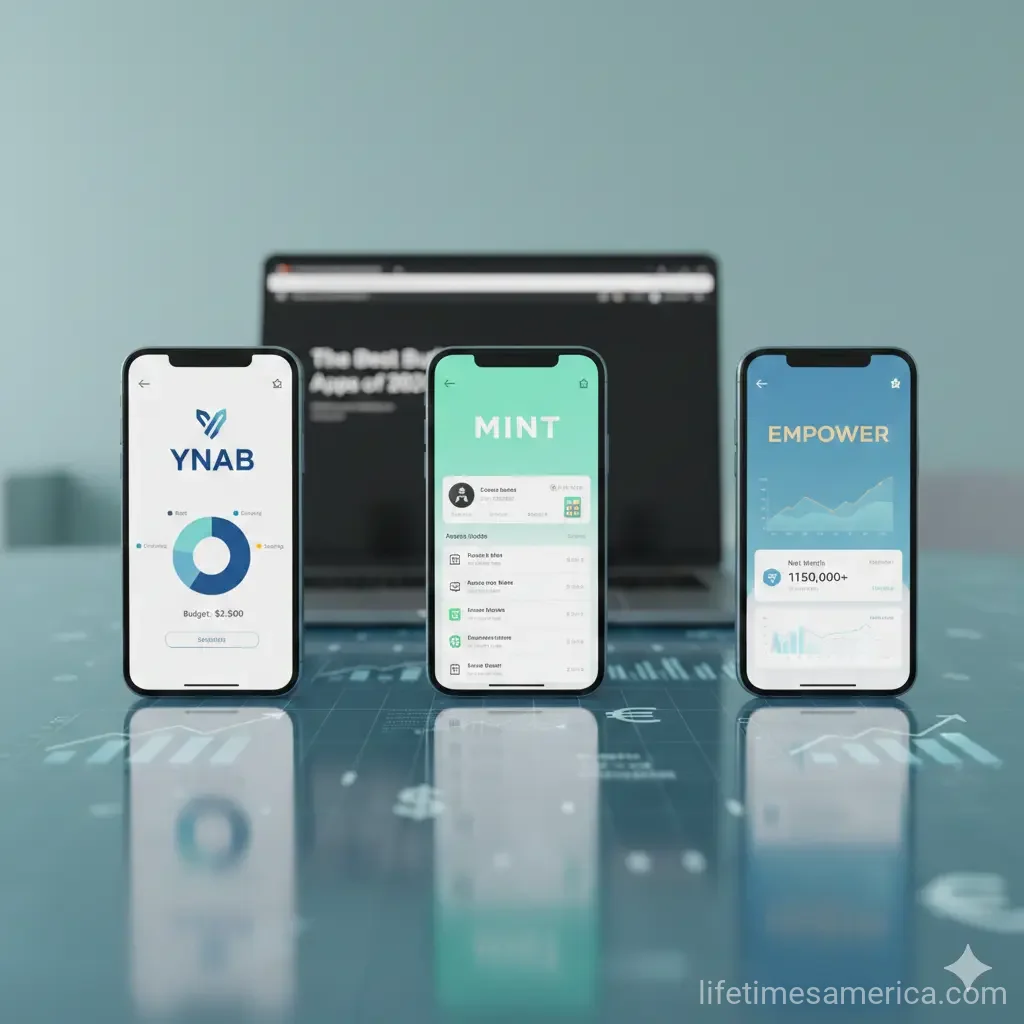
Struggling to keep your spending in check amid rising costs for groceries, gas, and housing in 2026? You're not alone—over 60% of Americans live paycheck to paycheck, but the right budgeting app can c...
The Lifetimes America editorial team curates, fact-checks, and updates guides on personal finance, property, health, immigration, legal, business, and lifestyle topics relevant to Lifetimes America readers. Articles are produced with AI assistance and reviewed by the editorial team before publication.
Struggling to keep your spending in check amid rising costs for groceries, gas, and housing in 2026? You're not alone—over 60% of Americans live paycheck to paycheck, but the right budgeting app can change that by helping you track every dollar, cut unnecessary expenses, and build savings for emergencies or that 401(k) boost.
In this head-to-head comparison of **the best budgeting apps of 2026: YNAB vs. Mint vs. Empower**, we'll break down features, pricing, pros, cons, and real-user insights tailored for U.S. households. Whether you're syncing with Chase, Wells Fargo, or your credit union, these tools integrate with major banks to automate tracking and align with IRS-friendly categories for tax time.
Why Budgeting Apps Matter in 2026
With inflation hovering around 3% and average household debt at $104,000—including credit cards, student loans, and mortgages—budgeting apps provide clarity. They categorize transactions automatically, forecast cash flow, and even flag subscription creep, which costs Americans $200+ monthly on average. Unlike spreadsheets, these apps sync in real-time across devices, making it easy to monitor spending while commuting or at home.
For U.S. users, top apps comply with bank-level security (like Plaid integration) and support features for shared finances, such as joint 529 plans or splitting utility bills. Let's dive into our three contenders: YNAB (You Need A Budget), Mint (now evolving under Credit Karma), and Empower.
YNAB: The Zero-Based Budgeting Powerhouse
YNAB stands out for its philosophy: give every dollar a job. This zero-based method assigns your income to categories upfront, preventing overspending. It's ideal for hands-on budgeters aiming to pay off debt or save for a home down payment.
Key Features
- Syncs with 12,000+ U.S. banks, credit cards, and loans; manual entry option available.
- Loan payoff simulator and "YNAB Together" for up to five users—perfect for families sharing a Capital One account.
- Real-time reports on spending patterns, age of money (how ahead you are), and goal progress.
- Recent 2026 updates: Enhanced equity compensation tracking for stock grants and AI-driven insights.
Pricing and Accessibility
$14.99/month or $109/year (about $9/month), with a 34-day free trial. College students get a full year free. App Store: 4.8 stars; Google Play: 4.5 stars.
Pros and Cons
- Pros: Transforms habits; detailed visuals; great for debt reduction (users report 20-30% savings).
- Cons: Steep learning curve; no full automation—requires weekly reviews.
Skip YNAB if you want set-it-and-forget-it tracking; it's for proactive planners.
Mint: The Free, Automated Tracker (Now Credit Karma Evolution)
Mint, acquired and rebranded under Credit Karma in recent years, remains a go-to for free, hands-off budgeting. It auto-categorizes spending and provides overviews, though 2026 updates emphasize Credit Karma's credit monitoring tie-ins.
Key Features
- Unlimited bank, credit card, and investment syncing with customizable budgets.
- Bill reminders, credit score tracking (free VantageScore), and subscription alerts.
- Net worth dashboard and cash flow forecasts, integrating with U.S. tax categories for easy Schedule A prep.
- 2026 enhancements: AI spending recaps and improved mobile forecasting.
Pricing and Accessibility
Completely free, with optional upsells for Credit Karma services. Available on web and mobile; high ratings for ease of use.
Pros and Cons
- Pros: Zero cost; quick setup; broad financial snapshot including retirement accounts.
- Cons: Less robust budgeting than paid apps; ads and wealth management pitches can clutter the interface.
Mint shines for beginners monitoring everyday spending without commitment.
Empower: Free Net Worth and Investment Focus
Empower (formerly Personal Capital) excels as a free baseline for holistic finance tracking. It's less about strict budgets and more about net worth, investments, and retirement planning—think 401(k) and IRA rollovers.
Key Features
- Syncs all accounts for a real-time net worth view, debt payoff progress, and investment analyzer.
- Budget tools with category tracking, retirement planner, and fee analyzer (spot high 401(k) fees).
- Customizable dashboards; optional advisor access for complex portfolios.
- 2026 updates: Enhanced mobile budgeting and scenario planning for Social Security estimates.
Pricing and Accessibility
Free for core tools; fees only for premium advisory services. Top-rated for investors.
Pros and Cons
- Pros: Comprehensive free dashboard; strong for high-net-worth tracking; no ads in basic view.
- Cons: Basic budgeting lacks depth; upsells for wealth management.
Best for those with investments prioritizing overview over daily transaction micromanagement.
YNAB vs. Mint vs. Empower: Side-by-Side Comparison
| Feature | YNAB | Mint | Empower |
|---|---|---|---|
| Pricing | $109/year | Free | Free (core) |
| Budgeting Style | Zero-based, manual assignment | Automated categories | High-level tracking |
| Best For | Debt payoff, habit-building | Daily spending, credit monitoring | Net worth, investments |
| Syncing | Yes + manual | Full auto | Full auto |
| Multi-User | Up to 5 | Limited | Household view |
| Ratings (App Store) | 4.8 | 4.7 | 4.8 |
YNAB wins for structure, Mint for affordability, Empower for investments.
Practical Tips for U.S. Users
- Link Securely: Use Plaid for banks like Bank of America; enable two-factor authentication.
- Tax-Align Categories: Match IRS forms (e.g., medical for Schedule A deductions).
- Combine Apps: Pair Empower's net worth with YNAB's budgeting for full coverage.
- Track Subscriptions: Cancel unused ones—average savings: $150/year.
- Set Goals: Aim for 3-6 months' expenses in a high-yield savings (5% APY in 2026).
Choose Your App and Take Control Today
Pick YNAB for disciplined budgeting, Mint for free ease, or Empower for investment insights. Start with free trials to test against your Wells Fargo statements or Roth IRA. Track for 30 days, adjust, and watch your savings grow—many users build a $1,000 emergency fund in months. Download now via app stores or official sites, and visit CFPB.gov for more financial tools.
Frequently Asked Questions
Sources & References
-
1
The Best Budget Apps for 2026 - NerdWallet — www.nerdwallet.com
-
2
The Best Budgeting, Net Worth, and Spending Apps in 2026 — www.longangle.com
-
3
Best Budgeting Apps for 2026 - Money — midineromifuturo.com
-
4
Best Budgeting Apps // Top 15 Budgeting Apps for 2026 - YouTube — www.youtube.com
-
5
9 Best Budgeting Apps of 2026 - SmartAsset — smartasset.com
-
6
Best Budgeting Apps of 2026 (Tested & Reviewed) - YouTube — www.youtube.com
-
7
Seven of the Best Budgeting Apps for 2026 - Kiplinger — www.kiplinger.com
Related Articles
How to Build a 6-Month Emergency Fund on a Minimum Wage
Building a six-month emergency fund on minimum wage might feel impossible, but it's more achievable than you think. With the right strategy and consistent effort, you can create a financial safety net...

The Best "Financial Literacy" Books Every American Should Read in 2026
Imagine standing at the edge of financial freedom, armed with knowledge that turns everyday dollars into lifelong security. In 2026, with inflation hovering around 2.5% and retirement accounts like 40...

How to Avoid "Lifestyle Creep" After a 2026 Promotion
Picture this: You've just landed that well-deserved promotion in 2026, your salary jumps by 20% or more, and suddenly you're eyeing a sleeker car, fancier dinners out, or that home upgrade you've alwa...

The Best Cashback Apps for Grocery Shopping in 2026
Imagine slashing your grocery bill by hundreds of dollars each year without clipping coupons or hunting for sales. In 2026, cashback apps make it simple for Americans to earn real money back on everyd...