How to Apply for "Disaster Relief" Loans After a Major US Storm
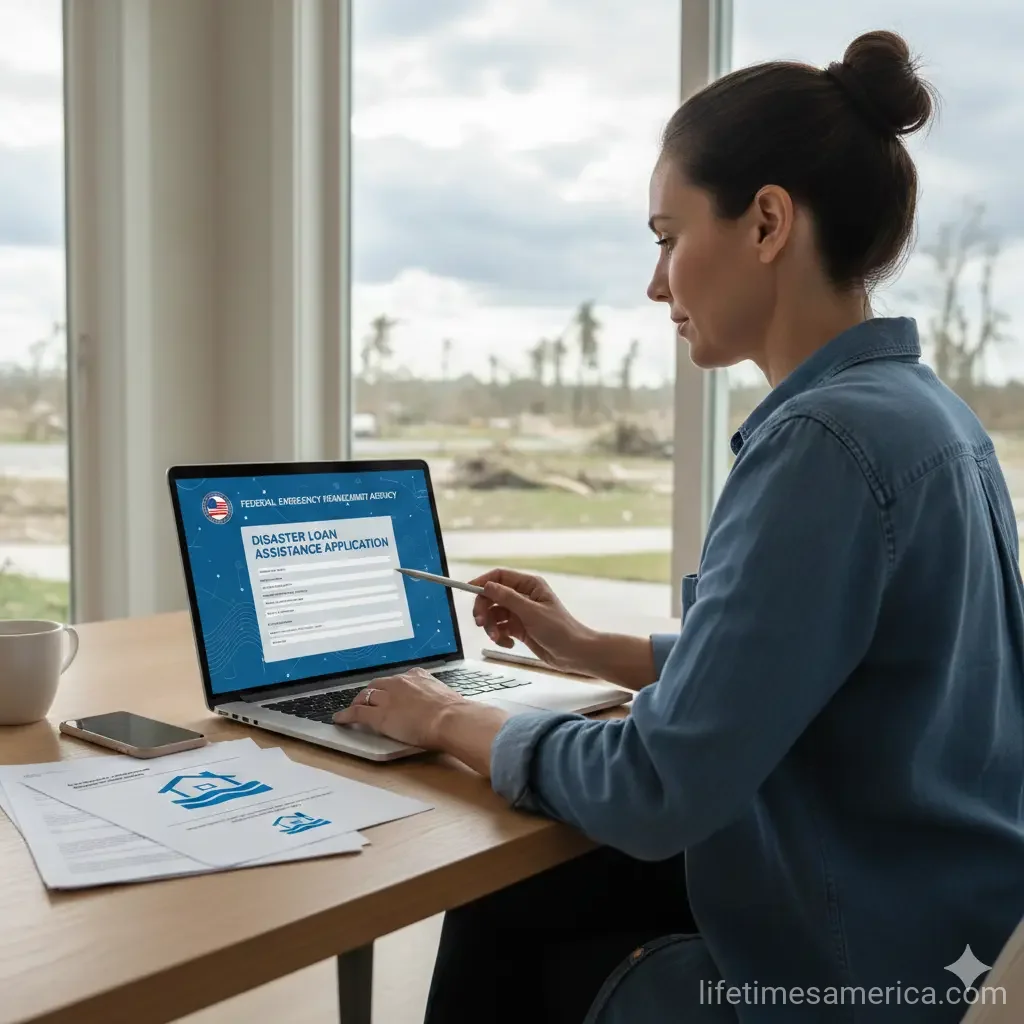
When a major storm devastates your community, the road to recovery can feel overwhelming. But disaster relief loans from U.S. federal agencies offer a vital lifeline, providing low-interest funds to r...
The Lifetimes America editorial team curates, fact-checks, and updates guides on personal finance, property, health, immigration, legal, business, and lifestyle topics relevant to Lifetimes America readers. Articles are produced with AI assistance and reviewed by the editorial team before publication.
When a major storm devastates your community, the road to recovery can feel overwhelming. But disaster relief loans from U.S. federal agencies offer a vital lifeline, providing low-interest funds to rebuild homes, businesses, and lives without the burden of high-rate private loans.
Whether it's a hurricane slamming the Gulf Coast, a tornado ripping through the Midwest, or flooding overwhelming the Northeast, these loans help Americans get back on their feet fast. In 2025 alone, the Small Business Administration approved over $5 billion in disaster loans following Hurricanes Helene and Milton . This guide walks you through every step to apply, with practical tips tailored for U.S. households and businesses in 2026.
What Are Disaster Relief Loans?
Disaster relief loans are government-backed, low-interest loans designed for individuals, businesses, and nonprofits hit by declared disasters like storms, floods, or wildfires. Unlike grants, these are loans you repay—but at rates far below commercial options, often 4% or less for homeowners and even lower for businesses .
The primary source is the U.S. Small Business Administration's (SBA) Disaster Loan Program, activated after a presidential disaster declaration. For example, after Hurricane Ian in 2022, over 100,000 Floridians received SBA loans totaling $4.5 billion to repair storm-damaged properties . In 2026, with climate-driven storms intensifying, these programs remain crucial, offering up to $2 million for businesses and $200,000 for homeowners' real property, plus $40,000 for personal property .
Types of Disaster Relief Loans Available
- Home and Personal Property Loans: Cover uninsured losses to your primary residence, like roof repairs or replacing flooded appliances. Maximum: $200,000 for real estate, $40,000 for contents .
- Business Physical Disaster Loans: For repairing or replacing business property damaged by the storm. Up to $2 million .
- Economic Injury Disaster Loans (EIDL): Help businesses meet working capital needs, like payroll, even if physical damage is minimal. Up to $2 million .
- Military Reservist EIDL: For businesses impacted when key employees are called to active duty during disasters .
These loans don't require collateral for amounts under $25,000, and terms can stretch up to 30 years . Interest-only payments kick in after the first year for homeowners.
Who Qualifies for Disaster Relief Loans?
Eligibility hinges on living or operating in a federally declared disaster area. Check FEMA's website for declarations—your county or state must be listed . U.S. citizens, legal residents, and some non-citizens qualify, including businesses owned by them .
For homeowners: Your primary residence must be in the disaster area and suffer uninsured losses. Renters can apply for personal property loans . Businesses need to show physical damage or economic injury tied to the disaster.
Key 2026 Updates and Income Considerations
In 2026, SBA expanded eligibility to include more tribal businesses and low-income households, waiving fees for applications under $50,000 . No credit check for loans under $25,000, but larger amounts require proof of repayment ability, like tax returns and financial statements . Low-income families may access supplemental assistance through state programs linked to SBA approvals.
Step-by-Step Guide: How to Apply for Disaster Relief Loans
Act fast—applications open immediately after a declaration and must be submitted within 60 days for physical damage or up to 4 years for EIDL in some cases, but sooner is better for priority processing . Here's your actionable roadmap.
Step 1: Confirm Your Area's Disaster Declaration
Visit FEMA's Disaster Declarations page or call 1-800-621-3362. Enter your ZIP code to verify. For example, after the 2025 Midwest tornadoes, declarations covered 150+ counties in Illinois, Indiana, and Ohio .
Step 2: Assess Your Damages
Document everything: Take timestamped photos/videos of damage, save receipts, and get repair estimates from licensed contractors. Contact your insurance first—SBA loans cover only uninsured losses .
"File your insurance claim immediately; SBA requires proof of settlement or denial before approving your loan."
Step 3: Apply Online or In-Person
- Go to SBA's Disaster Loan Assistance portal and create an account .
- Complete the application (takes 30-45 minutes). Upload docs like IRS Form 4506-T for tax transcripts, proof of ownership, and damage estimates.
- For businesses: Include profit/loss statements and balance sheets.
- Submit and note your application number. Expect an email confirmation within 24 hours.
Need help? Visit Disaster Recovery Centers (DRCs) set up in affected areas—they offer free application assistance . In 2026, virtual options expanded via SBA's chat support.
Step 4: SBA Review and Approval
SBA reviews in 2-4 weeks, faster for small loans. They may request more info—respond within 48 hours . If approved, sign electronically and funds disburse in 5-10 days via direct deposit.
Step 5: Use Funds and Repay
Funds must go toward approved repairs. Track spending for audits. Repayment starts 12 months post-disbursement for homes, with rates around 4% fixed (2.375% for nonprofits) . Prepay anytime without penalty.
Practical Tips for a Successful Application
- Prepare Docs Early: Gather 2 years of tax returns, bank statements, and lease agreements .
- Maximize Aid: Pair SBA loans with FEMA grants (non-repayable up to $42,500 for homes) and state programs like California's Disaster Assistance .
- Avoid Scams: SBA never asks for upfront fees. Report fraud to 1-800-225-5342 .
- Business Owners: Apply for both physical and EIDL to cover all bases—many miss the economic injury option .
- Low-Income Help: Programs like HUD's disaster vouchers can bridge gaps; check eligibility via 211.org .
Common Challenges and How to Overcome Them
Delays often stem from incomplete docs—double-check uploads. If denied, appeal within 6 months with new evidence . Credit issues? SBA considers disaster impact on your score.
For major 2026 storms like the anticipated Atlantic hurricane season, SBA increased staffing by 20% for faster processing .
FAQ
1. How long does it take to get disaster relief loan funds?
Typically 2-4 weeks for approval, plus 5-10 days for disbursement. Urgent cases can be expedited .
2. Do I need insurance to apply?
No, but you must file a claim first. SBA covers the gap .
3. Can renters apply for disaster loans?
Yes, for personal property up to $40,000 .
4. What if my business has no physical damage?
Apply for EIDL for lost revenue—up to $2 million .
5. Are there forgiveness options?
No full forgiveness, but terms are generous, and nonprofits get lower rates .
6. Where do I find local help?
Search for DRCs on FEMA's recovery page or call SBA at 1-800-659-2955 .
Next Steps to Secure Your Recovery
Don't wait—check your disaster status today and start documenting damages. Apply through SBA's portal now to lock in priority. Combine loans with FEMA aid, community funds, and insurance for full recovery. If denied or overwhelmed, contact a HUD-approved counselor via 1-800-569-4287. You're not alone; millions of Americans have rebuilt stronger with these tools. Stay safe and resilient.
Related Articles

The Best "Personal Loans" for Home Improvements in 2026
Planning a kitchen remodel, backyard makeover, or energy-efficient upgrade in 2026? A personal loan can get your project off the ground fast without tapping home equity. These unsecured loans offer qu...

How to Get a "Portfolio Line of Credit" (SBLOC) instead of a Personal Loan
Imagine needing quick cash for home repairs or a family emergency without selling your prized stock portfolio or racking up high-interest credit card debt. A Portfolio Line of Credit (SBLOC) could be...

What Is a Down Payment and How Much Do You Need?
When you're ready to buy a home, one of the first questions you'll face is: how much money do you need upfront? That upfront cash is your down payment, and it's one of the most important decisions you...

What Is PMI (Private Mortgage Insurance) and How Do You Avoid It?
Buying your first home is exciting, but those extra mortgage costs can quickly dampen the thrill. If you've heard whispers about Private Mortgage Insurance (PMI) sneaking into your monthly payments, y...