The Pros and Cons of Debt Consolidation Loans
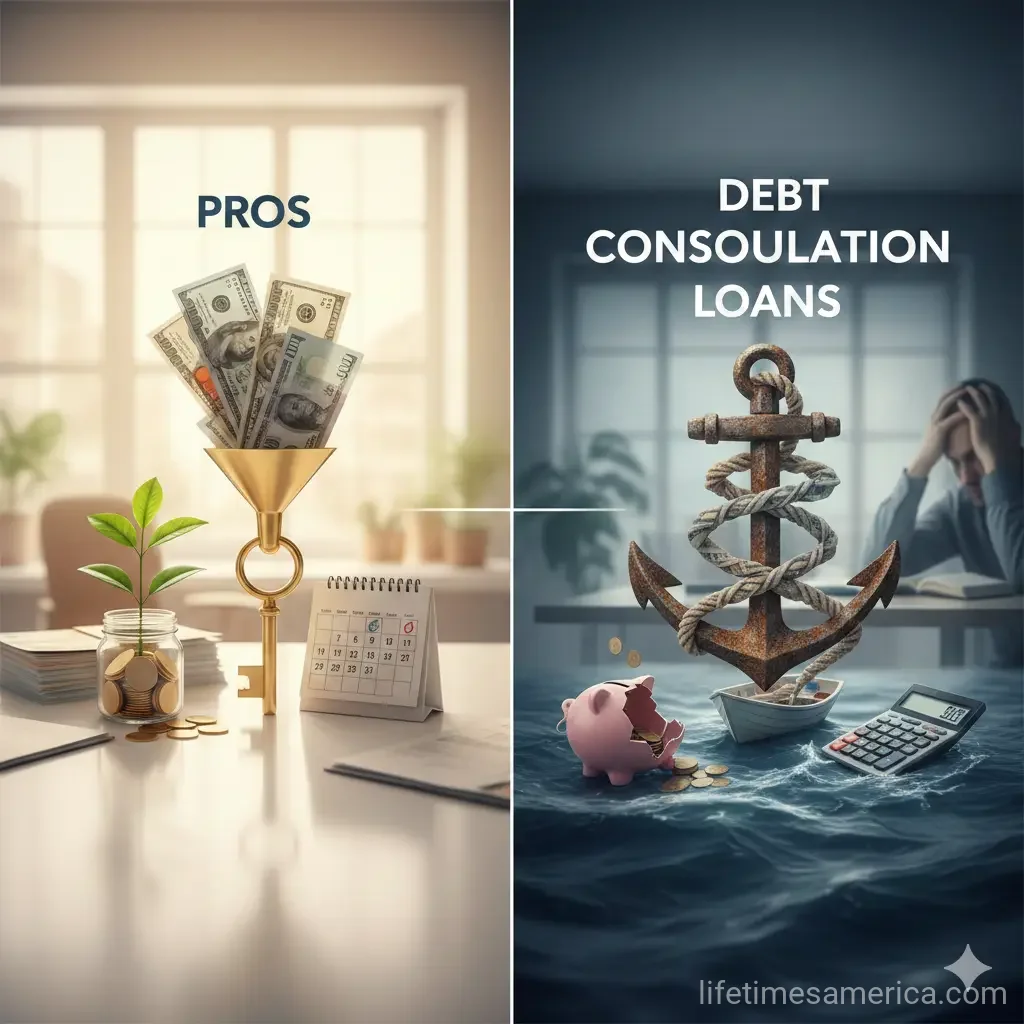
Struggling with multiple credit card bills piling up? Imagine turning that chaos into one simple monthly payment that could save you hundreds on interest. That's the promise of debt consolidation loan...
The Lifetimes America editorial team curates, fact-checks, and updates guides on personal finance, property, health, immigration, legal, business, and lifestyle topics relevant to Lifetimes America readers. Articles are produced with AI assistance and reviewed by the editorial team before publication.
Struggling with multiple credit card bills piling up? Imagine turning that chaos into one simple monthly payment that could save you hundreds on interest. That's the promise of debt consolidation loans, a popular strategy for Americans drowning in high-interest debt. But is it right for you? Let's dive into the pros and cons of debt consolidation loans to help you decide.
What Are Debt Consolidation Loans?
Debt consolidation loans let you combine multiple debts—like credit cards, medical bills, or personal loans—into a single new loan with one monthly payment. Typically offered by banks, credit unions, or online lenders, these loans often come with lower interest rates than your existing high-APR credit cards, which averaged 20-29% in 2026. You use the new loan to pay off old debts, then repay the lender over a fixed term, usually 24 to 60 months.
In the U.S., options include unsecured personal loans (no collateral needed) or secured loans like home equity loans, which might offer even lower rates but put your assets at risk. According to NerdWallet's February 2026 rankings, top lenders like SoFi and LightStream provide rates as low as 6-12% APR for qualified borrowers.
The Pros of Debt Consolidation Loans
Debt consolidation can simplify your finances and accelerate your path to freedom. Here are the key advantages:
- Lower Interest Rates and Savings: If your credit cards charge 20%+ APR, consolidating into a loan at 8-12% means less interest paid overall, freeing up money for principal reduction. For example, consolidating $20,000 at 22% credit card APR into a 10% loan over 5 years could save over $5,000 in interest.
- Single Monthly Payment: Juggling due dates from five cards? One payment reduces missed payment risks, which hurt your credit score, and simplifies budgeting.
- Faster Payoff and Clear Timeline: Fixed terms give a finish line—say, debt-free in 36 months—instead of endless minimum payments on revolving credit. Use interest savings for extra payments to pay off even quicker.
- Potential Credit Score Boost: Paying off cards lowers your credit utilization (30% of your FICO score), and on-time loan payments build positive history. Scores often rebound quickly.
- Easier Qualification for Secured Options: Home equity loans, backed by your house, often have lower rates and are easier to get than unsecured loans.
Real-World Example for Americans
Consider Sarah from Texas with $15,000 in credit card debt at 24% APR. She got a $15,000 unsecured loan from her credit union at 9.99% over 48 months. Her payment dropped from $650 scattered across cards to $380 monthly, saving $3,200 in interest and finishing two years early by adding $50 extra each month.
The Cons of Debt Consolidation Loans
While appealing, debt consolidation isn't a magic fix. Weigh these drawbacks carefully:
- May Not Qualify for Low Rates: Good credit (670+ FICO) is key for rates below your current debts. Poor credit? You might face 15-36% APRs, negating savings.
- Doesn't Address Spending Habits: It reorganizes debt, not eliminates it. Keep charging cards, and you'll dig a deeper hole.
- Fees and Costs Add Up: Origination fees (1-8% of loan amount), closing costs on home equity loans, or balance transfer fees can eat into savings.
- Risk of Longer Terms and More Interest: Extending repayment to 60+ months lowers monthly payments but increases total interest paid.
- Collateral Risks with Secured Loans: Default on a home equity loan? You could lose your house—far riskier than unsecured credit cards.
- Temporary Credit Dip: New inquiries and closing old accounts can drop your score short-term.
When Debt Consolidation Might Cost More
If you consolidate $10,000 at 25% credit card APR into a 5-year loan at 15% (due to fair credit), monthly payments fall, but total interest jumps from $12,000 to $9,000—wait, still a save? Not if fees add 5% upfront ($500). Run the numbers with free tools from the Consumer Financial Protection Bureau (CFPB) at consumerfinance.gov.
Secured vs. Unsecured Debt Consolidation Loans
| Type | Pros | Cons | Best For |
|---|---|---|---|
| Unsecured | No collateral risk; quicker approval; protects assets | Higher rates (8-36% APR); stricter credit requirements | Good credit holders avoiding risk |
| Secured (e.g., Home Equity) | Lower rates (4-9% APR); larger amounts; easier qualification | Risks home/car; closing costs; foreclosure threat | Homeowners with equity and discipline |
Under U.S. laws like the Truth in Lending Act (TILA), lenders must disclose APRs and fees clearly. Check annualcreditreport.com for your free weekly credit reports to assess options.
Is a Debt Consolidation Loan Right for You in 2026?
It's ideal if you have high-interest unsecured debt (>15% APR), good credit, and discipline to avoid new charges. Skip it if you're bankrupt, spending uncontrollably, or can't beat current rates. Alternatives include:
- Debt management plans via nonprofits like NFCC.org (lower rates negotiated, fees ~$25/month).
- 0% balance transfer cards (watch 3-5% fees, 12-21 month intro periods).
- Bankruptcy (Chapter 7 wipes eligible debts but tanks credit 7-10 years).
Prequalify without hard inquiries at sites like NerdWallet or LendingTree. For low-income Americans, explore credit union options or HUD counseling at hud.gov.
Practical Tips for Success
- Check Your Credit: Aim for 670+ FICO. Dispute errors free at AnnualCreditReport.com.
- Shop Rates: Compare 3-5 lenders; credit unions often beat banks.
- Calculate Total Cost: Use CFPB loan calculator: Ensure new APR + fees < current total.
- Freeze Cards: Cut them up or lock via app to prevent reuse.
- Budget Ruthlessly: Track spending with apps like Mint; build a 3-6 month emergency fund.
- Seek Free Advice: Contact NFCC (nfcc.org) or military-focused if applicable (cfpb.gov/military).
Next Steps to Take Control
Pull your credit reports today, calculate your savings potential, and prequalify with 2-3 lenders. Pair consolidation with a strict budget—many Americans cut spending 20% post-consolidation and celebrate debt-free status within years. You're not alone; resources like the FTC's consumer.gov offer free guidance. Start small, stay consistent, and reclaim your financial future.
Frequently Asked Questions
Sources & References
-
1
Best Debt Consolidation Loans of February 2026 - NerdWallet — www.nerdwallet.com
-
2
Pros and cons of debt consolidation — navigatorcu.org
-
3
Debt Consolidation Loans: Pros and Cons — www.nolo.com
-
4
Is Debt Consolidation Worth It? A 2026 Analysis — www.peopledrivencu.org
-
5
Debt Consolidation: Pros and Cons — www.ccfcu.org
-
6
Debt Consolidation Pros And Cons (2025) — www.consumeraffairs.com
-
7
What Is Debt Consolidation? Everything You Need to Know — www.myfsbonline.com
Related Articles

How to Use the 'Debt Snowball' Method to Become Debt-Free
Imagine staring down a mountain of credit card bills, personal loans, and maybe even some medical debt, feeling like you'll never dig out. That's where the debt snowball method comes in—a proven strat...

How to Handle a Debt Collector: Know Your Rights Under the FDCPA
Getting a call from a debt collector can feel overwhelming, but you're not defenseless. The Fair Debt Collection Practices Act (FDCPA) is a federal law that gives you specific rights and protections w...