How to Negotiate Your Medical Bills and Reduce Hospital Debt

A surprise medical bill can hit like a truck, turning a routine hospital visit into a financial nightmare. With medical costs soaring—insurance premiums more than doubled for millions from 2025 to 202...
The Lifetimes America editorial team curates, fact-checks, and updates guides on personal finance, property, health, immigration, legal, business, and lifestyle topics relevant to Lifetimes America readers. Articles are produced with AI assistance and reviewed by the editorial team before publication.
A surprise medical bill can hit like a truck, turning a routine hospital visit into a financial nightmare. With medical costs soaring—insurance premiums more than doubled for millions from 2025 to 2026—many Americans are buried under hospital debt they can't pay. But here's the good news: you can negotiate your medical bills and slash that debt, often by 30-50% or more, without needing a law degree.
In this guide, we'll walk you through proven steps to tackle your bills, from spotting errors to landing charity care. Whether you're insured, uninsured, or facing collections, these strategies work in 2026's healthcare landscape, backed by real U.S. examples and expert tips.
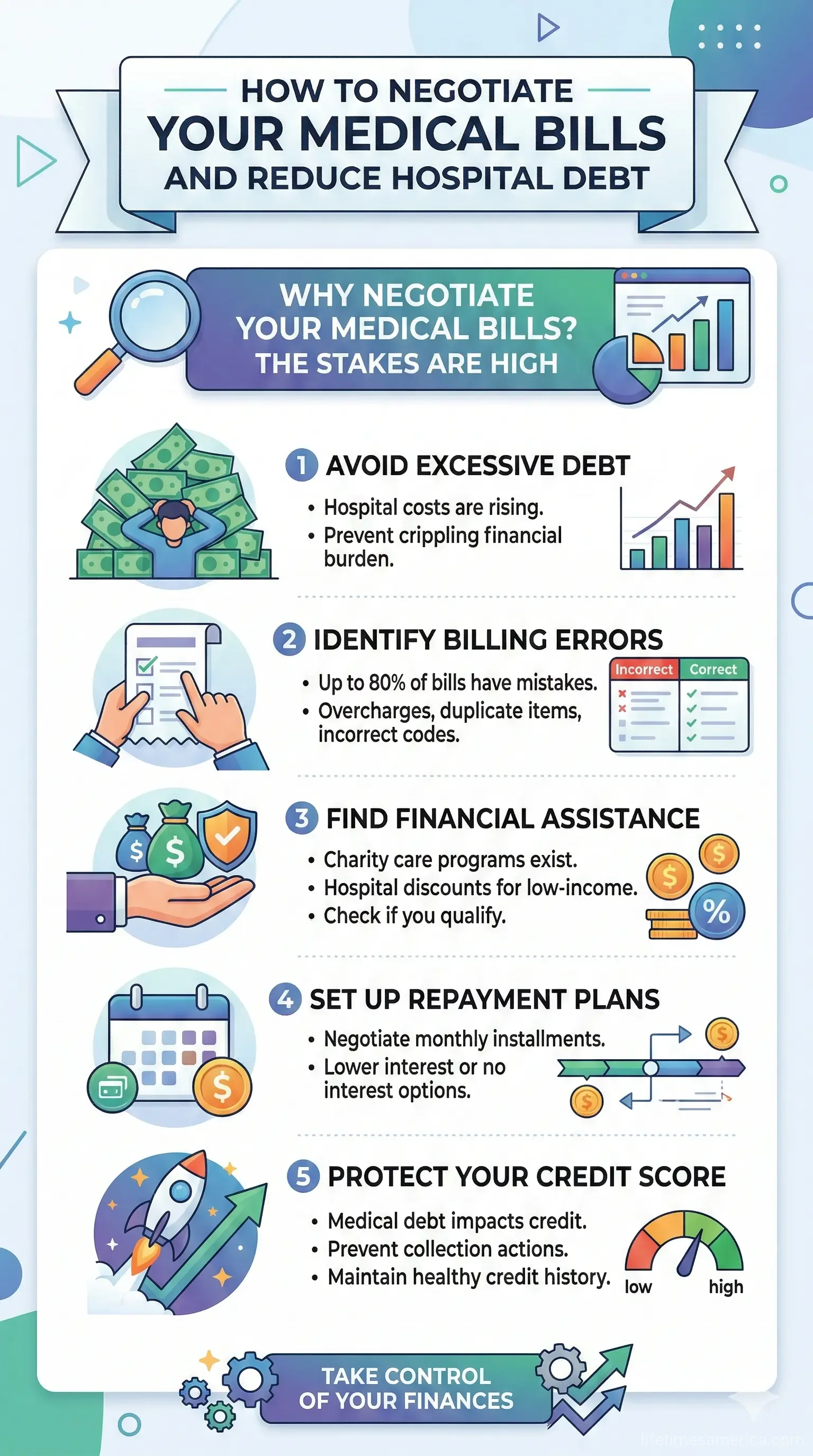
Why Negotiate Your Medical Bills? The Stakes Are High
Medical debt affects over 100 million Americans, pushing many into financial crisis. Hospitals often charge "chargemaster" rates—list prices inflated far above what insurers pay or what cash patients should. Negotiating isn't just possible; it's expected. Studies show 75% of people who spot bill errors get them fixed, and 60% who haggle win lower prices.
Under the No Surprises Act (extended protections in 2026), you're shielded from many out-of-network emergency bills, but routine care still leaves room for savvy negotiation. Start early—before treatment if possible—to avoid debt altogether.
Step-by-Step Guide: How to Negotiate Medical Bills and Cut Hospital Debt
Follow these actionable steps, tailored for U.S. patients. Persistence pays off; track every call with names, dates, and notes.
Step 1: Act Fast—Contact the Provider Immediately
Don't ignore the bill. Call the billing office right away to explain your situation. The sooner you reach out, the more options open up, like financial aid or plans. Be polite but firm: "I want to pay what I owe, but this bill is unaffordable for my family."
- Gather your Explanation of Benefits (EOB) from your insurer, the bill, and payment receipts.
- Ask for an itemized bill—it breaks down every charge by CPT code (Current Procedural Terminology). Errors are common; 75% get corrected when flagged.
- Cross-check with tools like FAIR Health Consumer or Healthcare Bluebook for regional rates.
Example: A California man facing $100,000 in uninsured bills after skipping ACA coverage got the full amount forgiven via appeals.
Step 2: Check for Charity Care and Financial Assistance
Most U.S. hospitals must offer charity care under the Affordable Care Act—free or discounted care for low-income patients. Eligibility is income-based (often up to 200-400% of federal poverty level).
- Search "[hospital name] financial assistance" or use Dollar For's eligibility tool.
- Apply even if unsure; denials can be appealed, as in the $100k forgiveness case.
- Nonprofits like the HealthWell Foundation or state programs (e.g., via Healthcare.gov) provide extra help.
In 2026, local governments in places like Chicago and New Orleans are buying and forgiving resident medical debt—check if your area qualifies.
Step 3: Negotiate the Bill Amount Like a Pro
Hospital prices are negotiable—"the numbers are fake," says expert Walker. They buy debt cheap and settle for less.
- Research the "uninsured rate": Often 30-50% below insured rates.
- Offer a lump sum lowball: Start at 25-50% of the balance (your "settlement sweet spot"). "What will you accept today if I pay upfront?" Typically, 30-50% off.
- Highlight hardship: Share income proof for discounts.
- Get it in writing—insist on a "pay-for-delete" if in collections, removing it from your credit report.
Pro tip: Negotiate with the original provider first—they're more flexible than collection agencies. Use cashier's checks for payments to protect your bank info.
Step 4: Set Up an Affordable Payment Plan
If lump sum isn't feasible, request a no- or low-interest plan. Hospitals offer better rates than credit cards. Ensure monthly payments fit your budget—say so upfront.
Over 90% of hospitals have plans, but you must ask. For insured patients, appeal insurer denials via your plan's process (e.g., UnitedHealthcare appeals portal).
Step 5: Handle Collections and Credit Impact
Medical debt under $500 won't hit credit reports after 2023 rules, extended in 2026. For larger debts:
- Validate the debt in writing within 30 days (Fair Debt Collection Practices Act).
- Negotiate settlements—agencies accept 15-25% for old debt.
- Seek free credit counseling via NFCC.org.
Prevent Future Medical Debt: Smart Strategies for 2026
Negotiation fixes today; prevention builds tomorrow.
- Pre-care price check: Use hospital price transparency tools (mandated by law) or get Advanced Explanations of Benefits.
- Verify networks: Confirm doctors/pharmacies are in-network to dodge surprise bills.
- Use HSAs/FSAs: Contribute pre-tax to your Health Savings Account for tax-free medical payments (2026 limit: $4,300 individual/$8,550 family).
- Shop ACA plans: Open enrollment ends Jan 15; subsidies cap premiums at 8.5% income.
Higher financial literacy boosts success—read up via MyHealthcareFinances.com.
Real American Stories: Negotiation Wins
"I always tell people the numbers are fake. They don't matter. It can always be lowered." — Expert on medical billing
Urquidez's $100k wipeout shows appeals work. Walker's clients routinely halve bills via upfront settlements. Your story could be next.
FAQ: Common Questions on Negotiating Medical Bills
1. How much can I realistically reduce my bill?
Expect 30-50% off with persistence; charity care can erase it entirely.
2. What if the bill goes to collections?
Negotiate a pay-for-delete settlement starting at 15-25%; validate first under FDCPA.
3. Do I need to be low-income for help?
No—payment plans and discounts apply broadly; charity is income-based.
4. Can insured people negotiate?
Yes—appeal EOB denials and haggle provider portions.
5. What's the best time to negotiate?
Before service, but anytime works—even post-collections.
6. Are there free tools for rates?
FAIR Health Consumer and Healthcare Bluebook.
Take Control: Your Next Steps to Crush Medical Debt
Grab your bill, make that call today, and reclaim your finances. Start with an itemized breakdown and charity app—many win on the first try. If stuck, contact NFCC for free counseling or Dollar For for aid. You've got this—lower debt means more for your family's future.
Sources & References
-
1
How To Negotiate Medical Bills - InCharge Debt Solutions — www.incharge.org
- 2
-
3
How To Settle Medical Debt In 2026: A Step-by-Step Guide - Ooraa — www.ooraa.org
-
4
Got an expensive medical bill? Here's what to do - USC Price — priceschool.usc.edu
-
5
How to Pay Off or Lower Your Medical Debt - AARP.org — www.aarp.org
-
6
Negotiating and Paying Medical Bills - MyHealthcareFinances — www.myhealthcarefinances.com
Related Articles

How to Use Your HSA to Build Wealth for Retirement
Imagine turning your everyday health savings into a powerhouse retirement fund—one that grows tax-free and lets you withdraw money penalty-free for medical bills even after age 65. That's the hidden p...

Health Savings Accounts (HSA): The Triple-Tax Advantage Secret
Imagine slashing your tax bill today, watching your savings grow tax-free, and pulling money out tax-free for healthcare in retirement—that's the power of a Health Savings Account (HSA). With healthca...