How to Build Credit from Scratch in the USA

Imagine landing your dream apartment in a bustling American city, only to hear "sorry, we need a credit score of at least 650." Or applying for that first car loan after college and getting denied bec...
The Lifetimes America editorial team curates, fact-checks, and updates guides on personal finance, property, health, immigration, legal, business, and lifestyle topics relevant to Lifetimes America readers. Articles are produced with AI assistance and reviewed by the editorial team before publication.
Imagine landing your dream apartment in a bustling American city, only to hear "sorry, we need a credit score of at least 650." Or applying for that first car loan after college and getting denied because you have no credit history. If you're starting from scratch—no credit file, thin credit, or as a recent immigrant—this is your reality. But here's the good news: building credit in the USA is straightforward and faster than you think. With the right steps, you can go from zero to a solid 670+ FICO score in 6-12 months, unlocking better rates on everything from apartments to 401(k) loans.
In this guide, we'll walk you through proven, practical strategies tailored for Americans building credit from scratch in 2026. From secured cards to credit-builder loans, you'll get actionable tips backed by experts and real-world examples. Let's turn "no credit" into "great credit."
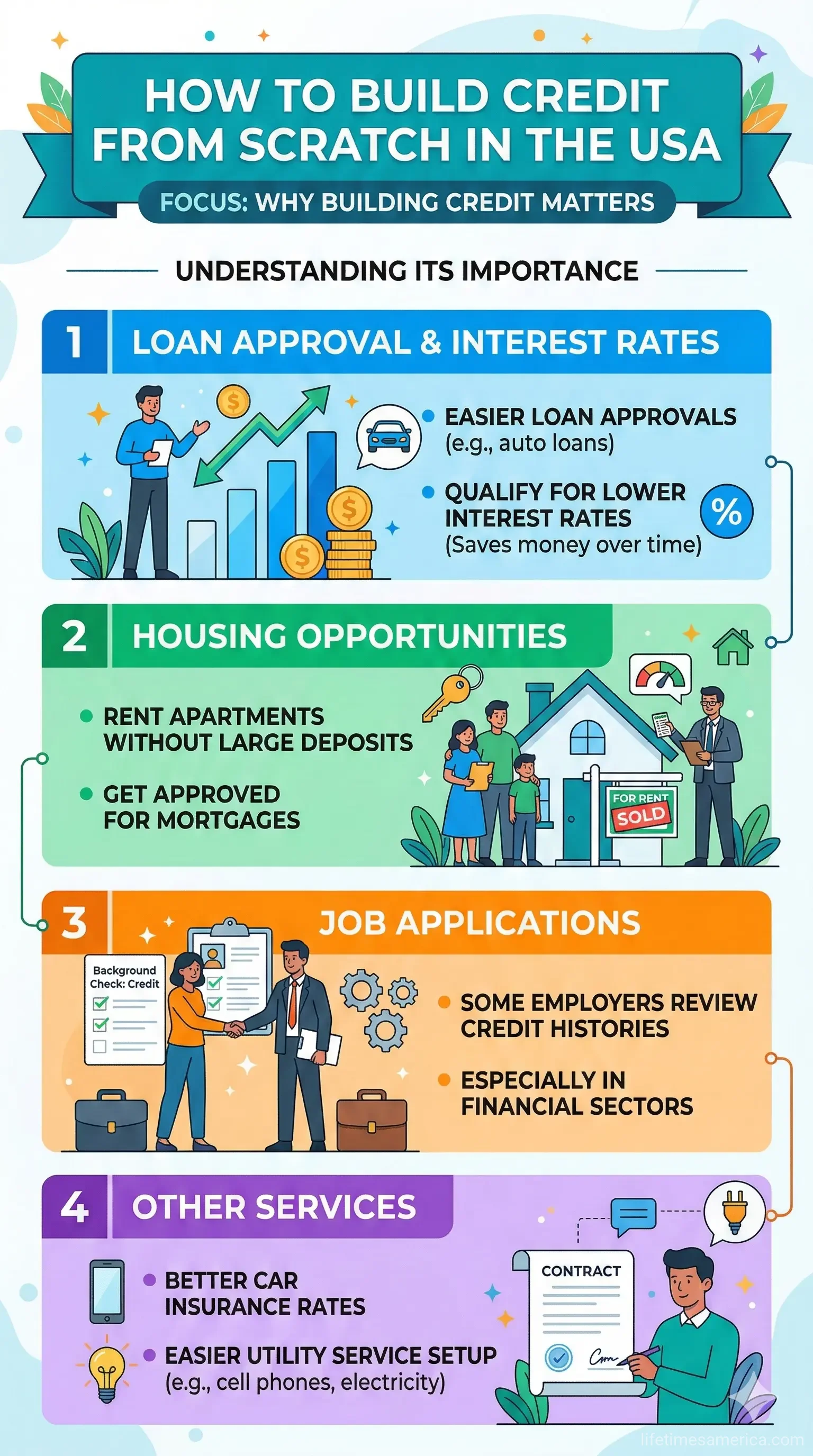
Why Building Credit Matters in the USA
Credit is the backbone of financial life here. Lenders, landlords, and even employers check your credit score—typically a FICO or VantageScore between 300 and 850—to gauge your reliability. A strong score (670+) means lower interest on mortgages, auto loans, and credit cards, potentially saving you thousands. Without it, you're stuck with high rates or denials.
The three major bureaus—Equifax, Experian, and TransUnion—track your history. No history? You're "credit invisible," affecting 26 million Americans. But positive activity reported to all three builds your file quickly.
Step 1: Check Your Starting Point
Before diving in, know where you stand. Get your free weekly credit reports from AnnualCreditReport.com—the only government-authorized site. Pull your FICO score from your bank or apps like Credit Karma (free).
- No credit file? You're invisible—focus on establishing history.
- Thin file? Few accounts; add more strategically.
- Low score? Address negatives first, like late payments.
Pro tip: Freeze your credit for free at each bureau to prevent fraud, especially if you're an expat or new to the system.
Step 2: Choose Your First Credit-Building Tool
Can't get traditional credit? Start with beginner-friendly options that report to bureaus. Here's how to pick:
Secured Credit Cards: The Gold Standard Starter
Deposit $200-$500 (your credit limit) with issuers like Discover it Secured or Capital One Platinum Secured. No credit check needed, and many upgrade you to unsecured after 7-12 on-time payments, refunding your deposit.
- Shop FDIC-insured banks reporting to all three bureaus.
- Aim for no annual fees; some earn cash back.
- Example: $200 deposit = $200 limit. Use for gas, pay off weekly.
Credit-Builder Loans: Forced Savings That Builds Credit
Perfect if you hate cards. Credit unions like Self or MoneyLion hold $500-$1,000 in savings while you make fixed monthly payments ($25-$50) for 6-24 months. Finish on time? Get your money back plus interest. Reports as an installment loan, diversifying your mix.
"It's like a savings account, except that instead of earning interest you build credit."
Become an Authorized User
Ask a trusted family member with good credit (700+) to add you to their card. Their positive history piggybacks on yours—use sparingly or not at all to avoid risks.
Other Options: Student Loans or Rent Reporting
Enrolled in college? Federal student loans build history without a credit check (via FAFSA). Services like Experian Boost add rent/utilities for free.
Step 3: Master the Habits That Boost Your Score Fast
Once you have an account, focus on the FICO factors (35% payment history, 30% utilization, 15% length of history, 10% new credit, 10% mix).
Pay On Time, Every Time (35% of Your Score)
Set autopay for full balance due dates—late payments tank scores for 7 years. Pay early if mailing checks.
Keep Utilization Under 30% (Ideally 10%)
Formula: (balance / limit) x 100. On a $500 secured card, charge <$50, pay twice monthly. This alone can jump your score 50+ points.
Build Length and Mix
Keep accounts open; age matters. After 6 months, add a second (e.g., unsecured card at 670+ score).
| Timeline | Action | Expected FICO Score |
|---|---|---|
| Month 0 | Get SSN/ITIN, apply secured card/loan | No score |
| Month 1-3 | Low utilization, on-time payments | Building (no score yet) |
| Month 3-6 | Consistent use | 650-680 |
| Month 6-12 | Add unsecured card, diversify | 720+ |
Common Pitfalls to Avoid in 2026
- Too many applications: Each hard inquiry dings 5-10 points; limit to 1-2/year.
- Closing old accounts: Shortens history.
- Maxing cards: Hurts utilization.
- Ignoring fees: Check for credit-builder loan fees.
For expats: Get an SSN or ITIN first via IRS.gov. International credit doesn't transfer—start fresh.
Advanced Tips for 2026: Boosters and Tools
- Experian Boost: Free; adds phone/utilities for instant 10-20 point bumps.
- Rent reporting: Via Rental Kharma or LevelCredit—up to 25% of score.
- Credit monitoring: Free from Credit Karma; paid from myFICO for accuracy.
- Diversify: Mix revolving (cards) and installment (loans).
Your Next Steps to a Strong Credit Future
Ready to start? Today: Check reports at AnnualCreditReport.com, apply for a secured card or credit-builder loan. Track progress monthly via free tools. In 6 months, celebrate with your first unsecured card approval. Consistent habits today mean financial freedom tomorrow—lower rates on homes, cars, and more. You've got this; America rewards builders.
Frequently Asked Questions
Sources & References
-
1
How To Build Credit From Scratch | Intuit Credit Karma — www.creditkarma.com
-
2
How to Build Your Credit Successfully - Intuit Blog — www.intuit.com
-
3
How to Build Your Credit Score | TD Bank — www.td.com
-
4
Building Credit in the US as an Expat: The Complete 2026 Guide — chandlernguyen.com
-
5
26 Tips to Improve Credit in 2026 - Experian — www.experian.com
-
6
Want to build your credit score in 2026? Experts offer quick tips — www.the-independent.com
-
7
How to Improve Your Credit Score in 2026 | American Bank — www.americanbankusa.com
Related Articles
What Is a Credit Report and How Is It Different from a Credit Score?
Ever wondered why your loan application got approved with a great rate—or denied outright? It often boils down to two key pieces of your financial puzzle: your credit report and credit score. While pe...

How to Increase Your Credit Score by 100 Points in 6 Months
Imagine unlocking lower mortgage rates, snagging that dream car loan without sky-high interest, or even qualifying for a premium credit card—all because your credit score jumped 100 points in just six...

What Is a Good Credit Score in the USA?
Imagine landing your dream home or snagging that low-interest auto loan, only to watch it slip away because of one number on your credit report. That number—your credit score—holds more power over you...

How to Check Your Credit Score for Free in the USA
Ever stared at a "declined" message on your credit card application or wondered why your dream home loan came with sky-high interest rates? Your credit score is the silent gatekeeper to your financial...