How to Buy a Business with an "SBA 7(a)" Loan: A Step-by-Step Guide
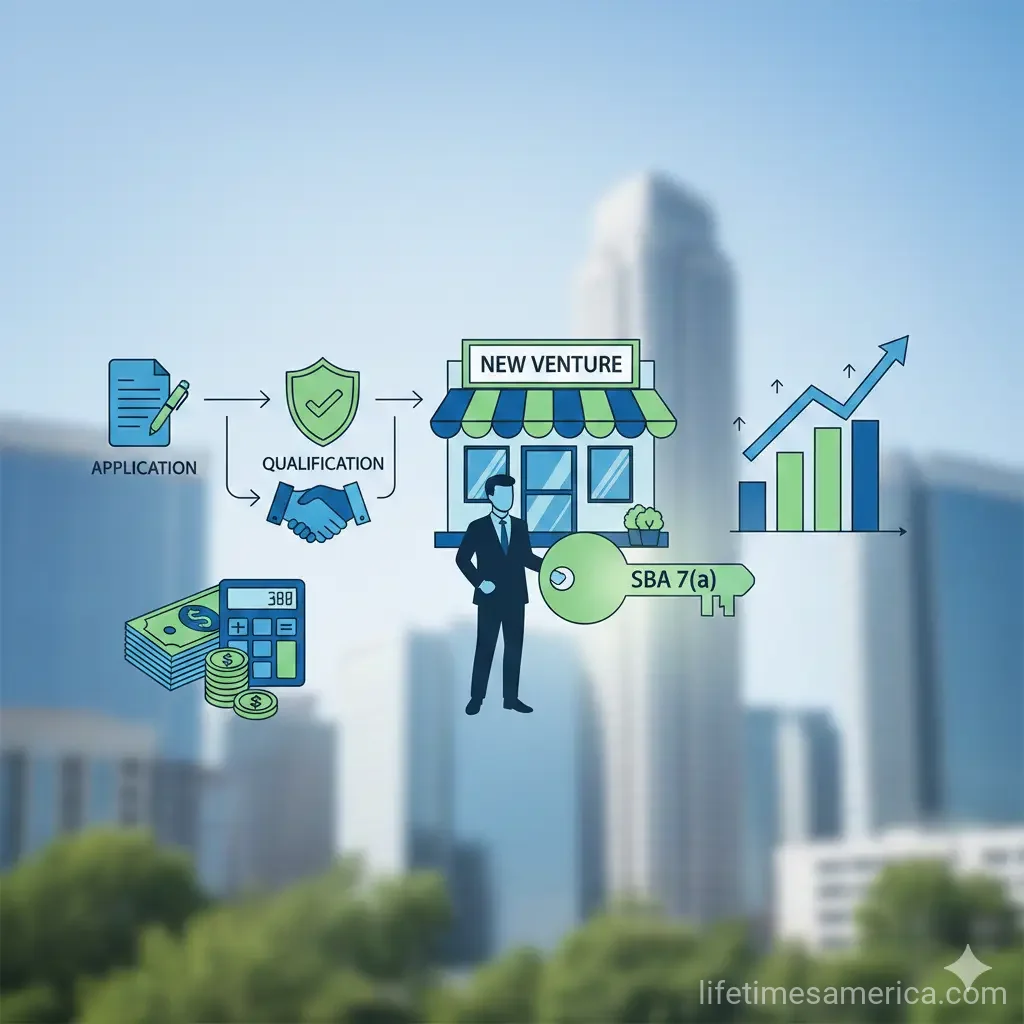
Buying a business can be a smart move for American entrepreneurs looking to skip the risks of starting from scratch. With an SBA 7(a) loan, you can finance the purchase of an established operation, ta...
The Lifetimes America editorial team curates, fact-checks, and updates guides on personal finance, property, health, immigration, legal, business, and lifestyle topics relevant to Lifetimes America readers. Articles are produced with AI assistance and reviewed by the editorial team before publication.
Buying a business can be a smart move for American entrepreneurs looking to skip the risks of starting from scratch. With an SBA 7(a) loan, you can finance the purchase of an established operation, tapping into its proven cash flow and customer base while benefiting from favorable terms backed by the U.S. Small Business Administration.
These loans are ideal for acquisitions where traditional financing falls short, especially for businesses heavy on intangibles like client lists in financial advising or insurance agencies. In 2026, the SBA 7(a) program remains the go-to for small business owners, offering up to $5 million in funding with longer repayment terms and lower down payments. This guide walks you through every step to secure one and close your deal successfully.
What Is an SBA 7(a) Loan and Why Use It for Buying a Business?
The SBA 7(a) loan is the agency's flagship program, guaranteeing up to 85% of loans issued by approved lenders to reduce their risk. This makes it easier for small businesses to qualify compared to conventional loans, which often demand substantial collateral equal to the loan amount.
Key Benefits for Business Acquisitions
- Flexible Use of Funds: Finance complete or partial business purchases, partner buyouts, or even expansions into similar operations.
- Lower Down Payments: Typically 10% equity injection, with exceptions for employee buy-ins or strong balance sheets allowing 0% down in some cases.
- Longer Terms: Up to 10 years for working capital or acquisitions, or 25 years for real estate, keeping monthly payments manageable.
- Competitive Rates: In 2026, rates hover around prime + 2.25% to 4.75%, often lower than bank loans for risky deals.
Consider a $350,000 insurance agency book of business: Traditional lenders might require $350,000-$525,000 in fixed assets, but an SBA 7(a) loan covers the intangible value without that hurdle. About 20% of new businesses fail in year one and 50% by year five, so acquiring proven revenue streams beats bootstrapping.
Eligibility Requirements for SBA 7(a) Loans in 2026
Not every deal qualifies, but most for-profit U.S. small businesses do if they meet SBA size standards and can't get credit elsewhere. Lenders scrutinize both buyer and seller.
Business Eligibility
- Operate for profit in the U.S. and qualify as "small" per NAICS code limits (e.g., under $41.5 million revenue for many retail sectors).
- Current on all federal, state, local taxes, and government debts; no recent defaults.
- Eligible uses include acquiring businesses, real estate, equipment, or working capital.
Owner Qualifications
- 20%+ owners must personally guarantee; provide personal financial statements and tax returns (3 years).
- Clean record: No incarceration, probation, or felony indictments.
- Demonstrate repayment ability via cash flow projections and credit history.
Sellers must provide 3 years of financials, showing the business is viable post-sale.
Step-by-Step Guide: How to Buy a Business with an SBA 7(a) Loan
Follow these actionable steps to navigate the process, which typically takes 45-90 days from application to closing.
Step 1: Find the Right Business and Conduct Due Diligence
Search listings on platforms like BizBuySell or work with brokers. Target industries like dental practices or law firms where goodwill exceeds assets. Hire a valuator for an appraisal—SBA requires it for deals over $250,000.
- Review 3 years of profit/loss statements, tax returns, and customer concentration.
- Verify no SBA-ineligible issues like gambling or lending businesses.
Step 2: Choose an SBA-Preferred Lender
Not all banks handle SBA loans; select a Preferred Lender Program (PLP) participant for faster approvals. Use the SBA's Lender Match tool at sba.gov to connect.
Step 3: Prepare Your Documentation
Gather these essentials early to avoid delays:
- Personal/business tax returns (3 years).
- Interim financials and debt schedules for both buyer/seller businesses.
- Purchase agreement and business valuation.
- Personal financial statement (SBA Form 413) for guarantors.
- Business plan with post-acquisition projections.
- Resumes and photo ID for owners.
Pro tip: Work with your lender for a customized checklist.
Step 4: Submit Application and Get Underwriting
Your lender submits to SBA for guaranty. Expect scrutiny on cash flow (must cover debt service) and collateral (business assets first, personal if needed; none required under $50,000). Provide seller involvement details—many stay on for transition.
Step 5: Negotiate Terms and Close the Deal
Once approved, review the commitment letter for rate, term, and fees (up to 3.5% guaranty fee, financeable). Sign purchase docs, fund escrow, and transfer ownership. Plan a 6-12 month seller transition for smooth handover.
Step 6: Post-Closing Compliance
Use funds only for approved purposes; report annually to SBA. Refinance options exist after 2 years if needed.
Types of Business Acquisitions Eligible for SBA 7(a) Loans
- Full Purchase: 100% acquisition of an existing business.
- Partner Buyout: Complete or partial; 0% down possible if active owners and strong debt-to-worth ratio (<9:1).
- Employee Buy-In: Less than 10% equity often allowed without injection.
- Expansion: Buy a same-NAICS competitor nearby with identical ownership; potentially 0% down.
Common Pitfalls and How to Avoid Them
- Inadequate Projections: Base on seller's historicals + conservative growth; lenders reject overly optimistic plans.
- Missing Seller Financials: Secure them pre-LOI.
- Overleveraging: Ensure post-loan debt service coverage ratio >1.15x.
- Tax Debts: Clear all liens first.
Real-world example: A financial advisor buying a $500,000 practice used an SBA 7(a) loan with 10% down, financing the rest over 10 years at manageable payments, leveraging the client's recurring revenue.
FAQ
How much can I borrow with an SBA 7(a) loan?
Up to $5 million, with guaranties covering 75-85% depending on size.
What's the minimum down payment?
Usually 10%, but 0% possible for buyouts or expansions meeting specific criteria.
Can I use it for any business?
No—excludes nonprofits, real estate investors, or speculative ventures; must be for-profit and U.S.-based.
How long does approval take?
45-90 days; faster with PLP lenders.
Do I need collateral?
Business assets first; personal if shortfall. None for loans ≤$50,000.
Can startups use it?
Yes, for buying an existing business, not pure startups.
Ready to Buy? Your Next Steps
Start by assessing your finances and scouting businesses today. Contact an SBA lender via Lender Match, assemble your docs, and attend a free SBA webinar on acquisitions. With discipline, an SBA 7(a) loan can turn ownership dreams into reality—lower risks, better terms, and a head start on success. Consult a CPA or attorney for personalized advice, and check sba.gov for updates.
Related Articles

How to Use a "Qualified Small Business Stock" (QSBS) to Pay Zero Tax
If you're an investor, entrepreneur, or employee at a startup, you've probably heard the phrase "tax-free gains" and thought it sounded too good to be true. But there's actually a legitimate way to po...
How to Claim the "Employee Retention Credit" (ERC) in 2026: Is it Still Possible?
Imagine discovering tens of thousands of dollars in your business's pocket—funds you earned by keeping employees on payroll during the toughest days of the COVID-19 crisis. That's the promise of the E...

The Best "Virtual" Business Addresses for US LLCs in 2026
Starting a limited liability company (LLC) in 2026 means navigating smart choices for privacy, professionalism, and compliance. One key decision is picking the right business address—especially if you...

How to Transition from W-2 to Self-Employed: A Financial Checklist
Making the leap from a steady W-2 paycheck to self-employment is exciting—and terrifying. You're trading the security of regular income and employer benefits for freedom and control over your work. Bu...