The 5 Best States for Real Estate Investors in 2026

Real estate investing in 2026 offers Americans smart opportunities to build wealth amid steady economic growth and shifting markets. With population booms, job expansion, and landlord-friendly policie...
The Lifetimes America editorial team curates, fact-checks, and updates guides on personal finance, property, health, immigration, legal, business, and lifestyle topics relevant to Lifetimes America readers. Articles are produced with AI assistance and reviewed by the editorial team before publication.
Real estate investing in 2026 offers Americans smart opportunities to build wealth amid steady economic growth and shifting markets. With population booms, job expansion, and landlord-friendly policies in key areas, the right state can deliver strong cash flow, appreciation, and long-term returns—here are the top five states standing out this year.
Why State-Level Choices Matter for Real Estate Investors in 2026
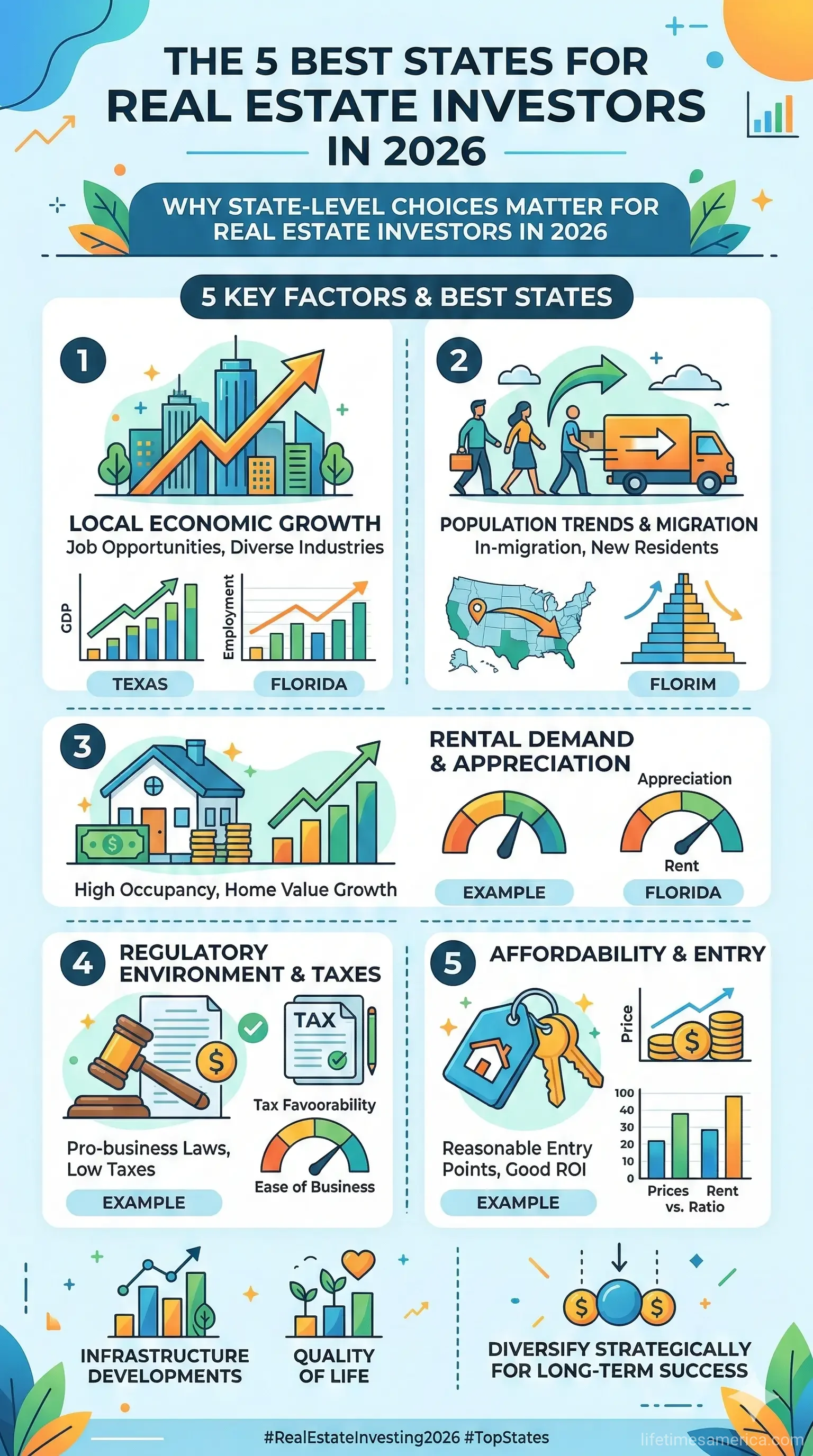
Selecting the best state for real estate investment goes beyond local neighborhoods—it's about statewide factors like taxes, regulations, economic drivers, and population trends. In 2026, states with no income tax, robust job growth, and high rental demand top the list, according to industry analyses. Factors such as landlord-tenant laws, property taxes, and market forecasts from sources like PwC's Emerging Trends report guide savvy investors. Texas and Florida lead due to their pro-business environments, while emerging hubs like North Carolina offer balanced growth.
Key Metrics to Evaluate States
- Population and Job Growth: Drives rental demand and home values.
- Cash Flow Potential: Rental yields minus expenses like taxes and maintenance.
- Appreciation Rates: Long-term value increases from economic expansion.
- Landlord Laws: Favoring quick evictions and limited tenant protections.
- Taxes: No state income tax boosts net returns, per IRS guidelines on investment income.
1. Florida: The Top Pick for Balanced Returns
Florida reigns as the premier state for real estate investors in 2026, blending high cash flow, rapid appreciation, and no state income tax. Population influx from retirees, remote workers, and tourists fuels demand in cities like Orlando, Tampa, and Miami, with year-round tourism ensuring 80-90% occupancy for short-term rentals.
Landlord-friendly laws allow for swift evictions—often within 3-7 days for non-payment—protecting investors' bottom lines. Secondary markets beyond Miami offer entry points with median home prices around $350,000, yielding 6-8% cap rates. Florida's economy, powered by tourism and trade, projects 2.5% annual job growth through 2030.
Top Florida Markets and Tips
- Orlando: Theme park demand drives vacation rentals; aim for properties near Disney with ADRs over $200/night.
- Tampa Bay: Tech and finance jobs boost long-term rentals; expect 5% yearly appreciation.
- Actionable Advice: Use Florida's homestead exemption for primary residences, but for investments, leverage 1031 exchanges via IRS rules to defer capital gains taxes when upgrading properties.
2. Texas: Economic Powerhouse with No Income Tax
Texas secures second place with explosive growth in Dallas, Houston, and Austin, offering affordable entry prices and strong rental yields of 7-10%. No state income tax means investors keep more profits, and diverse industries like energy, tech, and logistics project top job gains nationwide—Dallas/Fort Worth leads PwC's 2026 rankings.
Home values in Waco surged 30% last year alone, with rental yields at 0.55% monthly. Pro-landlord policies limit rent control and streamline evictions, making it ideal for scaling portfolios.
Prime Texas Opportunities
| City | Key Strength | Median Price (2026) | Projected Growth |
|---|---|---|---|
| Houston | Oil & Gas Jobs | $320,000 | 4% appreciation |
| Dallas | Business Hub | $380,000 | #1 Overall Market |
| Waco | Affordable Entry | $280,000 | 96% 5-Year Rise |
Investor Tip: Target multifamily units in growth corridors; check Texas Real Estate Commission resources for local zoning.
3. North Carolina: Affordability and Tech-Driven Growth
North Carolina shines for balanced investing, with the Research Triangle (Raleigh-Durham) attracting tech and biotech talent at 2.6% job growth. Affordable median prices around $400,000 pair with strong appreciation in Charlotte and Raleigh, plus cash flow in Greensboro.
Universities like Duke and UNC sustain student housing demand, while a diverse economy buffers recessions. Landlord laws favor investors with reasonable eviction timelines.
Standout NC Markets
- Raleigh-Durham: Biotech boom; 8% cap rates possible.
- Charlotte: Finance center; among top buy cities per Business Insider.
- Pro Tip: Explore Opportunity Zones for federal tax breaks on investments, detailed at IRS.gov.
4. Tennessee: Tourism and No-Tax Appeal
Tennessee combines Nashville's music-fueled tourism with no state income tax, ranking high for cash flow and appreciation. Markets like Nashville project solid prospects despite slight ranking dips, with industrial and retail buys recommended. Rental demand from conventions and entertainment yields high occupancy.
Tennessee Highlights
- Nashville: Top 10 buy city; strong retail demand.
- Memphis: Cultural draw for affordable rentals.
- Strategy: Focus on short-term rentals near venues; use Tennessee Housing Development Agency for market data.
5. Georgia: Atlanta's Commerce Magnet
Georgia rounds out the top five with Atlanta as a global hub for tech, film, and logistics, driving population growth and housing demand. Savannah's tourism generates $4.4 billion yearly, with 49% gross rental yields in historic areas. Affordable prices and investor-friendly regs make it a Southern standout.
Georgia Investment Gems
- Atlanta: Top buy city; professional influx.
- Savannah: Vacation rentals; median $327,125.
- Tip: Leverage Georgia's film tax credits for commercial conversions.
Practical Tips for Investing in These States
Start with due diligence: Use Zillow or Realtor.com for local comps, and consult HUD's rental market reports. Factor in 2026 insurance hikes in hurricane-prone areas like Florida—budget 1-2% of property value annually. Diversify across single-family, multifamily, and short-term rentals. For financing, explore FHA 203(k) loans for rehabs or conventional mortgages with 20-25% down. Always review state-specific landlord laws via Nolo.com or state attorney general sites.
Next Steps to Launch Your 2026 Investments
Analyze your goals—cash flow or appreciation?—then pull market data for top cities in these states. Connect with local Realtors via the National Association of Realtors, run pro formas with 8-10% vacancy buffers, and start small with one property. In 2026's dynamic market, acting on these states positions you for sustained success.
Frequently Asked Questions
Sources & References
-
1
Best States for Rental Property Investment in 2026 - Honest Casa — honestcasa.com
-
2
Best States to Invest in Real Estate 2026 - Real Estate Skills — www.realestateskills.com
-
3
Top Real Estate Investment Locations for 2026 - Sistar Mortgage — sistarmortgage.com
-
4
The 10 Best States for Rental Property Investment in 2026 - Global Vacation Rentals — join.globalvacationrentals.com
-
5
U.S. Real Estate Markets to Watch 2026 - PwC — www.pwc.com
-
6
The 10 Best Cities to Buy a Home in 2026 - Business Insider — www.businessinsider.com
-
7
The 10 Hottest Housing Markets for 2026 - Zillow — www.zillow.com
Related Articles

The Best REITs (Real Estate Investment Trusts) to Buy in 2026
Looking to diversify your portfolio with steady income and real estate exposure without buying physical properties? Real Estate Investment Trusts (REITs) offer Americans a straightforward way to inves...

How to Buy Your First Investment Property: The 2-4 Unit Strategy
Imagine turning your hard-earned savings into a steady stream of rental income while building long-term wealth—all from a single property that houses multiple tenants. That's the power of the 2-4 unit...

How to Buy a Rental Property Out of State: A Risk Guide
Imagine spotting a booming rental market in Texas from your home in California, where properties cost half as much and rents are climbing fast. Out-of-state investing lets you tap into these opportuni...

Real Estate Investing with No Money Down: Is it Actually Possible?
Ever dreamed of building wealth through real estate but feel stuck because you don't have a pile of cash for a down payment? You're not alone—many Americans wonder if real estate investing with no mon...