How to Claim a Tax Deduction for "Electric Vehicle" Charging Stations
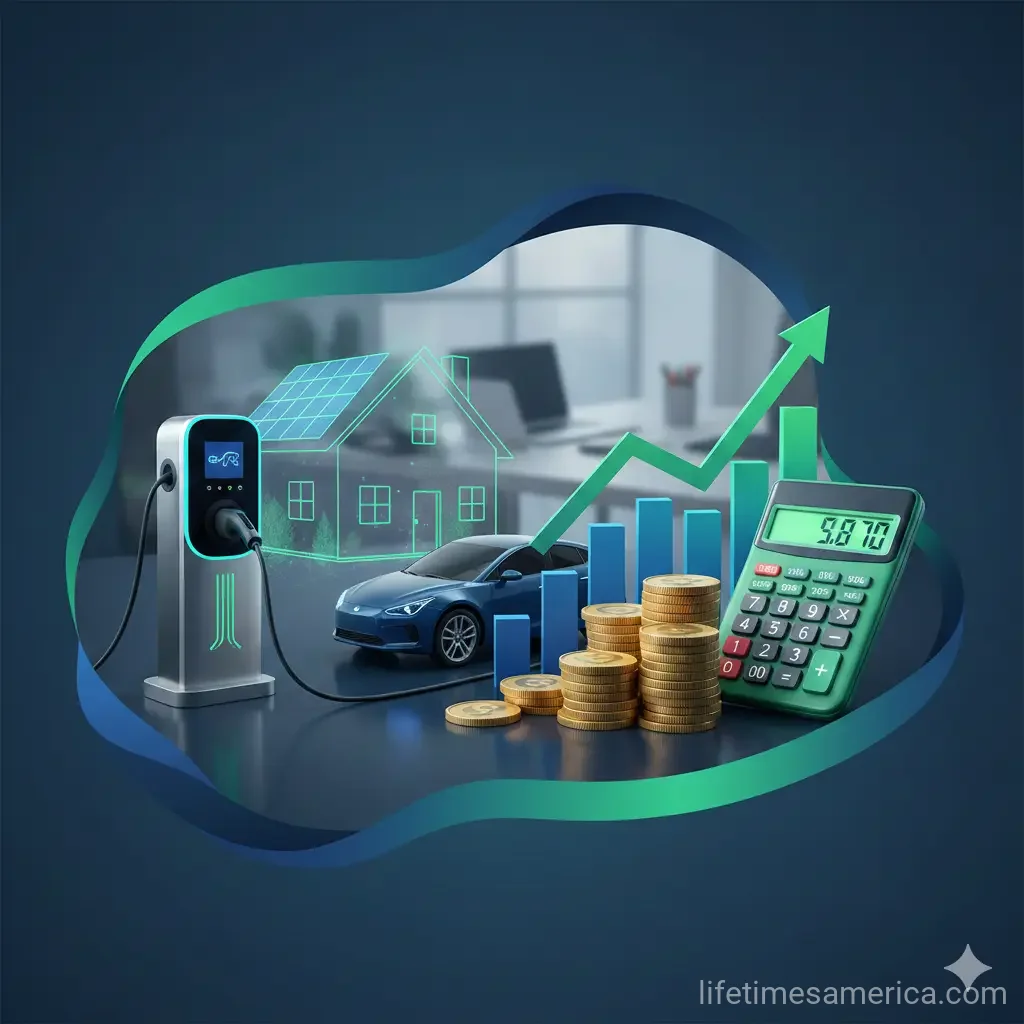
Imagine pulling into your driveway after a long day, knowing your electric vehicle (EV) is ready to charge at a station you installed yourself—and Uncle Sam is helping foot the bill. With EV adoption...
The Lifetimes America editorial team curates, fact-checks, and updates guides on personal finance, property, health, immigration, legal, business, and lifestyle topics relevant to Lifetimes America readers. Articles are produced with AI assistance and reviewed by the editorial team before publication.
Imagine pulling into your driveway after a long day, knowing your electric vehicle (EV) is ready to charge at a station you installed yourself—and Uncle Sam is helping foot the bill. With EV adoption surging across America, the federal **30C tax credit** makes installing home or business charging stations more affordable than ever, offering up to 30% back on costs. But this incentive expires June 30, 2026, so time is ticking if you're planning to claim it.
Whether you're a homeowner topping up your Tesla, a business owner equipping your parking lot, or a nonprofit expanding green initiatives, this guide breaks down everything you need to know about claiming a tax deduction—technically a **nonrefundable tax credit**—for EV charging stations. We'll cover eligibility, steps to claim, location rules, and tips to maximize your savings, all updated for 2026 filings.
What Is the 30C Tax Credit for EV Charging Stations?
The **Alternative Fuel Vehicle Refueling Property Credit**, known as the 30C credit, reimburses a percentage of costs for installing EV chargers and related infrastructure. Enacted under the Energy Policy Act of 2005 and expanded by the Inflation Reduction Act of 2022, it covers electric vehicle charging ports, essential components, labor, and even permits.
For 2026, the credit applies to equipment placed in service by June 30, 2026. It's calculated per "single item of property," typically each charging port, plus associated energy storage. This isn't a deduction that reduces taxable income—it's a direct credit against your federal tax liability, making it more valuable.
Key Credit Amounts by User Type
- Individuals (Home Use): 30% of costs, up to $1,000 per charger. Must be at your principal residence.
- Businesses (Commercial Use): Base 6% up to $100,000 per port; jumps to 30% if prevailing wage and apprenticeship rules are met.
- Tax-Exempt Entities (Nonprofits, Schools, Churches): Same as businesses: 6% base or 30% with requirements, with direct pay option for refunds.
Costs include the charger, parts essential to operation, installation labor, and construction fees—but not the building itself or unrelated upgrades.
Who Qualifies for the EV Charging Station Tax Credit?
Not everyone can claim this credit. Eligibility hinges on your status, location, and installation details.
Residential Homeowners
If you're installing a Level 2 charger at your main home, you're eligible for the $1,000 cap. No business purpose needed, but the charger must store and dispense electricity for EVs. Example: Sarah in suburban Ohio buys a ChargePoint Home Flex for $800 plus $400 installation— she claims 30% ($360) after confirming her address qualifies.
Business Owners and Fleets
Businesses qualify if the charger is depreciable property used for trade or business, like employee or customer parking. A fleet operator in Texas adding DC fast chargers to their lot could claim up to $100,000 per port at 30% ($30,000 back).
Tax-Exempt Organizations
Nonprofits, municipalities, and schools get the same rates, with the bonus of direct pay—receiving cash even without tax liability. Churches installing chargers in low-income areas have used this to go green without upfront costs.
Location Requirements: The Census Tract Rule
A major 2023 update requires installations in **eligible census tracts**: low-income communities or non-urban areas. Use the IRS's online tool to check—enter your address to see if it qualifies.
- Low-income: Census tracts at or below state median family income.
- Non-urban: Outside metropolitan areas.
Pro tip: About 35% of U.S. addresses qualify, including many suburbs. If yours doesn't, consider nearby business parks or partnering with eligible sites.
Steps to Claim Your EV Charging Tax Credit
Claiming is straightforward via your federal tax return. Here's your actionable checklist for 2026 filings (due April 2027).
- Install Before Deadline: Complete by June 30, 2026. Keep receipts for charger purchase, parts, labor, and permits.
- Verify Eligibility: Confirm location with IRS tool; note wages paid for 30% rate (prevailing wage via DOL.gov, apprenticeships certified).
- File Form 8911: Attach to Form 1040 (individuals) or 1120 (businesses). Retroactive for 2022+ installs.
- Calculate Credit: 30% of qualified costs (or 6% base). Subtract from tax owed—carry forward unused amounts.
- Submit with Return: E-file via IRS Free File or software like TurboTax, which guides Form 8911.
For tax-exempts: Elect direct pay on the form for a refund check. Businesses: The owner or installer can claim—pick the best fit.
Documentation You'll Need
- Invoices showing costs and dates.
- Proof of business/depreciable use (e.g., depreciation schedule).
- Census tract eligibility screenshot.
- Wage/apprenticeship certifications if aiming for 30%.
Maximizing Your Savings: Practical Tips
Don't stop at the federal credit—stack with state rebates. California offers up to $1,000 more; check DSIREusa.org for your state.
- Go Level 2 or DC Fast: Eligible for all; faster ROI.
- Bundle with Energy Storage: Batteries qualify separately up to $1,000 home/$100,000 commercial.
- Hire Certified Installers: Qmerit or ChargePoint partners ensure compliance.
- Plan for 2026 Taxes: Estimate liability; credit reduces it dollar-for-dollar.
Real-world example: A small business in rural Georgia installs two ports at $50,000 each with prevailing wages—claims $30,000 per ($60,000 total).
"The 30C credit covers 30% of EV charging station and installation costs, including permits and electrician's fees." — EV Connect
Common Mistakes to Avoid
- Forgetting location check—denials spike here.
- Missing wage docs for 30% rate—stuck at 6%.
- Filing wrong year: Claim in the service year (e.g., 2026 install = 2026 return).
- No receipts: IRS audits require proof.
FAQ
Can I claim the credit for a charger installed in 2025 on my 2026 taxes?
Yes, file Form 8911 with your 2025 return (due 2026). Credits are retroactive from 2022.
Does the credit apply to renters or second homes?
No, only principal residences for individuals. Businesses/nonprofits have broader options.
What if my location doesn't qualify?
Check adjacent tracts or partner with eligible sites. Tool: IRS Energy Credits page.
Is labor included in the credit?
Yes, installation labor and essential parts qualify.
Can nonprofits get cash back?
Yes, via direct pay option—no tax liability needed.
What's the deadline?
June 30, 2026, for installations.
Next Steps to Claim Your Credit Today
Ready to charge ahead? Start by checking your address eligibility, gathering quotes from certified installers, and marking your calendar for pre-June 30 action. Consult IRS Publication 535 or a tax pro for your situation—rules can shift. This credit could save thousands while cutting emissions; don't miss out before it sunsets.
Disclaimer: Tax laws change; this isn't advice. See a CPA or irs.gov for personalized guidance.
Related Articles

How to Use a "Step-Up in Basis" to Save Thousands on Inherited Stock
When you inherit stock or other investment assets, you're getting more than just the property itself—you're potentially getting a massive tax break. The step-up in basis rule is one of the most powerf...

How to Protect Your Crypto Portfolio from 2026 IRS Regulations
As cryptocurrency investments surge in popularity among Americans, the IRS's 2026 regulations introduce stricter reporting that could catch even savvy investors off guard. With Form 1099-DA now mandat...
How to Claim a "Home Office" Deduction as a W-2 Remote Worker?
Millions of Americans are working remotely in 2026, staring at the same four walls while dreaming of turning those home setup costs into tax savings. But if you're a W-2 employee logging in from your...

How to Avoid the "Kiddie Tax" on Your Child’s Investment Income
Imagine gifting your child a nest egg through investments, only to watch a hefty chunk disappear into higher taxes because of a little-known IRS rule called the "kiddie tax." This common pitfall catch...