How to Spot a Financial Scam: 10 Red Flags to Watch For
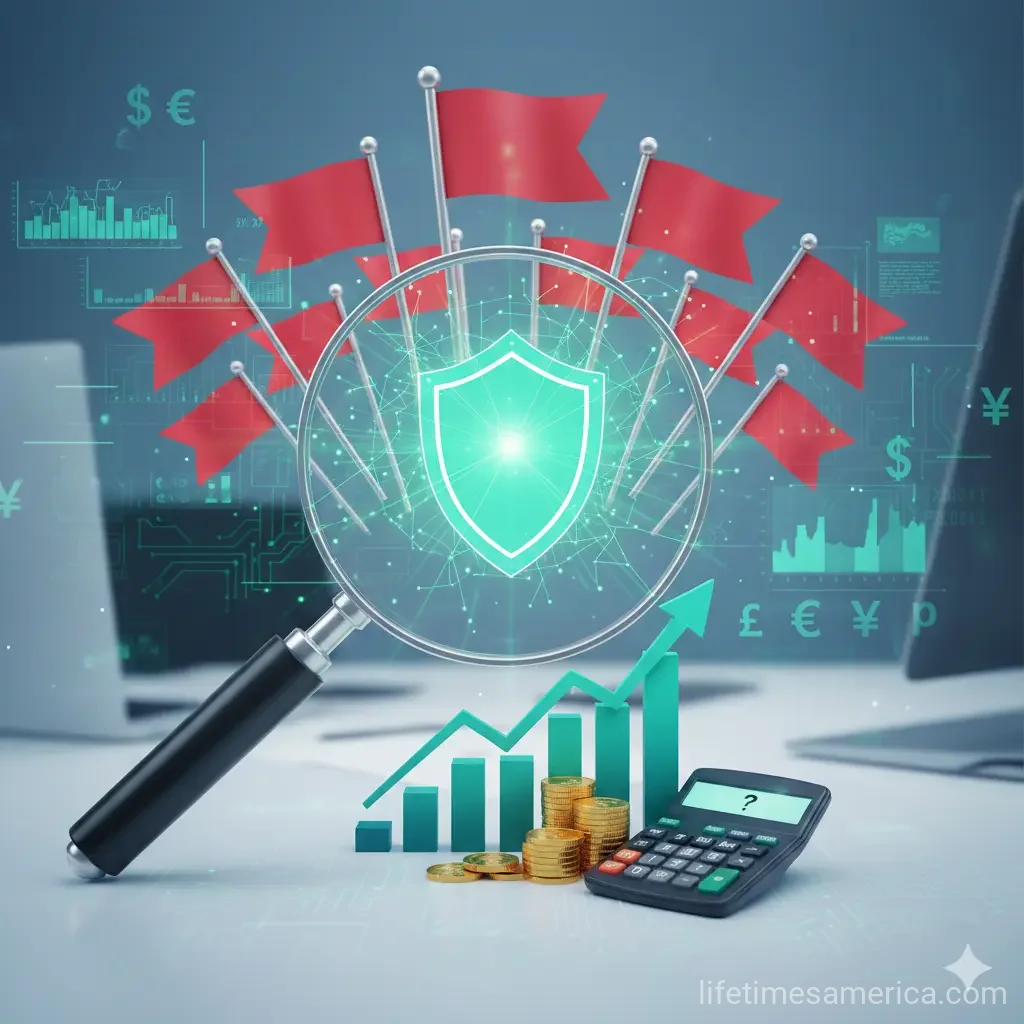
Imagine checking your bank account after a promising call from a "financial advisor" only to discover thousands gone in an instant. In 2026, financial scams cost Americans over $12.5 billion annually,...
The Lifetimes America editorial team curates, fact-checks, and updates guides on personal finance, property, health, immigration, legal, business, and lifestyle topics relevant to Lifetimes America readers. Articles are produced with AI assistance and reviewed by the editorial team before publication.
Imagine checking your bank account after a promising call from a "financial advisor" only to discover thousands gone in an instant. In 2026, financial scams cost Americans over $12.5 billion annually, with losses surging due to AI-driven tactics and sophisticated schemes.Spotting the red flags early can protect your hard-earned money, your retirement savings, and your family's future.
From fake investment opportunities to phony government relief calls, scammers are targeting everyone—from busy parents to retirees drawing from 401(k)s and Social Security. The Federal Trade Commission (FTC) reports impostor scams alone caused losses exceeding $445 million for seniors in recent years, and experts predict AI will make 2026 even riskier. This guide breaks down 10 red flags to watch for, with real-world U.S. examples, practical tips, and resources like FTC.gov and IRS.gov to stay safe.
Why Financial Scams Are Surging in 2026
Scammers exploit economic pressures, like 1.17 million layoffs in 2025, fueling desperate job hunts and vulnerability to fraud. AI tools create deepfake videos, phony testimonials, and personalized pitches, while tactics like "pig butchering" blend romance with investment lures. The FBI notes $16 billion in internet crime losses, often via wire transfers, gift cards, or crypto—methods hard to reverse.
As Americans, we're prime targets because of our access to robust financial systems like direct deposit from employers or Medicare reimbursements. But knowledge is power: the FTC urges verifying everything independently and reporting suspicions immediately at ReportFraud.ftc.gov.
10 Red Flags to Spot a Financial Scam
Here's your checklist of warning signs, drawn from 2026 trends reported by the FTC, FBI, and financial experts. If you see even one, pause and verify.
Guaranteed High Returns with Little or No Risk
Promises of 12%+ annual returns without market risks scream fraud. Legitimate investments, like stocks or bonds, always carry risk—no SEC-registered product guarantees outsized gains. In 2026, crypto "opportunities" and oil/gas partnerships in states like Texas often fabricate past performance or use cherry-picked data.
Action step: Ask for SEC filings via EDGAR database at sec.gov. If they dodge, walk away.
High-Pressure Tactics and Artificial Urgency
"Act now—spots are limited!" or countdown timers create panic to bypass your judgment. Scammers use this in investment pitches and fake refund scams, pressuring wire transfers before you think.
U.S. example: "Protective transfer" scams claim your Bank of America account is compromised, demanding immediate crypto payments.
Action step: Hang up and call your bank using a number from their official site.
Unregistered Investments or Missing Paperwork
Real securities must be registered with the SEC or qualify for exemptions, complete with Private Placement Memorandums (PPMs) and audited statements. Vague or absent docs signal violations.
Action step: Check broker-dealer status at BrokerCheck.finra.org or sec.gov.
Requests for Untraceable Payments
Wire transfers, gift cards, crypto, or apps like Zelle? Huge red flag—these are irreversible. The FTC flags these in 70% of top scams.
Example: Smishing texts demanding payment for a "family emergency" from an unknown number.
Action step: Insist on checks or credit cards for buyer protection.
Evasive or Vague Answers About Risks
Ask, "What's the worst-case scenario?" Legit advisors explain downsides clearly. Fraudsters deflect, get defensive, or lack references.
In 2026 AI-enhanced romance scams, "partners" push investments without risk details.
Action step: Demand written disclosure; consult a fiduciary advisor via NAPFA.org.
Too-Good-to-Be-True Job or Relief Offers
Bogus jobs requiring upfront fees or "tariff relief" sites stealing data proliferated in 2025, worsening in 2026 amid layoffs. Phony health insurance or unemployment aid scams target Medicare users.
Action step: Verify at usa.gov/jobs or irs.gov—never pay to apply.
Unsolicited Contact from "Government" or Banks
IRS, Social Security, or your bank won't demand immediate payment via gift cards or threaten arrest. Real agencies mail letters first.
2026 trend: Deepfake calls impersonating execs for Business Email Compromise (BEC).
Action step: Use official numbers from usa.gov or ssa.gov.
Requests for Personal Info Without Verification
Scammers fish for SSN, PINs, or 2FA codes. Fake refund scams say, "Send $100 to verify."
Action step: Enable credit freezes at Equifax, Experian, TransUnion via annualcreditreport.com.
Social Media or Romance Investment Pitches
"Pig butchering" builds trust online, then pushes fake crypto trades. FTC losses hit $5.7 billion.
Action step: Reverse-image search profiles; never invest via links they provide.
Last-Minute Payment Changes
Email "updates" to wire instructions for home buys or contractor pays? Classic BEC fraud costing billions.
Action step: Confirm by phone using pre-saved contacts; require dual approval for big sums.
Real-Life U.S. Examples of 2026 Scams
Take the BBB's 800+ complaints about fake tariff relief calls in late 2025—scammers posed as officials, harvesting data for spam and theft. Or AI "romance" scams where deepfakes mimic loved ones needing wire help. In Houston, oil/gas frauds lured business owners with unregistered private placements. Victims lost life savings, but quick reporters recovered funds via FTC mediation.
Practical Tips to Protect Your Finances
- Freeze your credit annually at the big three bureaus—free under FACTA.
- Use strong, unique passwords with a manager; enable 2FA everywhere.
- Monitor accounts daily via apps from trusted banks.
- Educate family: Share FTC's scam alerts at consumer.ftc.gov.
- For investments, stick to registered advisors; check at sec.gov or finra.org.
Stay One Step Ahead: Next Steps
Start today: Review accounts, freeze credit, and bookmark FTC.gov and IRS.gov. Teach your network these 10 red flags—because in 2026, vigilance is your best defense. If targeted, act fast: report, freeze assets, and consult pros. Your financial security is worth it.
Frequently Asked Questions
Sources & References
-
1
Securities Fraud in 2026 | Every Houston Business Owner Should Know These Red Flags — www.spencer-law.com
- 2
-
3
Biggest Fraud and Scams to Watch for in 2026 - AARP — www.aarp.org
-
4
Top Financial Scams to Look Out for in 2026 | FVCbank — www.fvcbank.com
- 5
-
6
Top 3 Fraud Predictions for 2026 - Regions Bank — doingmoretoday.com
-
7
Shocking New Scams of 2026 You NEED to Know About - YouTube — www.youtube.com
-
8
Fraud Watch 2026: How to Spot Scams Before They Hit Your Wallet — www.bankmw.com
- 9
Related Articles
How to Build a 6-Month Emergency Fund on a Minimum Wage
Building a six-month emergency fund on minimum wage might feel impossible, but it's more achievable than you think. With the right strategy and consistent effort, you can create a financial safety net...
The Best "Financial Literacy" Books Every American Should Read in 2026
Imagine standing at the edge of financial freedom, armed with knowledge that turns everyday dollars into lifelong security. In 2026, with inflation hovering around 2.5% and retirement accounts like 40...
How to Avoid "Lifestyle Creep" After a 2026 Promotion
Picture this: You've just landed that well-deserved promotion in 2026, your salary jumps by 20% or more, and suddenly you're eyeing a sleeker car, fancier dinners out, or that home upgrade you've alwa...
The Best Cashback Apps for Grocery Shopping in 2026
Imagine slashing your grocery bill by hundreds of dollars each year without clipping coupons or hunting for sales. In 2026, cashback apps make it simple for Americans to earn real money back on everyd...