What Is a Class Action Lawsuit and How Do You Get Your Share?

Imagine checking your mail and finding a notice about a lawsuit against a major bank or product maker—one that could put money back in your pocket without you lifting a finger. That's the power of cla...
The Lifetimes America editorial team curates, fact-checks, and updates guides on personal finance, property, health, immigration, legal, business, and lifestyle topics relevant to Lifetimes America readers. Articles are produced with AI assistance and reviewed by the editorial team before publication.
Imagine checking your mail and finding a notice about a lawsuit against a major bank or product maker—one that could put money back in your pocket without you lifting a finger. That's the power of class action lawsuits, a key tool for Americans harmed by the same wrongdoing. If you've ever wondered what a class action lawsuit is and how to get your share, this guide breaks it down step by step, with practical tips tailored for U.S. consumers.
What Is a Class Action Lawsuit?
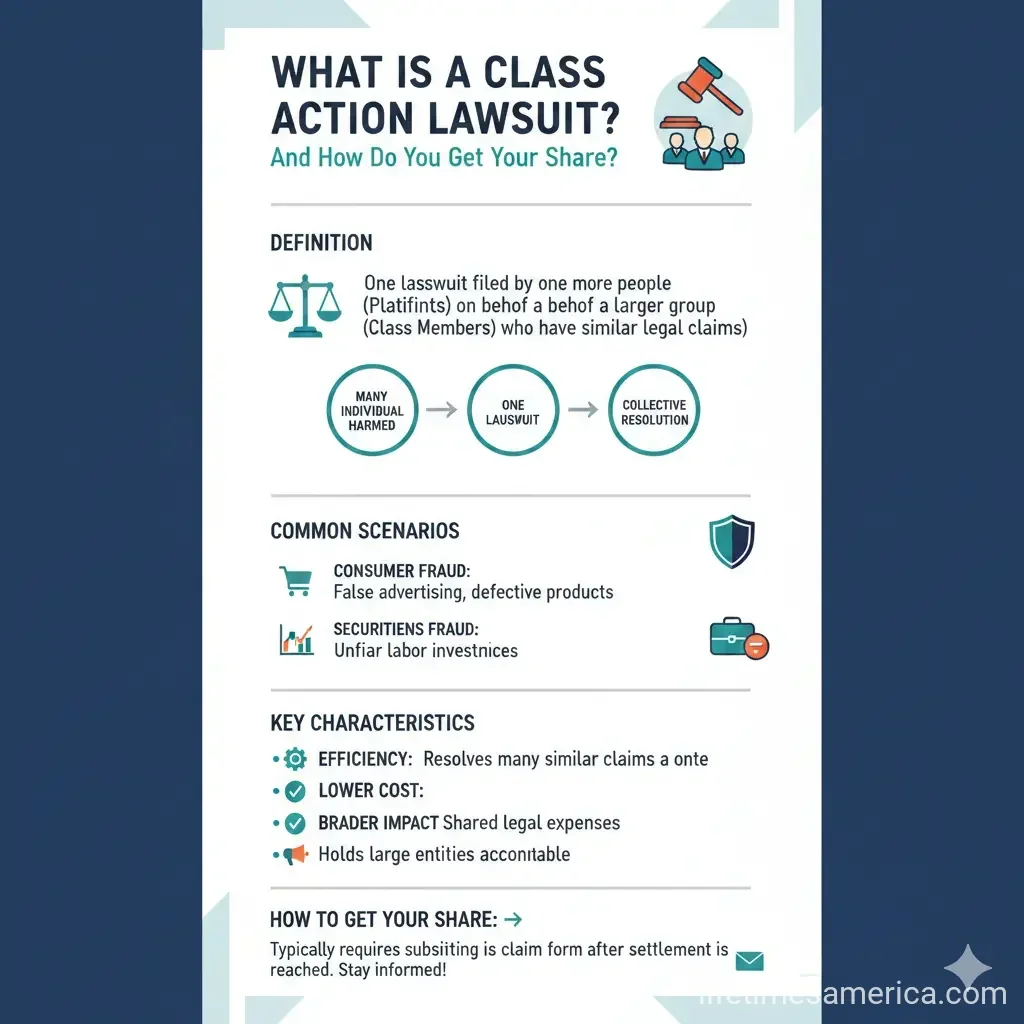
A class action lawsuit is a civil case where one or more plaintiffs sue on behalf of a larger group—called the "class"—who suffered similar harm from the same defendant. This setup lets hundreds or thousands of people combine their claims into one efficient lawsuit, rather than filing individually.
These suits tackle issues like defective products, consumer fraud, employment discrimination, or unfair debt practices—common in our Debt Solutions & Legal Finance world. For instance, if a company overcharges millions on credit card fees or sells faulty appliances, affected Americans can band together.
Why Class Actions Matter in the U.S.
Class actions promote access to justice by making small individual claims viable when pooled together. They save court time, reduce costs, and pressure companies to fix problems, benefiting public safety. In 2026, with rising consumer complaints about fintech and debt collectors, these lawsuits remain vital.
How Does a Class Action Lawsuit Work?
Class actions follow a structured process under U.S. federal and state rules, primarily Federal Rule of Civil Procedure (FRCP) 23. Here's the typical timeline:
- File the complaint: A class representative (lead plaintiff) files on behalf of the group.
- Class certification: The court approves the class if it meets key requirements—this is the biggest hurdle.
- Notify class members: Courts send notices via mail, email, ads, or websites.
- Litigate or settle: The case proceeds to trial or negotiation; most settle after certification.
- Distribute awards: Approved settlements pay out shares to eligible members.
Key Requirements for Certification
To certify a class under FRCP 23(a), it must show:
- Numerosity: Too many members for individual suits.
- Commonality: Shared legal or factual questions.
- Typicality: Representatives' claims match the class's.
- Adequacy: Representatives and lawyers can fairly lead.
Plus, it fits a FRCP 23(b) category, like cases where individual suits risk inconsistent results.
Real-World U.S. Examples of Class Actions
Class actions hit big targets. In a famous case, Volkswagen settled for $15 billion over emissions cheating, paying millions of owners. More relevant to debt: Equifax's 2017 data breach led to a $425 million settlement for affected Americans filing claims.
In product liability, faulty Roundup weed killer sparked multibillion-dollar suits for cancer victims. Employment cases, like Walmart's gender pay discrimination (Dukes v. Walmart), highlighted certification challenges but advanced worker rights.
For debt solutions, think suits against payday lenders for predatory fees or banks for hidden overdraft charges—recovering billions for consumers since the 2008 crisis.
How to Know If You're in a Class Action
You might be included automatically if you fit the class definition, like "all U.S. customers who bought X product from 2023-2026." Notices must be clear, stating the claims, opt-out rights, and settlement effects per FRCP 23.
Check your mail, email, or sites like ClassAction.org. In 2026, digital notices via apps and social media are common for tech-related suits.
How Do You Get Your Share? Step-by-Step Guide
Getting paid is straightforward if eligible. Follow these actionable steps:
- Review the notice: It details claims, deadlines, and how to claim. Don't ignore it—deadlines are strict.
- Check eligibility: Match your situation to the class (e.g., bought the product, held the stock).
- Submit a claim form: Online or mail; provide proof like receipts if needed. Many are no-proof required.
- Decide on opt-out: Opt out by deadline if you want to sue separately (rare for small claims).
- Wait for approval: Courts review settlements; payouts follow, often months later.
- Cash your check or deposit: Shares vary—$5 to thousands—after attorney fees (typically 25-33%).
Pro tip: Track open settlements at TopClassActions.com or the FTC's site for consumer cases. For debt-related suits, monitor CFPB.gov alerts.
Common Pitfalls to Avoid
- Missing deadlines—mark your calendar!
- Ignoring tax implications: Payouts may be taxable; report to IRS if over $600.
- Assuming inclusion: Always file a claim.
Benefits and Drawbacks of Class Actions
Benefits:
- Low or no cost to join.
- Efficient for small claims.
- Forces corporate accountability.
Drawbacks:
- Small individual payouts.
- Long waits (1-5 years).
- Binding judgment unless opted out.
Frequently Asked Questions
Related Articles

How to Handle Medical Debt in the USA
Imagine opening your mailbox to find a hospital bill for $5,000 after what you thought was a routine visit. You're not alone—millions of Americans face this reality every year, with medical debt total...

Debt Consolidation Loans: How They Work and When to Use One
Struggling with multiple credit card bills piling up each month? You're not alone—millions of Americans face high-interest debt that feels impossible to tackle. A debt consolidation loan could be your...

Workers Compensation Benefits: What You Are Financially Entitled To
If you've been injured at work, understanding your financial entitlements under workers' compensation can make a real difference in your recovery and financial stability. Workers' compensation benefit...

What Is a Structured Settlement and Can You Sell It for Cash?
Imagine winning a hard-fought personal injury lawsuit only to face a tough choice: take a lump sum that could vanish quickly or opt for steady payments that last a lifetime. That's the world of struct...