The Beginner’s Guide to Bitcoin and Ethereum: A 2026 Outlook
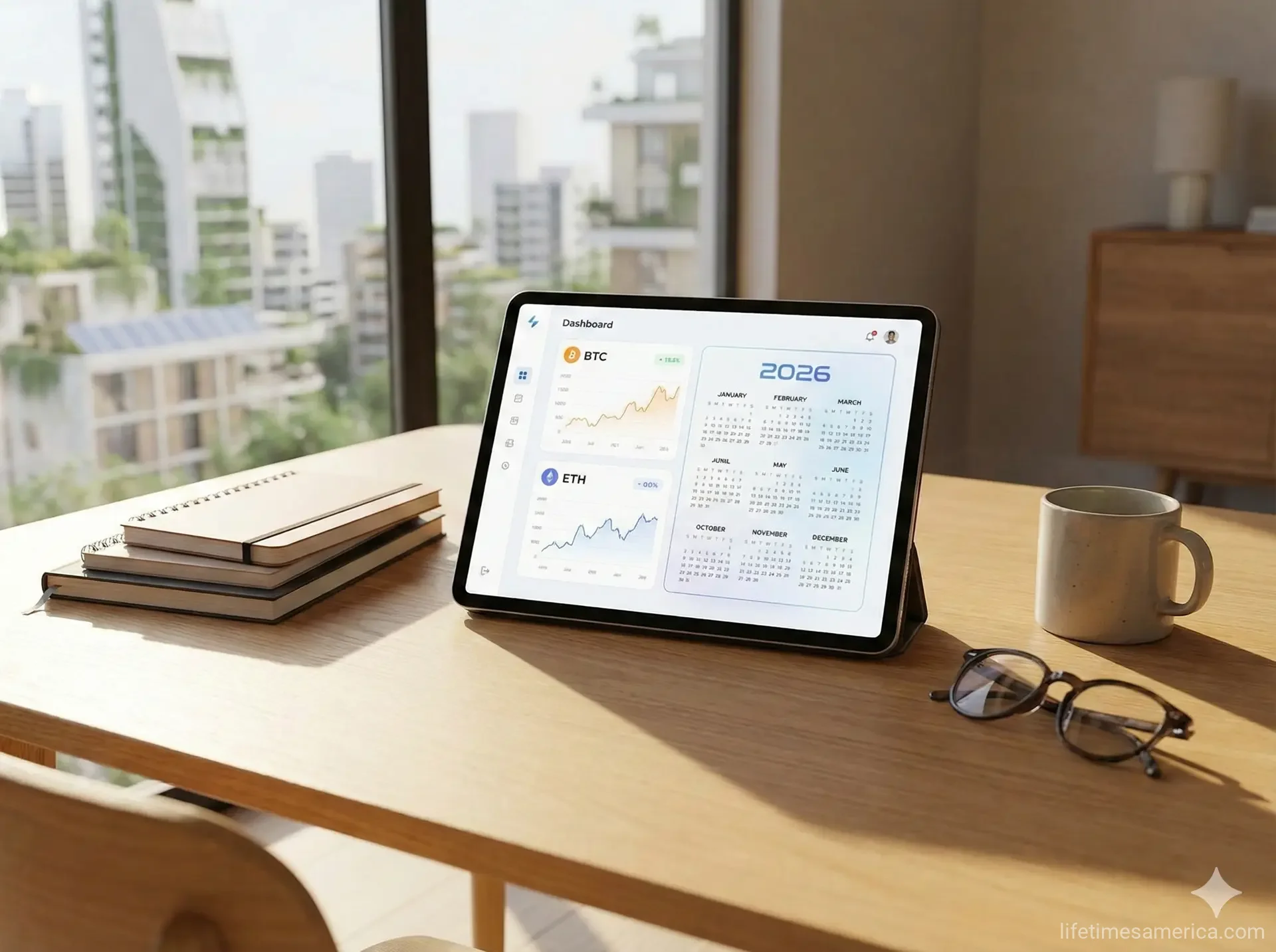
Imagine waking up in 2026 to find your retirement savings have grown not just through traditional stocks or bonds, but thanks to a smart allocation in Bitcoin and Ethereum. As Americans navigate infla...
The Lifetimes America editorial team curates, fact-checks, and updates guides on personal finance, property, health, immigration, legal, business, and lifestyle topics relevant to Lifetimes America readers. Articles are produced with AI assistance and reviewed by the editorial team before publication.
Imagine waking up in 2026 to find your retirement savings have grown not just through traditional stocks or bonds, but thanks to a smart allocation in Bitcoin and Ethereum. As Americans navigate inflation concerns and seek alternatives to the stock market, these digital assets offer a compelling way to diversify your portfolio right from your smartphone.
Whether you're funding a 401(k) or building wealth outside employer plans, understanding Bitcoin and Ethereum is key. This beginner's guide breaks it down simply, with practical steps tailored for U.S. investors, including tax tips from the IRS and secure buying options.
What is Bitcoin? The Digital Gold Standard
Bitcoin (BTC) is the original cryptocurrency, created in 2009 as a decentralized digital currency. It operates on a blockchain—a secure, public ledger that records transactions without banks or governments in control. Think of it as digital gold: scarce, with a fixed supply of 21 million coins, over 19 million already in circulation.
For Americans, Bitcoin serves as a hedge against inflation. With the U.S. dollar facing ongoing pressures, many investors use it as a store of value, much like gold in your IRA. In 2026, Bitcoin ETFs like the iShares Bitcoin Trust (IBIT) and Fidelity Wise Origin Bitcoin Fund (FBTC) make it easy to invest through your brokerage account—no crypto wallet needed.
Why Bitcoin Appeals to Beginners in 2026
- Proven Track Record: Bitcoin has survived market cycles, making it the most conservative crypto choice.
- U.S. Regulation: The SEC approves Bitcoin ETFs, providing investor protections similar to stocks.
- Accessibility: Buy fractions of a Bitcoin (satoshis) starting with just $10.
Experts recommend Bitcoin as the core of a beginner's portfolio—up to 70-80% allocation for stability.
What is Ethereum? The Backbone of Web3
Ethereum (ETH) launched in 2015 and powers smart contracts—self-executing code that automates agreements without middlemen. Unlike Bitcoin's focus on payments, Ethereum supports decentralized finance (DeFi), NFTs, and tokenized real-world assets.
In 2026, Ethereum's shift to Proof-of-Stake (post-Merge) makes it deflationary: EIP-1559 burns fees, reducing supply over time. No hard cap like Bitcoin, but this creates scarcity. U.S. regulators eye Ethereum for tokenizing trillions in stocks—currently $670 million on-chain vs. $67 trillion total markets.
Ethereum's Edge for American Investors
- Growth Potential: Powers DeFi platforms like Uniswap and Layer 2s like Base for faster, cheaper transactions.
- Staking Rewards: Earn yields by locking ETH, similar to a high-yield savings account (check platforms like Coinbase).
- Future-Proof: Analysts predict ETH undervalued as tokenization booms.
For risk-tolerant beginners, tilt your portfolio toward more ETH for higher returns.
Bitcoin vs. Ethereum: Key Differences for 2026
Choosing between them? Use this comparison to decide your mix:
| Feature | Bitcoin | Ethereum |
|---|---|---|
| Primary Use | Store of value (digital gold) | Smart contracts, DeFi, apps |
| Supply | 21 million cap | No cap, but deflationary burns |
| Risk Level | Lower volatility | Higher growth potential |
| U.S. Access | ETFs (IBIT, FBTC) | Spot ETFs, staking via exchanges |
| 2026 Outlook | Conservative anchor | Tokenization leader |
A balanced portfolio: 50-70% Bitcoin for safety, 30-50% Ethereum for upside.
How to Buy Bitcoin and Ethereum Safely in the U.S. (2026 Steps)
Start small—only invest what you can afford to lose. Here's your step-by-step:
- Choose a Reputable Exchange: Coinbase, Kraken, or Binance.US for Americans. They're compliant with U.S. laws like KYC (Know Your Customer).
- Create and Verify Account: Use your email, phone, and ID (SSN for tax reporting). Enable 2FA security.
- Fund Your Account: Link your bank via ACH (free, 1-3 days) or use debit card (fees apply).
- Buy Crypto: Search BTC or ETH, place a market order. Dollar-cost average: buy fixed amounts weekly.
- Secure Storage: Transfer to a wallet. Hot wallets (MetaMask, Trust Wallet) for convenience; cold wallets (Ledger) for long-term.
Pro Tip: For simplicity, use Bitcoin ETFs in your Vanguard or Fidelity account—no wallet hassles.
U.S. Tax Rules You Must Know
The IRS treats crypto as property. Track every trade:
- Selling at profit? Capital gains tax (0-37% based on income/holding period).
- Staking rewards? Taxed as income.
- Use tools like CoinTracker for Form 8949 reporting. Consult a CPA familiar with crypto.
Resources: IRS.gov crypto FAQ and Publication 544.
Investment Strategies for Beginners in 2026
Dollar-cost averaging beats timing the market. Example: Invest $200/month split 60/40 BTC/ETH.
Sample $10,000 Portfolio:
- $6,000 Bitcoin (safe base)
- $2,000 Ethereum (growth)
- $1,500 Stablecoins (USDT for flexibility)
- $500 Altcoins (research carefully)
Avoid hype—91% of altcoins dropped 50-70% in 2025. Stick to BTC/ETH first. Practice on demo accounts.
Wallets and Security Best Practices
- Hot Wallets: MetaMask (ETH-focused), Phantom (multi-chain).
- Cold Wallets: Hardware like Ledger or Trezor—offline protection.
- Never share seed phrases. Beware phishing.
2026 Outlook: What to Expect
Bitcoin solidifies as digital gold amid economic uncertainty. Ethereum leads tokenization, with Layer 2s slashing fees. Watch altcoin/BTC ratio for rallies. U.S. adoption grows via ETFs and clearer regs.
Ready to Start? Your Next Steps
1. Open a Coinbase account today—claim any signup bonus.
2. Invest $100 in BTC/ETH to learn the ropes.
3. Track via apps like Blockfolio.
4. Review quarterly; rebalance annually.
5. Consult a financial advisor for your 401(k)/IRA integration.
Crypto isn't get-rich-quick—it's long-term wealth building. With discipline, Bitcoin and Ethereum can power your American dream in 2026 and beyond.
Frequently Asked Questions
Sources & References
-
1
A Beginner's Guide: How to Buy Ethereum Safely — atomicwallet.io
-
2
Which cryptocurrency should a beginner invest in in 2026 — www.binance.com
-
3
How Can I Learn Crypto Trading in 2026? Beginner's Guide — westafricatradehub.com
-
4
How to Invest $10,000 in Crypto for 2026: Analyst's Guide — www.tradingview.com
-
5
How I'd Start Crypto in 2026: Modern Step-By-Step Guide — www.youtube.com
-
6
How To Buy Bitcoin For Beginners (2026 Guide) — www.youtube.com
-
7
Bitcoin vs. Ethereum 2026 ▷ Wo gibt´s mehr Potenzial? — www.n-tv.de
Related Articles

The Best "No-Fee" Brokerages for Fractional Shares in 2026
Imagine owning a slice of Amazon or Tesla without needing thousands of dollars upfront. That's the power of fractional shares, letting everyday Americans build diversified portfolios on any budget in...
The Best "Micro-Investing" Apps for Spare Change in 2026
Imagine turning your daily coffee run's spare change into a growing investment portfolio without lifting a finger. In 2026, micro-investing apps make it easier than ever for Americans to build wealth...
How to Hedge Against 2.8% Inflation: The Best Assets for 2026
Inflation at 2.8% might not grab headlines like the 9% peaks of a few years back, but it's still quietly eroding your purchasing power—think higher grocery bills, pricier gas, and rent that just keeps...
How to Use "Series I Bonds" as a 2026 Inflation Hedge
If you're worried about inflation eating away at your savings, Series I bonds offer a straightforward way to protect your purchasing power while earning a competitive return backed by the U.S. governm...