How to Rent an Apartment with Bad Credit: 5 Proven Strategies

Getting rejected for an apartment because of bad credit feels unfair—but here's the good news: it doesn't have to be a deal-breaker. Thousands of Americans rent apartments every year despite having le...
The Lifetimes America editorial team curates, fact-checks, and updates guides on personal finance, property, health, immigration, legal, business, and lifestyle topics relevant to Lifetimes America readers. Articles are produced with AI assistance and reviewed by the editorial team before publication.
Getting rejected for an apartment because of bad credit feels unfair—but here's the good news: it doesn't have to be a deal-breaker. Thousands of Americans rent apartments every year despite having less-than-perfect credit scores. The key is knowing the right strategies to show landlords you're a reliable tenant, even if your credit history tells a different story.
Whether you're recovering from past financial mistakes, building credit from scratch, or dealing with unexpected circumstances, you have options. This guide walks you through five proven strategies that'll help you secure an apartment, plus practical tips for strengthening your application.
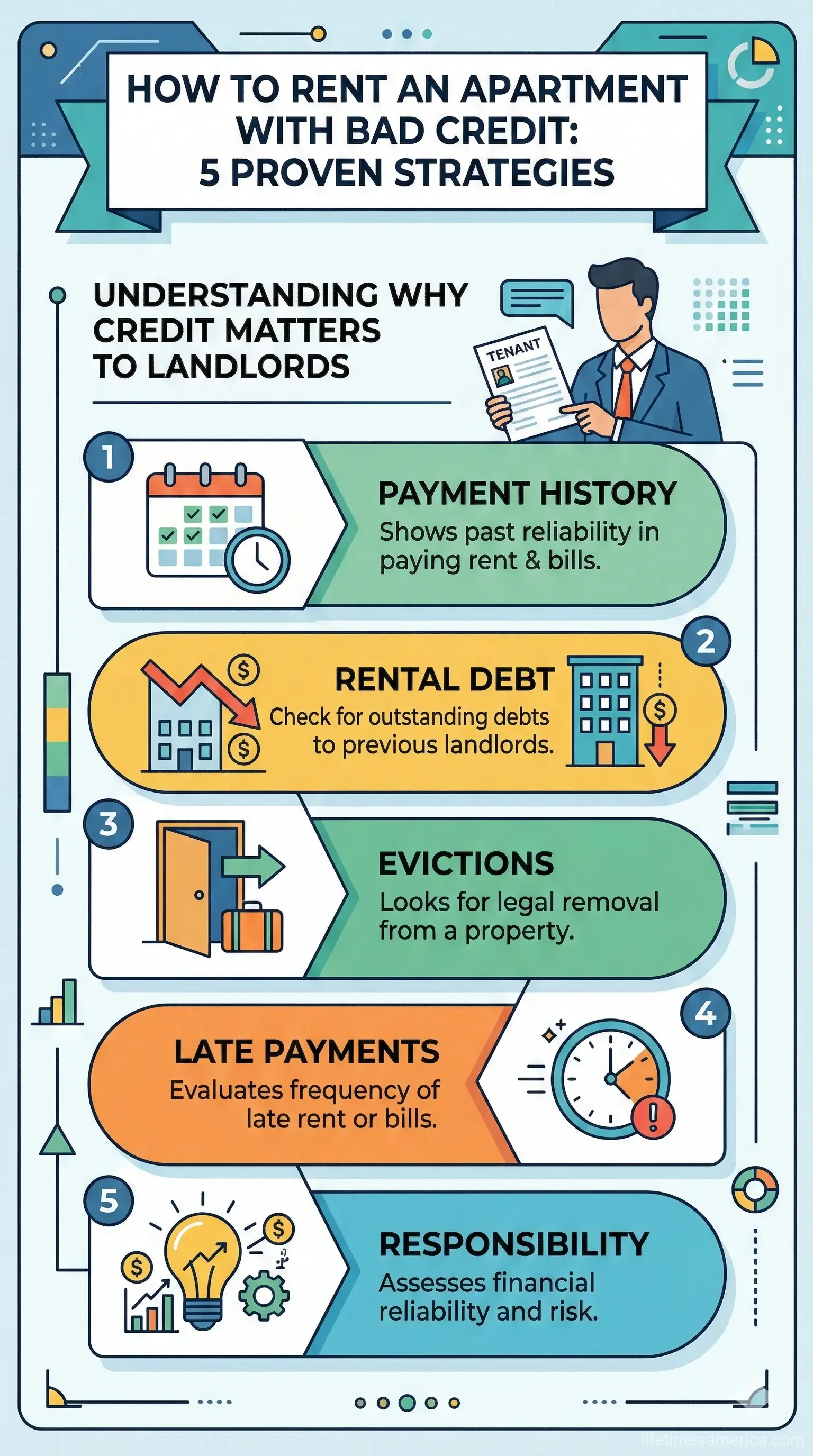
Understanding Why Credit Matters to Landlords
Before diving into solutions, it helps to understand why landlords care about credit in the first place. When a landlord considers renting to you, they're assessing risk. If you default on rent, it directly impacts their income and forces them into expensive eviction proceedings. Your credit score signals your payment history and financial reliability—but it's not the only factor they consider.
Here's what landlords typically check for:
- Low credit score
- History of late payments
- Payment gaps or missing months
- High debt-to-income ratio
- Delinquent accounts or collections
- Derogatory marks like auto repossessions
The good news? Landlords care about both credit and income—and steady income can often outweigh a lower credit score. That's where your leverage lies.
Strategy 1: Prove Your Income and Financial Stability
One of the most effective ways to overcome bad credit is demonstrating that you have the financial means to pay rent consistently. Landlords want confidence that you'll make rent payments on time, and a steady paycheck speaks louder than past mistakes.
How to Show Proof of Income
Gather documentation that proves your financial stability:
- Recent pay stubs (last 2-3 months)
- Bank statements showing regular deposits and positive balance
- Letter from your employer confirming employment and salary
- Tax returns (if self-employed or freelance)
- Offer letter if you're starting a new job soon
Landlords typically want to see that your monthly income is at least 2.5 to 3 times your monthly rent. If you earn $3,000 per month, for example, you should target apartments renting for $1,000 or less. This shows you're not stretching your budget too thin.
Strategy 2: Offer a Larger Security Deposit
Money talks. If your credit score won't reassure a landlord, offering additional financial commitment will. A larger security deposit demonstrates that you're serious about the rental and invested in maintaining the property.
How Much Should You Offer?
Instead of the standard one month's rent as a security deposit, consider offering:
- Two months' rent upfront
- First month, last month, and security deposit paid in advance
- Additional deposit beyond standard requirements
This approach shows financial responsibility and gives landlords peace of mind. You'll typically get this money back at the end of your lease (minus any legitimate deductions for damage), so think of it as a temporary commitment rather than lost money.
Strategy 3: Find a Co-Signer or Guarantor
A co-signer is someone (usually a family member or trusted friend) who agrees to be responsible for rent if you can't pay. Having a co-signer with good credit can dramatically improve your chances of approval.
What a Co-Signer Does
Your co-signer essentially vouches for you financially. They're legally responsible if you default on rent, which makes landlords much more comfortable taking a chance on you. The co-signer doesn't live in the apartment—they just provide their creditworthiness as backing.
Finding a Co-Signer
Potential co-signers might include:
- Parents or family members
- Close friends with established credit
- Mentors or professional references
Be transparent about what you're asking. Your co-signer should understand that they're taking on financial responsibility and should review the lease before signing.
Strategy 4: Target Landlords and Properties Willing to Work With Bad Credit
Not all rental options require credit checks or have strict credit score minimums. Knowing where to look dramatically increases your chances of approval.
Second-Chance Rental Properties
Some apartment communities specialize in renting to tenants with less-than-perfect credit. These "second-chance" properties may have stricter terms (higher deposits, shorter leases), but they're designed specifically for your situation.
Private Landlords vs. Property Management Companies
Private landlords and small property owners are typically more flexible than large management companies. They're less likely to follow rigid checklists and more willing to consider your whole application rather than just your credit score.
Where to find private landlords:
- Craigslist and local rental sites
- Facebook community groups
- Neighborhood bulletin boards
- Local property management companies (smaller ones)
Other Flexible Rental Options
Consider these alternatives if traditional apartments aren't working out:
- Month-to-month rentals: Landlords may accept upfront payment or references instead of credit checks
- Subletting or roommate arrangements: Sharing with someone who has good credit can help you qualify
- Income-based or government-subsidized housing: These focus on income verification rather than credit scores
- Student housing: Many prioritize enrollment and income over credit
Strategy 5: Be Honest and Transparent About Your Credit
Landlords respect honesty. If your credit took a hit because of a specific event (job loss, medical emergency, divorce), explain it directly and show what you've learned.
How to Address Bad Credit in Your Application
Include a brief, honest explanation that shows:
- What happened: "I lost my job in 2024 and missed several payments"
- What you've done: "I've since been employed steadily for 18 months and haven't missed a payment"
- Your commitment: "I'm working to rebuild my credit and take my rental obligations seriously"
This narrative approach humanizes your application and shows you're not a chronic deadbeat—you're someone who faced challenges and is moving forward.
Additional Steps to Strengthen Your Application
Provide References
Letters from previous landlords, employers, or other credible references can offset credit concerns. Previous landlords are especially valuable—they can confirm you paid rent on time and maintained the property well.
Know Your Credit Score
Most landlords look for a minimum credit score between 620 and 650, though there's no nationwide requirement. Knowing your score helps you target appropriate properties and understand where you stand. You can check your credit for free at annualcreditreport.com.
Consider Negotiating Lease Terms
If a landlord is hesitant about your credit, consider negotiating:
- A shorter lease term (6 months instead of 12) to reduce their risk
- Slightly higher monthly rent in exchange for overlooking credit issues
- Automatic rent payment from your bank account to demonstrate reliability
Moving Forward: Your Next Steps
Renting with bad credit requires preparation and persistence, but it's absolutely possible. Start by gathering your financial documentation, determining which strategy fits your situation best, and identifying properties or landlords likely to work with you. Remember that every landlord is different—what one rejects, another may approve.
Focus on what you can control: demonstrating steady income, offering financial incentives, and presenting yourself as responsible and honest. Your credit score is just one data point. Your reliability, communication, and willingness to meet landlords halfway matter just as much.
Take action this week: check your credit score, gather your pay stubs and references, and start researching apartments from private landlords in your target area. With the right approach, you'll find a place to call home.
Frequently Asked Questions
Sources & References
-
1
Can You Get an Apartment With Bad (or No) Credit? — Advance America — www.advanceamerica.net
-
2
How To Get An Apartment With Bad Credit — Bankrate — www.bankrate.com
-
3
How to Rent an Apartment with Bad Credit (Yes, It's Possible) — Apartments.com — www.apartments.com
- 4
-
5
How to Get an Apartment With 'Bad' Credit — American Express — www.americanexpress.com
-
6
What Credit Score Do You Need to Rent Apartment? (600–700+) — LeaseRunner — www.leaserunner.com
-
7
How to Get an Apartment with Bad Credit — Zillow — www.zillow.com