The Cost of Living in Rural America vs. Major Cities
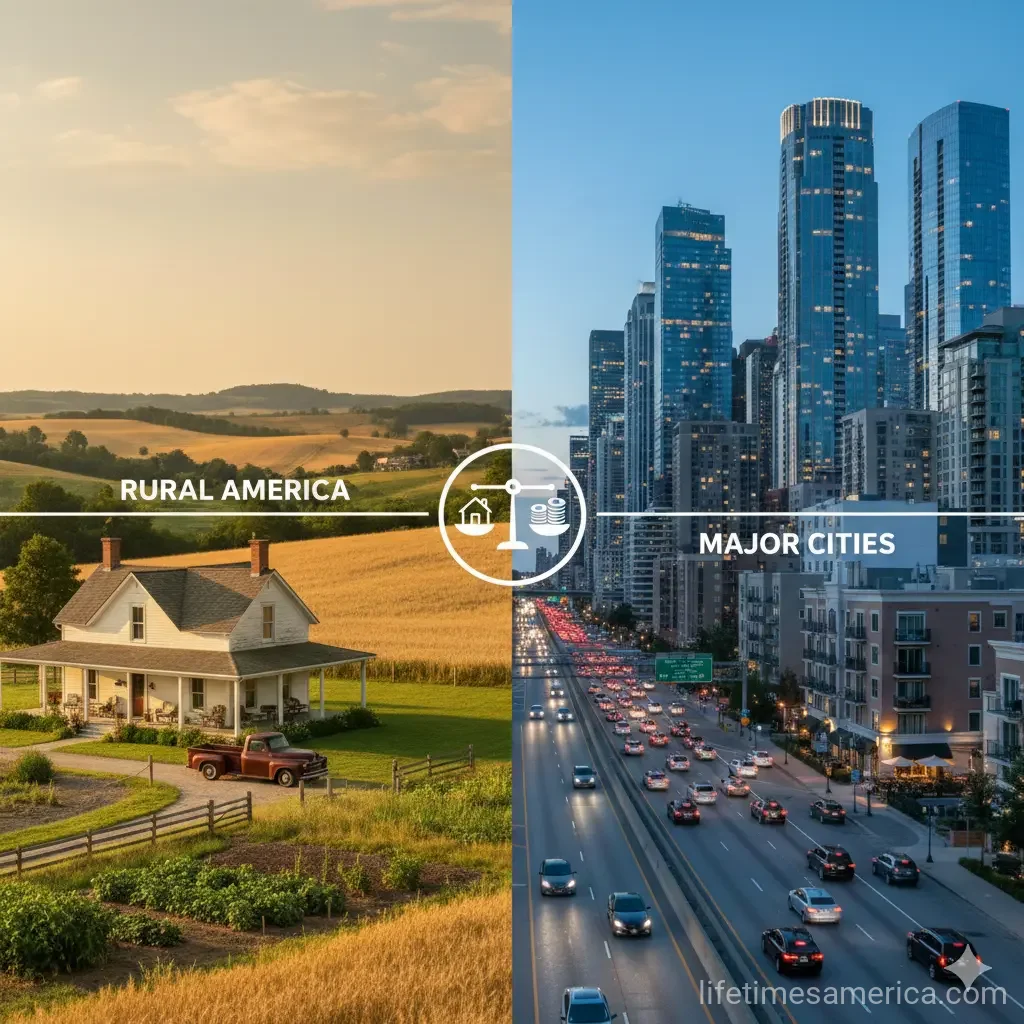
The cost of living in America varies dramatically depending on where you choose to settle. While major cities like San Francisco and New York command premium prices, rural communities and smaller metr...
The Lifetimes America editorial team curates, fact-checks, and updates guides on personal finance, property, health, immigration, legal, business, and lifestyle topics relevant to Lifetimes America readers. Articles are produced with AI assistance and reviewed by the editorial team before publication.
The cost of living in America varies dramatically depending on where you choose to settle. While major cities like San Francisco and New York command premium prices, rural communities and smaller metros offer significantly lower expenses—sometimes at less than half the cost. Understanding these differences is crucial if you're considering a move, planning retirement, or simply trying to stretch your budget further.
The Price Gap: Rural vs. Urban America
The disparity between high-cost and low-cost communities is striking. Paradise Valley, Arizona, ranks as the most expensive city in the United States with a cost-of-living index of 223, a median home price of $3.27 million, and average rent of $3,300 per month. In contrast, Helena-West Helena, Arkansas, was ranked the most affordable city with a cost-of-living index of just 65, a median home price of $41,400, and rent averaging around $600 per month.
For single adults, the income requirements tell an even more compelling story. Most affordable cities in the Midwest and South require $85,000 to $105,000 annually (Indianapolis at $85,197, Memphis at $87,200, and Omaha at $89,500), while expensive coastal metros demand $150,000 or more (San Jose at $163,045 and San Francisco at $148,441). For families of four, affordable cities need between $180,000 and $230,000, while coastal cities require more than $400,000.
Breaking Down the Costs
Housing Expenses
Pittsburgh, Pennsylvania, stands out as the most affordable big city in 2026, with a median home price of $250,000—more than $150,000 less than many comparable metros. When measuring housing affordability relative to income, El Paso, Texas has the lowest housing cost burden at 20.35% of median income (median monthly cost of $1,016 with median income of $59,932). Louisville, Kentucky, and Albuquerque, New Mexico, follow closely at 20.38%, while Mesa, Arizona, comes in at 20.54%.
The national median household income of $83,730 is enough to live comfortably in most affordable cities but falls short in expensive coastal areas.
Groceries and Daily Essentials
Food costs vary significantly by location. In high-cost cities like Ketchikan, Alaska, residents pay much more than the national average for groceries with a grocery cost index of 138, while families in cities like Gaffney, South Carolina, spend nearly half as much.
Healthcare Costs
Healthcare expenses follow similar patterns. In high-cost cities like Ketchikan, Alaska, and Mercer Island, Washington, the price of a doctor's visit or prescription can be more than twice as high as in places such as Gaffney, South Carolina, or Bluefield, West Virginia, where healthcare costs fall well below the national average with index scores in the 65-80 range.
Utilities and Transportation
Utility bills and transportation costs are significantly higher in California, Colorado, and Hawaii compared to affordable communities across the South and Midwest. This difference can add hundreds of dollars to your monthly budget depending on where you live.
Who Can Actually Afford to Live Where?
Recent data shows a clear divide in spending patterns based on income level. The Bank of America Institute highlights that much of the growth in consumer spending in 2025 has been driven by higher-income households, while lower-income consumers are spending less, particularly in categories like travel, dining, and entertainment. Lower-income households are increasingly allocating a larger share of their budgets to essentials like groceries, while higher-income consumers continue to spend on restaurants, experiences, and non-essentials.
This reality underscores why location choice matters so much. A family earning $85,000 might live comfortably in Indianapolis but struggle in San Francisco.
The Midwest and South: Affordable Living Hotspots
The data consistently shows that the Midwest and South offer the best value for Americans seeking affordable living. States like Arkansas, Oklahoma, Kansas, and Mississippi provide lower housing costs, reduced state income taxes in some cases, and generally lower expenses across groceries, utilities, and healthcare.
Many Americans are responding to this reality. People are increasingly moving from the outer parts of the United States into the Midwest, seeking relief from rising costs in coastal areas.
What About Basic Needs?
Understanding what you actually need to earn is essential. A basic needs budget for a family of four where both parents work includes approximately $32,000 for childcare, $23,000 for housing, $15,000 for food, $15,000 for transportation, $11,000 for healthcare, and $22,000 for other essential expenses. This totals $118,000 annually—well above the federal poverty line of $32,150 for a family of four.
The federal poverty line, established at $32,150 for a family of four and $15,650 for an individual, doesn't reflect the true cost of living in most American communities, which is why many families earning $80,000 feel they're barely scraping by.
Making Your Decision: Key Considerations
When evaluating where to live, consider these factors:
- Housing costs as a percentage of your income (aim for under 28-30%)
- State income tax rates and overall tax burden
- Job market and employment opportunities in your field
- Quality of life factors including schools, healthcare access, and community amenities
- Cost of essential services like childcare and transportation specific to that area
- Your lifestyle preferences and whether rural or urban living suits you
Making Your Move
If you're considering relocating to reduce your cost of living, start by researching specific cities rather than just states. Use cost-of-living calculators to compare your current expenses with potential new locations. Calculate your required income based on actual job opportunities in your field, not just national averages. Visit potential communities during different seasons to get a feel for the lifestyle and climate.
Remember that the cheapest place to live isn't always the best choice if it means sacrificing job opportunities, family connections, or quality of life. The goal is finding the location that offers the best balance of affordability, opportunity, and personal satisfaction for your unique situation.
Frequently Asked Questions
Sources & References
-
1
The 30 Cheapest Places to Live in the US in 2026 - AmeriSave — www.amerisave.com
-
2
Coupons.com Reveals the Most and Least Expensive US Cities to Live in for 2026 - Business Insider — markets.businessinsider.com
-
3
Cheapest States to Live In 2025 - North American — www.northamerican.com
-
4
The Cost of Living in 2026 Is WORSE Than People Realize - YouTube — www.youtube.com
Related Articles

Moving from California to Texas: The Ultimate 2026 Relocation Guide
Imagine trading California's coastal fog and sky-high rents for Texas's wide-open spaces, barbecue smoke, and no state income tax. Every year, tens of thousands of Californians make this bold move, dr...

The Cost of Living in New York City vs. Miami in 2026
Planning a move to a vibrant coastal city? Whether you're dreaming of Manhattan's skyline or Miami's beaches, understanding the cost of living in New York City vs. Miami in 2026 is key to making a sma...

The 5 Most Affordable Cities in the USA for Remote Workers
Imagine ditching the high rents of coastal cities while keeping your remote job's flexibility and salary. In 2026, affordable U.S. cities with reliable internet, coworking spaces, and vibrant lifestyl...

The Ultimate Checklist for Moving to a New State
Moving to a new state opens up exciting opportunities for your career, family, or lifestyle, but it can feel overwhelming without a clear plan. This ultimate checklist breaks down every step into mana...