The Ultimate Checklist for Moving to a New State
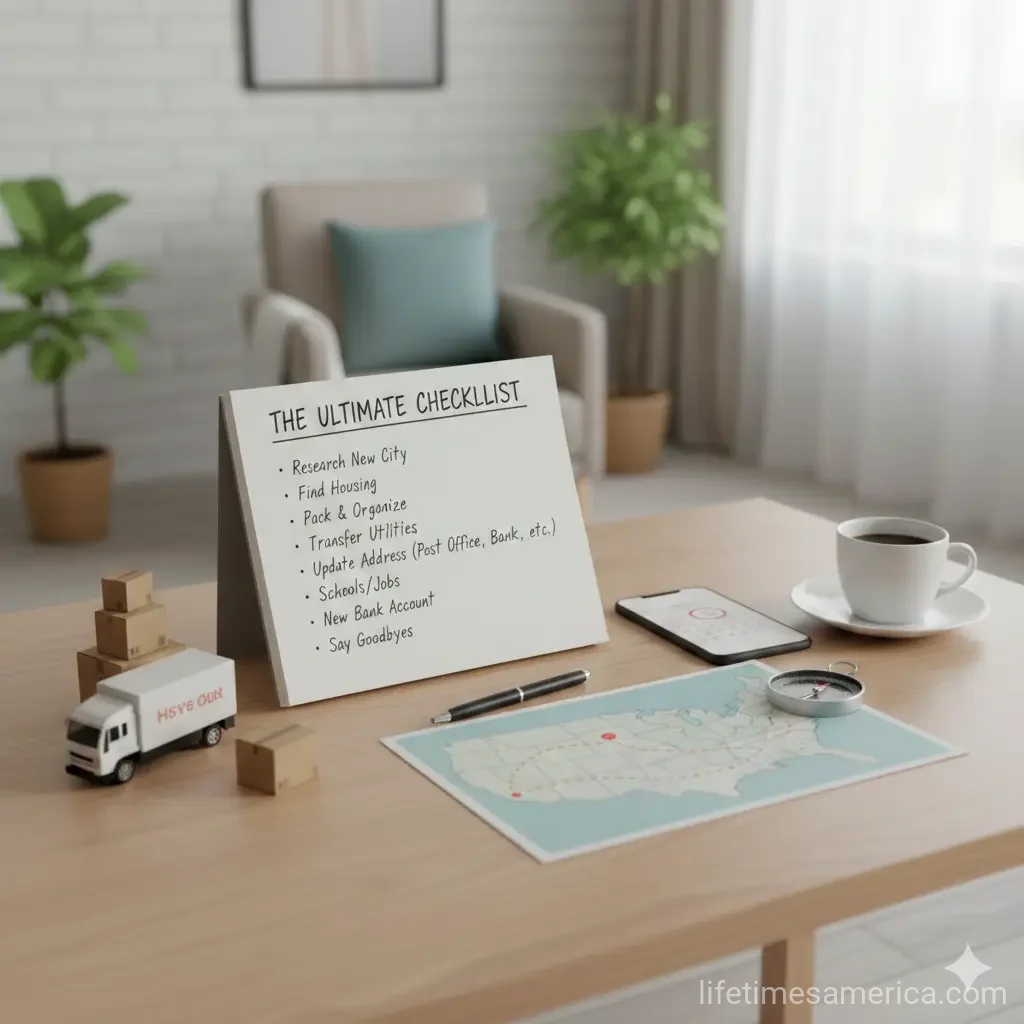
Moving to a new state opens up exciting opportunities for your career, family, or lifestyle, but it can feel overwhelming without a clear plan. This ultimate checklist breaks down every step into mana...
The Lifetimes America editorial team curates, fact-checks, and updates guides on personal finance, property, health, immigration, legal, business, and lifestyle topics relevant to Lifetimes America readers. Articles are produced with AI assistance and reviewed by the editorial team before publication.
Moving to a new state opens up exciting opportunities for your career, family, or lifestyle, but it can feel overwhelming without a clear plan. This ultimate checklist breaks down every step into manageable tasks, tailored for Americans navigating interstate relocations in 2026, so you can focus on building your new life.
8-12 Weeks Before the Move: Plan and Research
Start early to avoid last-minute stress. The first phase focuses on big-picture decisions that set the foundation for a smooth transition.
Research Your New State and Neighborhood
Compare **cost of living** between your current and new locations, including housing, groceries, utilities, and taxes. For example, states like Texas have no state income tax, while California has higher rates up to 13.3% in 2026. Dive into job markets, schools, and local vibes—tools like city-data.com or BestPlaces.net help here.
Create a Detailed Moving Budget
Outline all costs: professional movers (average $4,000-$6,000 for a 2-bedroom cross-country move in 2026), gas, tolls, packing supplies, and deposits for utilities. Add 10-20% buffer for surprises like interstate tolls or hotel stays. Use online calculators from sites like Move.org for personalized estimates.
Decide on Moving Method and Book Services
Check the Federal Motor Carrier Safety Administration (FMCSA) website to verify licensed movers and avoid scams. Book pros 8 weeks out, or reserve a truck if DIY-ing. Confirm contracts, delivery dates, and insurance.
- Notify employer if relocating for work.
- Research schools for kids and transfer records.
- Update financial institutions and insurance providers.
6-8 Weeks Before: Handle Legal and Administrative Tasks
This is paperwork central—get these done to comply with state laws and avoid penalties.
Review Leases, Insurance, and Legal Agreements
Renters: Give written notice per your lease (typically 30-60 days). Homeowners: Update property insurance. Adjust auto and health policies for new state minimums—e.g., some states require no-fault insurance.
Gather Important Documents
Keep a dedicated folder for: IDs, birth certificates, medical records, pet vaccines, financial statements, and school transcripts. Don't pack these with your belongings.
Notify Key Parties
- File USPS change of address (forwarding starts in 7-10 days).
- Alert IRS, state tax agency, banks, subscriptions, and voter registration.
- Inform utilities for disconnection; overlap by a day.
4-6 Weeks Before: Pack and Prepare Your Home
Declutter first to cut costs—sell or donate what you don't need.
Inventory Belongings and Pack Strategically
List everything, noting valuables and fragiles. Label boxes by room and contents (e.g., "Kitchen - Fragile"). Pack non-essentials now: books, off-season clothes. Create an essentials box for first night: toiletries, meds, chargers.
Plan for Pets, Kids, and Vehicles
Get pet records and stock food. Refill prescriptions; find new doctors/pharmacies. Most states require vehicle registration and license updates within 10-30 days—check your new DMV site and book appointments.
Set Up New Utilities and Services
Contact providers in your new state for electricity, gas, water, internet (book early—wait times can hit 2 weeks). Research local options; some areas have deregulated energy markets.
2-4 Weeks Before: Final Preparations
Tighten up loose ends as move day nears.
Finalize Travel and Logistics
Book flights/hotels if flying partway. Confirm mover details: payment, contacts, inventory. Schedule cleanings for old home.
Enroll Kids and Transfer Memberships
Submit school paperwork with immunizations/transcripts. Update or cancel gym, Costco, or professional groups.
- Buy packing supplies if needed.
- Disconnect non-essentials like cable.
- Look into home warranties for your new place.
Moving Day: Execute the Plan
Stay calm and document everything.
- Confirm with movers on arrival times.
- Take photos of your old home's condition for disputes.
- Pack a moving-day kit: snacks, water, tools, pet supplies.
- Travel safely—plan pet breaks and kid entertainment.
After the Move: Settle In Quickly
First week: Essentials. Next weeks: Full integration.
First 24-48 Hours
- Inspect new home with movers; note damages.
- Connect utilities if not pre-set.
- Unpack essentials: bed, kitchen basics, pet area.
- Change locks, set up security.
First Week Essentials
Visit DMV for license/registration (bring proof of residency, insurance). Update voter registration—some states link it to your license. Find local grocery, pharmacy, hospital, vet.
Ongoing Tasks (First Month)
- Meet neighbors for tips.
- Register pets/dogs per local rules.
- Handle taxes: Notify IRS of residency change for state filings.
- Explore: Parks, restaurants, community events.
Practical Tips for a Stress-Free Move
Track everything in a app like Sortly or a spreadsheet. Budget for 2026 inflation—fuel costs up 5% from last year. If military or federal employee, check PCS benefits via usa.gov. For seniors, explore Medicare provider changes.
Next Steps to Get Started
Print this checklist or save it digitally. Start with your budget and neighborhood research today—that's 80% of the battle won. You've got this; your new adventure awaits. Safe travels!
Frequently Asked Questions
Sources & References
-
1
Ultimate Checklist for Moving to Another State — www.nationalvanlines.com
-
2
The Ultimate Moving Out-of-State Checklist — www.angi.com
-
3
Essential Guide: Ultimate Long-Distance Moving Checklist — www.meatheadmovers.com
-
4
Moving Out of State Checklist — www.thisoldhouse.com
-
5
The Only Moving Checklist You'll Ever Need — www.move.org
-
6
A Checklist for Moving to a New State — mygoodmovers.com
-
7
Ultimate Moving Checklist: 8-Week Timeline — firstclassmoversct.com
-
8
Moving Checklist (2025) — www.consumeraffairs.com
Related Articles

Moving from California to Texas: The Ultimate 2026 Relocation Guide
Imagine trading California's coastal fog and sky-high rents for Texas's wide-open spaces, barbecue smoke, and no state income tax. Every year, tens of thousands of Californians make this bold move, dr...

The Cost of Living in New York City vs. Miami in 2026
Planning a move to a vibrant coastal city? Whether you're dreaming of Manhattan's skyline or Miami's beaches, understanding the cost of living in New York City vs. Miami in 2026 is key to making a sma...

The 5 Most Affordable Cities in the USA for Remote Workers
Imagine ditching the high rents of coastal cities while keeping your remote job's flexibility and salary. In 2026, affordable U.S. cities with reliable internet, coworking spaces, and vibrant lifestyl...

The Cost of Living in Rural America vs. Major Cities
The cost of living in America varies dramatically depending on where you choose to settle. While major cities like San Francisco and New York command premium prices, rural communities and smaller metr...