Negotiating Upfront Medical Payments: How to Get a "Cash Discount"

Imagine staring at a medical bill that rivals your monthly mortgage payment—all for a routine procedure you thought was covered. You're not powerless. In the United States, patients routinely slash th...
The Lifetimes America editorial team curates, fact-checks, and updates guides on personal finance, property, health, immigration, legal, business, and lifestyle topics relevant to Lifetimes America readers. Articles are produced with AI assistance and reviewed by the editorial team before publication.
Imagine staring at a medical bill that rivals your monthly mortgage payment—all for a routine procedure you thought was covered. You're not powerless. In the United States, patients routinely slash these bills by 20-50% through smart negotiation, especially by offering upfront cash payments that unlock hidden "cash discounts" hospitals rarely advertise.Negotiating upfront medical payments can turn overwhelming debt into manageable costs, and it's fully legal under federal laws like the No Surprises Act.
With healthcare costs projected to rise 8.5% in the group market and 7.5% in the individual market in 2026, mastering these tactics is more crucial than ever. This guide equips you with proven strategies, real-world examples, and resources tailored for Americans navigating billing departments, insurance gaps, and surprise charges.
Why Cash Discounts Exist in U.S. Healthcare
Hospitals and providers set "chargemaster" rates—list prices inflated up to 10 times what insurers actually pay. These are starting points for negotiation, not final bills. When you pay cash upfront, providers bypass insurance processing fees (often 10-20% of the bill) and get immediate funds, making a discount appealing.
Uninsured or self-pay patients qualify for the same negotiated rates insurers receive, per industry standards. Federal rules reinforce this: The No Surprises Act (effective 2022, with 2026 updates) protects against balance billing for out-of-network emergencies, giving leverage for upfront deals. In 2026, amid payer pressures from Medicare Advantage risk adjustments and rising medical loss ratios, providers are even more open to cash offers to stabilize revenue.
Real Savings Potential
- A $5,000 MRI might drop to $1,500-$2,500 cash—matching insurer rates.
- Hospital stays: 30-50% off for lump-sum payments.
- Outpatient procedures: Up to 40% discounts via prompt-pay agreements.
These aren't guesses; patient advocates report consistent wins by citing the chargemaster vs. contracted rates.
Step-by-Step Guide to Negotiating Upfront Medical Payments
Approach negotiations like a business deal: prepared, polite, and data-driven. Aim for billing staff or patient financial services, not front-desk clerks. Here's your roadmap.
Step 1: Gather Your Documents
Request an itemized bill—every charge detailed with CPT codes (procedure identifiers). Compare it to your Explanation of Benefits (EOB) from insurers like Medicare or private plans. Errors abound: duplicate charges, upcoding, or unbilled insurance.
- Get the EOB from your insurer or Medicare portal (medicare.gov).
- Demand the full chargemaster rate sheet from the provider.
- Spot discrepancies: If insured rates are $X, insist on matching as a self-pay baseline.
Step 2: Research Fair Pricing
Use free tools for benchmarks:
- Healthcare Bluebook: Fair price estimates by ZIP code.
- Medicare Procedure Price Lookup: 2026 rates for your area.
- BLS Consumer Price Index for Medical Care: Track inflation (up 8% in 2026).
Example: A colonoscopy in Texas lists at $4,000 but averages $1,200 cash nationwide.
Step 3: Make Your Pitch for a Cash Discount
Call or visit the billing office. Script: "I'm prepared to pay $X cash today if you match your insurer-negotiated rate. Here's my research showing fair market value is Y% lower." Highlight benefits—no collections, instant revenue.
"If you pay in cash, or if you pay over time, additional options may become available."
Propose 20-40% off upfront. If low-income, mention charity care (hospitals must screen under IRS rules for 501(c)(3) status).
Step 4: Leverage Federal Protections
Know your rights:
- No Surprises Act: Caps out-of-network surprises; negotiate good-faith estimates upfront (cms.gov/no-surprises).
- Medicare Patients: 2026 Drug Price Negotiation Program stabilizes costs, but negotiate non-drug bills separately.
- HIPAA: Providers must discuss bills privately; request financial counselors.
Step 5: Secure It in Writing and Follow Up
Get a zero-balance letter post-payment. For installments, negotiate no-interest plans (common for cash commitments). Track via certified mail if needed.
Common Pitfalls and How to Avoid Them
Don't rush—bills can be negotiated post-collection. Avoid emotional pleas; use data. Uninsured? You're entitled to discounts; insured? Check for self-pay waivers exceeding coverage.
| Pitfall | Solution |
|---|---|
| Accepting first offer | Counter with 30% lower, citing benchmarks. |
| Ignoring hidden fees | Clarify freight, restocking, minimums—like vendor contracts. |
| Missing charity care | Apply via hospital financial aid forms (income-based, up to 100% off). |
Tools and Resources for Americans
- HealthCare.gov: Subsidies if income qualifies.
- IRS Charity Care Guidelines: Mandates for nonprofits.
- Patient Advocates: Dollar For (dollarfor.org) or local ombudsmen.
- State AG offices: File complaints for unfair billing.
In 2026, with Medicare Physician Fee Schedule tweaks hitting specialties unevenly, providers seek stable cash flows—your opportunity.
FAQ
Can I negotiate if I have insurance?
Yes—ask for self-pay cash discounts if out-of-pocket exceeds negotiated rates. Compare EOBs.
What's the average cash discount?
20-50%, often matching insurer rates. Start low, settle mid-range.
Do I need a lawyer?
Rarely—most resolve via calls. Use free advocates first; escalate to state regulators if denied.
What about Medicare patients?
Negotiate non-covered services or deductibles. 2026 MFP negotiations aid drugs, not procedures.
Is there a deadline?
No—negotiate anytime, even in collections. Act before credit hits (180 days).
What if they refuse?
Request financial assistance screening, dispute via billing appeals, or contact CMS/insurer.
Take Control of Your Medical Bills Today
Negotiating upfront medical payments isn't just possible—it's expected in America's complex system. Start with your itemized bill, arm yourself with benchmarks, and confidently request that cash discount. Many save thousands; you can too. Print this guide, make the call, and secure a written agreement. For persistent issues, connect with a patient advocate or visit cms.gov for protections. Your financial health matters—act now.
Useful Tools
Related Articles

Medical Billing Errors: How to Spot "Upcoding" and Save Thousands
Imagine opening your medical bill only to discover you're being charged for a high-stakes surgery when you just had a routine check-up. This isn't a rare nightmare—it's upcoding, a sneaky medical bill...

How to Fight an "Out-of-Network" Medical Bill in 2026
Imagine rushing to the emergency room in the middle of the night, only to receive a medical bill months later that rivals your monthly mortgage payment—all because your anesthesiologist was out-of-net...
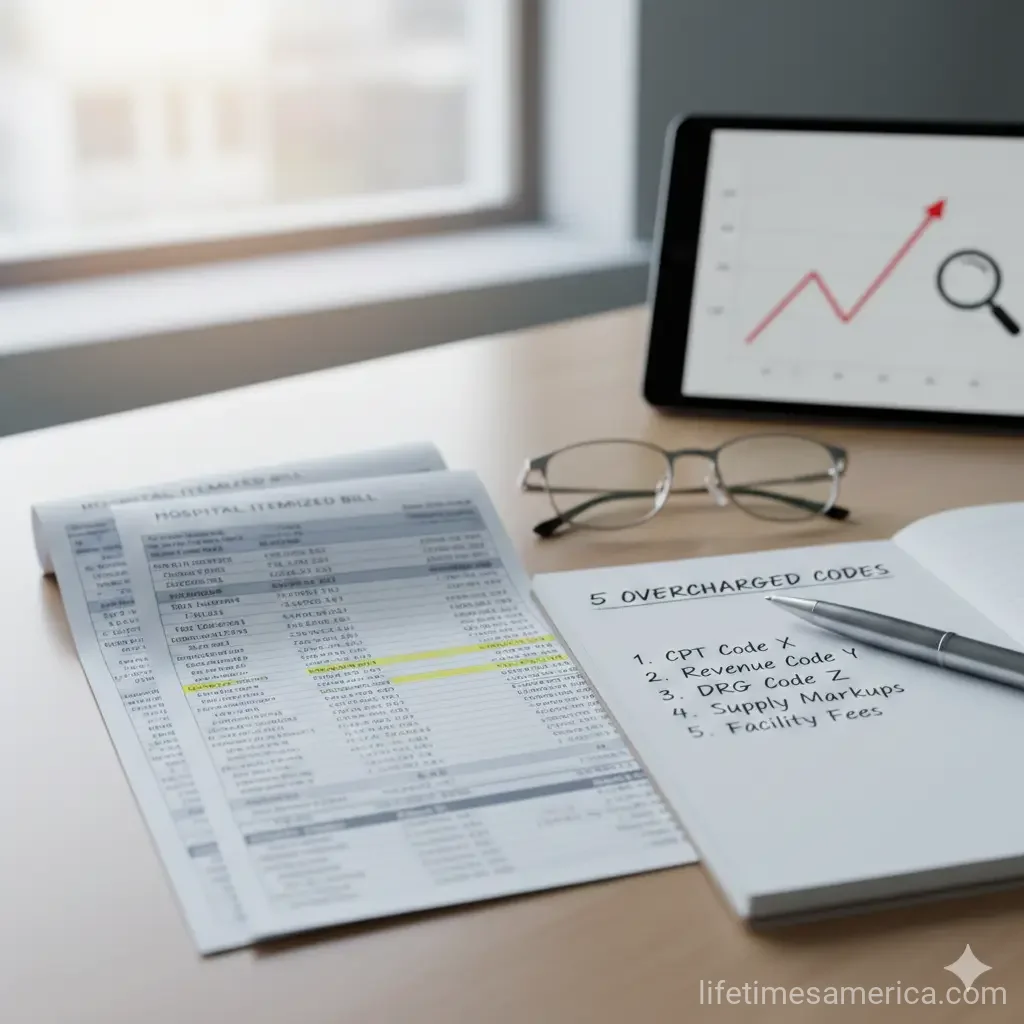
How to Read a Hospital Itemized Bill: 5 Codes That Are Often Overcharged
Imagine opening your mailbox to find a hospital bill for $25,000 after a routine ER visit for a sprained ankle. You're stunned—your insurance covered most of it, but the out-of-pocket costs seem wildl...