How to Read a Hospital Itemized Bill: 5 Codes That Are Often Overcharged
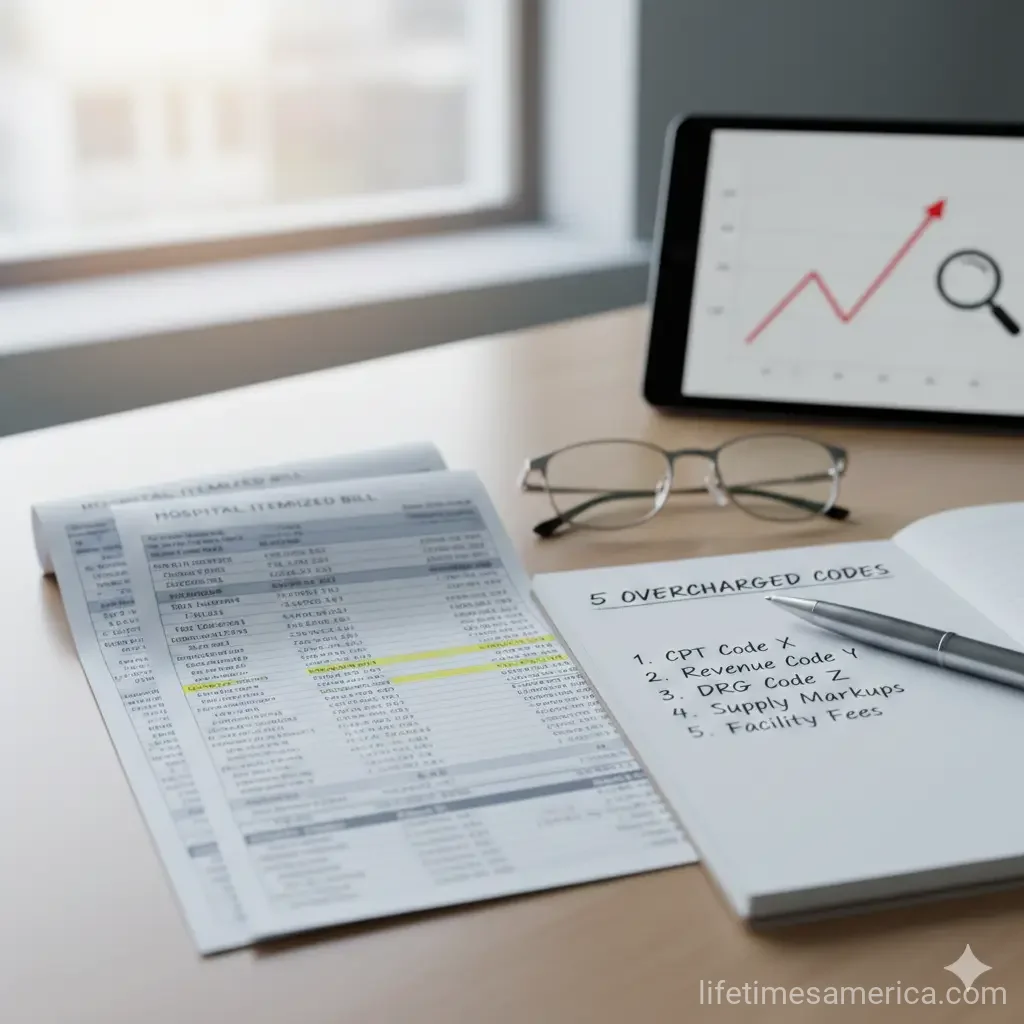
Imagine opening your mailbox to find a hospital bill for $25,000 after a routine ER visit for a sprained ankle. You're stunned—your insurance covered most of it, but the out-of-pocket costs seem wildl...
The Lifetimes America editorial team curates, fact-checks, and updates guides on personal finance, property, health, immigration, legal, business, and lifestyle topics relevant to Lifetimes America readers. Articles are produced with AI assistance and reviewed by the editorial team before publication.
Imagine opening your mailbox to find a hospital bill for $25,000 after a routine ER visit for a sprained ankle. You're stunned—your insurance covered most of it, but the out-of-pocket costs seem wildly inflated. This scenario plays out for millions of Americans every year, but it doesn't have to end with you paying up.Learning how to read a hospital itemized bill empowers you to spot errors, challenge overcharges, and potentially save thousands. In 2026, with rising healthcare costs and new CMS regulations, understanding billing codes is more crucial than ever.
This guide breaks down the essentials of decoding your bill, highlights 5 codes that are often overcharged, and provides actionable steps to fight back—all tailored for U.S. patients under laws like the No Surprises Act.
What Is a Hospital Itemized Bill?
A hospital itemized bill, often called a UB-04 form, is a detailed breakdown of every charge from your stay or visit. Unlike the summary bill, it lists services, procedures, medications, and supplies line by line, including dates, descriptions, billing codes, quantities, and costs.
Key sections typically include:
- Hospital charges: Room fees, operating room time, or overnight stays.
- Doctor fees: Separate bills from attending physicians, surgeons, anesthesiologists, and specialists.
- Lab and test fees: Blood work, X-rays, MRIs, and radiologist interpretations.
- Pharmacy and supplies: Medications, IV fluids, bandages, and equipment.
- Other fees: Nursing care, therapy, or facility overhead.
Your bill should also show insurance payments, adjustments, and your balance. Common errors like duplicate charges or services not rendered appear here—spotting them can slash your costs. Under U.S. law, hospitals must provide this upon request, no questions asked.
How to Request Your Itemized Bill
- Call the billing office: Do this right after discharge or when the summary arrives. Ask for the "UB-04 itemized bill with all CPT, ICD-10, and revenue codes."
- Use the patient portal: Many hospitals like those in the HCA or Kaiser networks offer downloads.
- Contact your insurer: They can request it and send an Explanation of Benefits (EOB) for comparison.
- Send a written request: If phone calls fail, email or mail it—keep records for disputes.
Pro tip: Federal rules under the 2021 No Surprises Act require good-faith estimates upfront, and you have 120 days to dispute bills.
5 Hospital Billing Codes That Are Often Overcharged in 2026
Hospitals use standardized codes like CPT (Current Procedural Terminology), HCPCS (Healthcare Common Procedure Coding System), ICD-10 (diagnosis), and revenue codes to bill. In 2026, "billing creep"—upcoding for higher reimbursements—is rampant, especially with new CMS rules emphasizing RVUs and AI-driven audits. Here are the top 5 culprits.
1. CPT 99285: Level 5 ER Visit
This code bills the highest complexity for non-critical ER care, often charged $1,500–$3,000. Meant for life-threatening cases like heart attacks, hospitals now justify it via "test-count" (e.g., blood work + CT scan = Level 5), even for minor issues.
Red flag: If your visit was for chest pain ruled out as anxiety, demand the "Acuity Sheet" proving complexity. Challenge it—many downgrade to Level 3 (CPT 99283), saving $800+.
2. Revenue Code 0250: Non-Specific Pharmacy Charges
A lump-sum "Pharmacy" line under 0250 hides markups like $20 Tylenol or $500 saline. Despite 400+ new ICD-10 codes in 2026 for specificity, hospitals bundle "administration fees" here.
Action step: Request a drug-by-drug breakdown. Negotiate generics or match cash prices from GoodRx, often 90% lower.
3. CPT G2211: Complexity Add-On for Office Visits
Newly permanent in 2026, this add-on ($15–$25) applies to "ongoing complex care." Primary care docs overuse it on routine follow-ups, inflating bills amid CMS's push for APCM codes.
Spot it: No chronic issues? Dispute via your EOB—insurers like UnitedHealthcare often deny improper uses.
4. HCPCS C9399: Unclassified Drugs
For drugs without specific codes, billed at 95% of Average Wholesale Price (AWP)—a massive markup. CMS 2026 rules exclude it from C-APC packaging, leading to overcharges on injectables.
Average overcharge: $200–$1,000 per dose. Cross-check with pharmacy invoices.
5. Revenue Code 0360: Operating Room Charges
Non-specific OR time, often $10,000+/hour. Hospitals pad with "setup fees" or minute-by-minute billing, even for quick procedures. 2026 CMS bypass codes enable this in multi-procedure claims.
Fight back: Verify exact time logged against your medical record.
Step-by-Step: How to Audit and Dispute Overcharges
Never pay the first bill—it's the golden rule of 2026 medical finance. Follow this process:
- Gather documents: Itemized bill, EOB, medical records, and pre-visit good-faith estimate.
- Cross-check codes: Use free tools like the AMA CPT lookup or CMS fee schedules to verify rates.
- Spot errors: Duplicates, unrendered services, upcoding (e.g., 99285 vs. 99283).
- Contact billing: Politely dispute in writing: "Please explain CPT 99285 justification and provide Acuity Sheet."
- Escalate: If denied, file with your state insurance department, CMS (1-800-MEDICARE), or a patient advocate via Dollar For (dollarfor.org).
- Negotiate: Offer 30–50% off; cite cash prices or charity care policies—most hospitals settle.
In 2026, AI claim scrubbing and stricter documentation reduce denials but increase scrutiny on these codes.
Your Rights Under U.S. Billing Laws
The No Surprises Act protects against balance billing for out-of-network ER care or anesthesia. Medicare patients get price transparency via Hospital Compare tools. All patients can request financial assistance—hospitals must screen for Medicaid/CHIP eligibility.
Report violations to the CMS hotline or your state's Attorney General.
FAQ
How long do I have to request an itemized bill?
Hospitals must provide it upon request, typically within 30 days, but act fast—dispute windows are 120 days under No Surprises.
Can I get help auditing my bill for free?
Yes, nonprofits like Patient Advocate Foundation (patientadvocate.org) or state health departments offer free reviews.
What if insurance denies my dispute?
Appeal internally, then externally via your state's DOI. Independent reviews often side with patients.
Are 2026 CMS changes making bills more transparent?
Somewhat—new G-codes and RVU emphasis aim for accuracy, but generic revenue codes persist.
What's the average savings from auditing?
Patients recover $500–$5,000 on average by spotting just one error.
Do I need a lawyer for big disputes?
Rarely—start with advocates. For bills over $10,000, consult medical billing attorneys via NOLO.
Take Control of Your Hospital Bill Today
Armed with this knowledge, you're ready to tackle that stack of medical paperwork. Start by requesting your itemized bill this week, audit for these 5 codes, and dispute anything fishy. You'll not only save money but also hold hospitals accountable in our complex U.S. healthcare system.
Next steps:
- Download your bill from the patient portal now.
- Bookmark CMS.gov for code lookups.
- Join a patient advocacy group for ongoing support.
- Share this guide—knowledge is power for all Americans facing medical debt.
Useful Tools
Related Articles

Medical Billing Errors: How to Spot "Upcoding" and Save Thousands
Imagine opening your medical bill only to discover you're being charged for a high-stakes surgery when you just had a routine check-up. This isn't a rare nightmare—it's upcoding, a sneaky medical bill...

How to Fight an "Out-of-Network" Medical Bill in 2026
Imagine rushing to the emergency room in the middle of the night, only to receive a medical bill months later that rivals your monthly mortgage payment—all because your anesthesiologist was out-of-net...

Negotiating Upfront Medical Payments: How to Get a "Cash Discount"
Imagine staring at a medical bill that rivals your monthly mortgage payment—all for a routine procedure you thought was covered. You're not powerless. In the United States, patients routinely slash th...