The Truth About Term Life vs. Whole Life Insurance

Choosing the right life insurance can feel overwhelming, but understanding the core differences between term life and whole life insurance empowers you to protect your family's future without overpayi...
The Lifetimes America editorial team curates, fact-checks, and updates guides on personal finance, property, health, immigration, legal, business, and lifestyle topics relevant to Lifetimes America readers. Articles are produced with AI assistance and reviewed by the editorial team before publication.
Choosing the right life insurance can feel overwhelming, but understanding the core differences between term life and whole life insurance empowers you to protect your family's future without overpaying. In 2026, with rising costs and evolving financial needs, Americans need clear facts to decide what's best—temporary protection or lifelong security with savings.
What Is Term Life Insurance?
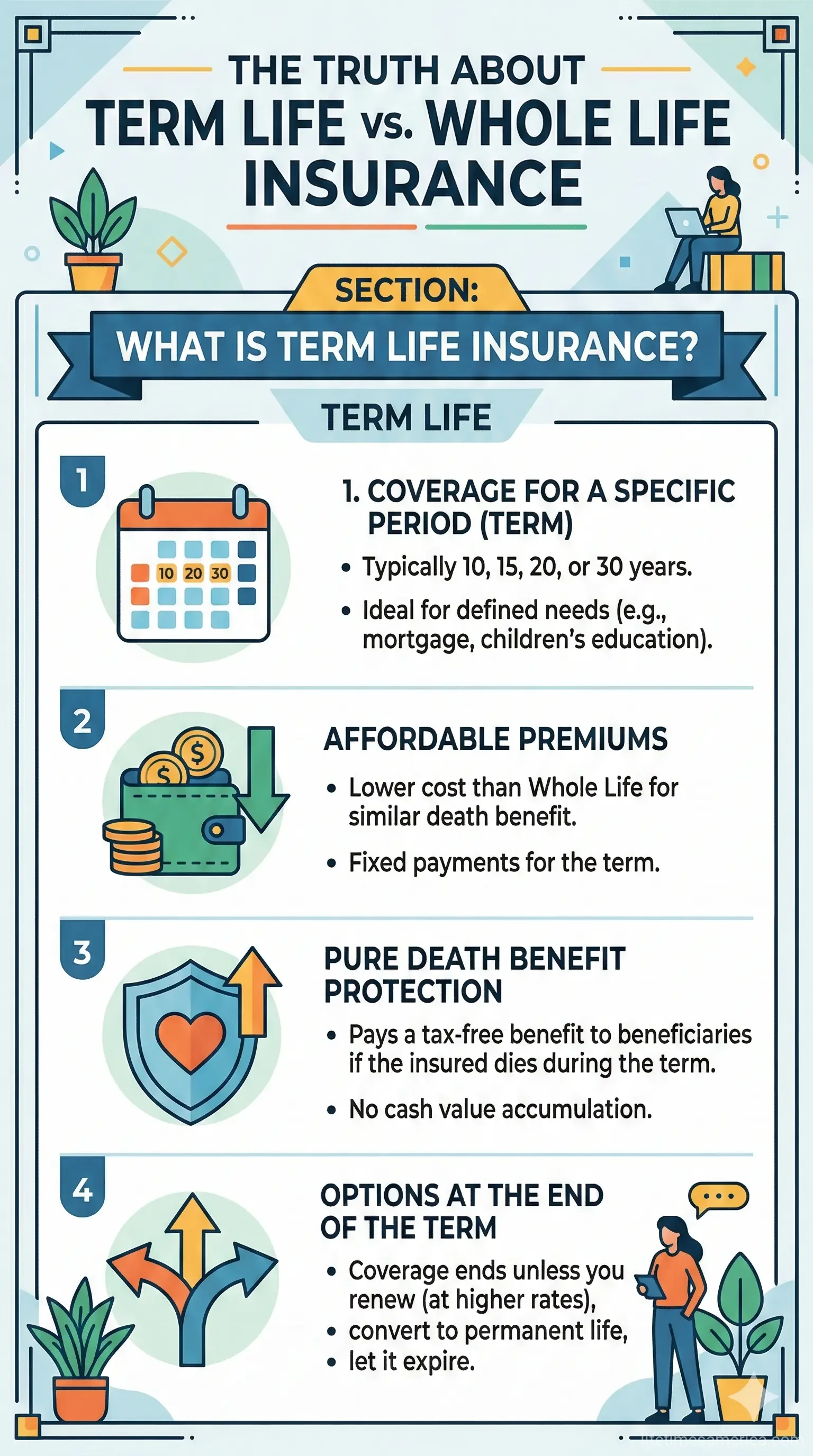
Term life insurance offers straightforward coverage for a specific period, typically 10, 20, or 30 years. If you pass away during the term, your beneficiaries receive a tax-free death benefit to cover lost income, debts, or education costs. It's pure protection without bells and whistles, making it ideal for young families or those with temporary needs like a 30-year mortgage.
Key Features of Term Life
- Affordable premiums: Costs 5-15 times less than whole life for the same coverage. For a healthy 35-year-old wanting $500,000 in 20-year term coverage, expect around $30 per month ($360/year).
- Fixed rates: Premiums stay the same throughout the term, regardless of health changes.
- Flexible terms: Options from 10 to 30 years align with life stages, like until kids graduate college.
- Conversion options: Many policies let you switch to permanent coverage without a new medical exam.
- No cash value: No savings component—coverage ends if you outlive the term, unless renewed (often at higher rates based on age and health).
For most Americans, term life provides high coverage at low cost during peak earning years, often recommended as the "best value" for 90% of people.
What Is Whole Life Insurance?
Whole life insurance delivers lifelong coverage as long as premiums are paid, combining a death benefit with a cash value component that grows tax-deferred over time. This makes it a hybrid of protection and savings, appealing for estate planning or lifelong dependents.
Key Features of Whole Life
- Lifetime protection: Never expires, guaranteeing a payout whenever death occurs.
- Cash value growth: Builds guaranteed value you can borrow against or withdraw for emergencies, loans, or premium payments.
- Fixed premiums: Locked in for life, no increases due to age or health.
- Dividend potential: Participating policies from mutual insurers may pay dividends (not guaranteed), boosting cash value or reducing costs.
- Estate benefits: Helps with wealth transfer, bypassing probate, and covers estate taxes—crucial for high-net-worth families.
However, premiums are significantly higher. That same 35-year-old might pay $450/month ($5,400/year) for $500,000 whole life, totaling $108,000 over 20 years while building $85,000-$100,000 in cash value.
Term Life vs. Whole Life: Side-by-Side Comparison
Here's a clear breakdown of how they stack up in 2026:
| Feature | Term Life Insurance | Whole Life Insurance |
|---|---|---|
| Coverage Duration | Fixed (10-30 years) | Lifetime |
| Premiums | Low & fixed (e.g., $30/mo for $500K/20-yr) | High & fixed (e.g., $450/mo for $500K) |
| Cash Value | None | Yes, tax-deferred growth |
| Dividends | Rare | Possible (not guaranteed) |
| Best For | Income replacement, debt, young families | Estate planning, lifelong needs |
Term is cheaper upfront but ends without payout if you outlive it. Whole life costs more but offers enduring value.
Cost Comparison in 2026
Cost is the biggest differentiator. A 40-year-old man might pay $334/year for a 20-year, $500,000 term policy versus $6,387/year for whole life. Over 20 years, term totals ~$7,200, while whole life hits ~$127,000—but with substantial cash value.
Financial experts often advocate "buy term and invest the difference." Saving $420/month from whole life premiums in a 7% returning index fund could yield ~$220,000 in 20 years, outpacing whole life's cash value. In 2026, with steady interest rates, premiums reflect updated health data but basics remain unchanged.
Pros and Cons: Which Fits Your Life?
Pros and Cons of Term Life
- Pros: Budget-friendly, simple, high coverage for specific needs like mortgages or child-rearing.
- Cons: No cash value, coverage lapses if outlived, renewal premiums spike.
Pros and Cons of Whole Life
- Pros: Permanent security, savings tool, tax advantages for estates.
- Cons: Expensive, less coverage per dollar, complex for short-term needs.
Choose term if you're insuring a paycheck or debt. Opt for whole life for legacy building or special needs dependents.
When to Choose Term, Whole, or Both
Most need term for affordability during vulnerable years (e.g., parenting). High earners or estate planners benefit from whole life. Consider a "laddering" strategy: multiple term policies for different durations, or pair term with whole for temporary high coverage plus lifelong protection.
U.S. regulations ensure tax-free death benefits (IRC Section 101), but consult IRS.gov for estate tax details. Shop via state insurance departments or usa.gov for licensed agents.
Practical Tips for Americans in 2026
- Assess needs: Calculate 10-15x annual income via tools on bls.gov or naic.org.
- Get quotes: Compare from A-rated carriers; healthy non-smokers save most.
- Review health: Lock in rates young—premiums rise with age.
- Hybrid approach: Term now, convert later if needs change.
- State resources: Check your state's DOI for consumer protections.
Next Steps for Your Peace of Mind
Run a needs calculator, gather 3-5 quotes from reputable insurers, and speak with a licensed advisor. Whether term, whole, or a mix, securing coverage today safeguards tomorrow—start protecting your loved ones now.
Frequently Asked Questions
Sources & References
-
1
Term vs. Whole Life Insurance: Pros, Cons & When You May Want - Thrivent — www.thrivent.com
-
2
Term vs. Whole Life Insurance: Which is Right for You in 2026? - Trusted Senior Specialists — www.trustedseniorspecialists.com
-
3
Term vs Whole Life Insurance: Complete 2026 Comparison Guide - Lifeplanify — www.lifeplanify.co
-
4
Term vs. Whole Life Insurance 2026: The Honest Truth - Insuvantage — insuvantage.com
-
5
Life Insurance in 2026: Why Term and Whole Life Are Still Dominating - Allstar Financial Insurance — allstarfinancialinsurance.com
-
6
Know the difference: Whole Life vs. Term Life Insurance - Aflac — www.aflac.com
Related Articles

The Best "Business Insurance" for E-commerce Sellers in 2026
Running an e-commerce business in 2026 means thriving amid booming online sales, but it also exposes you to unique risks like data breaches, product defects, and shipping mishaps. The best business in...

How to Use "Universal Life" Insurance for Executive Bonus Plans
Imagine rewarding your top executive with a benefit that protects their family, builds retirement wealth, and costs your business next to nothing after taxes. That's the power of using universal life...

How to Use "Infinite Banking" to Buy Your Next Car
Tired of watching your hard-earned money disappear when you buy a car? There's a financial strategy that's gaining traction among savvy Americans who want to keep more money in their own pockets. It's...

How to Use "Life Settlements" to Sell Your Life Insurance for Cash
Imagine holding a life insurance policy that's become more burden than benefit—premiums eating into your retirement savings, or changed family needs making the death benefit unnecessary. A life settle...