How to Dispute a Charge on Your Credit Card: Your Rights Explained
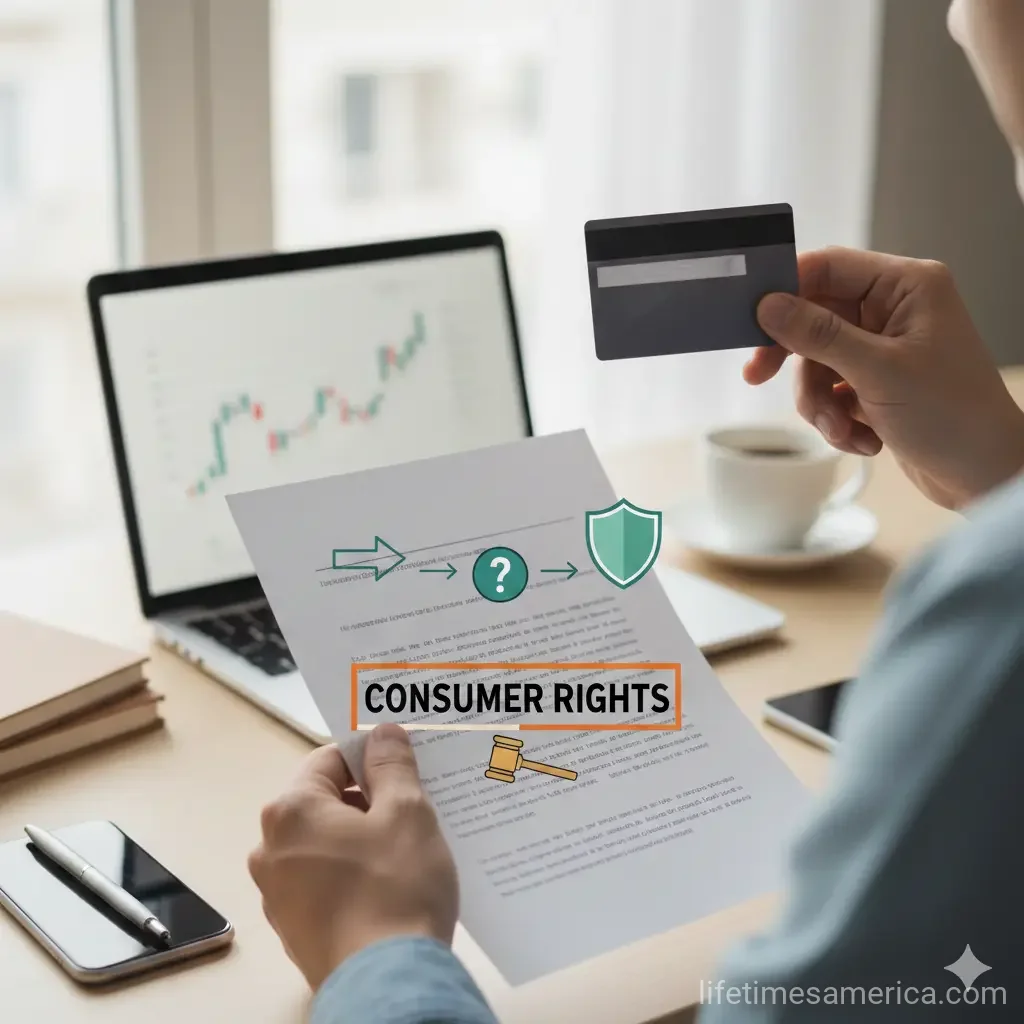
Imagine checking your credit card statement and spotting a mysterious $200 charge from a vacation rental you never booked. Your heart sinks, but don't panic—federal law gives you powerful rights to fi...
The Lifetimes America editorial team curates, fact-checks, and updates guides on personal finance, property, health, immigration, legal, business, and lifestyle topics relevant to Lifetimes America readers. Articles are produced with AI assistance and reviewed by the editorial team before publication.
Imagine checking your credit card statement and spotting a mysterious $200 charge from a vacation rental you never booked. Your heart sinks, but don't panic—federal law gives you powerful rights to fight back and get your money back. As an American consumer, understanding how to dispute a charge on your credit card can save you time, stress, and cash in 2026.
The Fair Credit Billing Act (FCBA) is your biggest ally here, protecting you from unauthorized charges, billing errors, and shady merchants. Whether it's fraud, double billing, or goods that never arrived, you'll learn the step-by-step process, timelines, and tips to win your dispute today.
What Are Your Rights Under Federal Law?
The FCBA, enforced by the Federal Trade Commission (FTC), ensures credit card issuers investigate disputes promptly and fairly. Key protections include:
- No payment required on disputed amounts: You don't have to pay the disputed charge or related fees and interest while the investigation happens. Pay the rest of your bill on time to avoid late fees.
- Time limits for issuers: They must acknowledge your dispute in writing within 30 days and resolve it within two billing cycles (no more than 90 days).
- Limited liability for fraud: You're only responsible for up to $50 on unauthorized charges if reported promptly; often $0 if you notify quickly.
- Credit protection: Issuers can't report you as delinquent during the dispute, though they can note the ongoing challenge to credit bureaus like Equifax, Experian, and TransUnion.
These rights apply to "open-end" credit like credit cards, but not always debit cards or charge cards—check your card's terms.
Common Reasons to Dispute a Charge
Not every disagreement qualifies, but here are the top valid reasons in 2026:
- Fraud or unauthorized use: Someone stole your card info—no time limit to dispute.
- Billing errors: Wrong amount, duplicate charges, or math mistakes—up to 60 days from statement date.
- Non-delivery or poor quality: Goods didn't arrive or services were subpar—up to 120 days in some cases.
- Unrecognized charges: Vague billing descriptors leading to confusion.
- Subscription issues: Failed cancellations or unwanted renewals.
- Canceled orders: You canceled, but the charge stuck.
Pro tip: Always try resolving with the merchant first—it strengthens your case and sometimes fixes things faster.
Step-by-Step Guide: How to Dispute a Charge
Follow these actionable steps to dispute effectively. Act fast—most disputes need filing within 60 days of the statement showing the charge.
Step 1: Review Your Statement and Gather Evidence
Spot the issue? Collect proof like receipts, emails, photos of undelivered goods, or merchant correspondence. Note the date, amount, merchant name, and reason for dispute. For fraud, change your PIN and enable transaction alerts via your issuer's app.
Step 2: Contact the Merchant First
Call or email the seller within 60 days. Many resolve issues without escalation. Keep records of all interactions.
Step 3: Notify Your Credit Card Issuer
Report promptly—online, app, phone, or mail. Use certified mail for paper disputes to prove delivery. Provide:
- Account number
- Charge details (date, amount, merchant)
- Explanation of the problem
- Supporting documents
Examples: Capital One allows digital disputes within 90 days of the transaction. Most issuers provide provisional credits during investigation.
Step 4: Wait for the Investigation
Expect acknowledgment in 30 days and resolution in 90 days max. Your issuer contacts the merchant's bank, reviews evidence, and decides.
Step 5: Understand Possible Outcomes
Three main results:
- Full refund: Temporary credit becomes permanent; merchant pays.
- Partial refund: You get some back; pay the rest.
- Denial: Charge reapplies; appeal within payment due date or 10 days.
If denied, appeal in writing, explaining why. Still unhappy? File with the Consumer Financial Protection Bureau (CFPB) at consumerfinance.gov.
Timelines: How Long Do You Have?
Time is critical—missing deadlines weakens your claim.
| Reason for Dispute | Time Limit | Source |
|---|---|---|
| Billing errors (FCBA) | 60 days from statement | |
| Fraud | No limit | |
| Quality/non-delivery | Up to 120 days | |
| Card network averages | 45-180 days |
Issuers like Capital One extend to 90 days from transaction for some disputes. Always check your cardholder agreement.
Tips for a Successful Dispute in 2026
- Document everything: Screenshots, emails, call logs—your paper trail wins cases.
- Be specific: Vague claims get denied; detail the exact issue.
- Monitor your account: Set up alerts for new charges.
- Avoid repeat disputes: Multiple losses can flag your account for scrutiny.
- Use apps: Most issuers (Chase, Amex, Citi) have one-click dispute tools.
- Know card networks: Visa/Mastercard rules vary slightly; issuers handle most legwork.
"The issuer may not take action against you for using your rights." — FTC Consumer Advice
Next Steps to Protect Yourself Today
Review your latest statement now and set up fraud alerts. Bookmark your issuer's dispute page and the FTC's guide. If facing a charge, start with the merchant, then escalate confidently—your rights are strong. Stay vigilant, and you'll keep your hard-earned dollars safe in 2026.
Frequently Asked Questions
Sources & References
-
1
How Long Do I Have to Dispute Credit Card Charges? - Experian — www.experian.com
-
2
The Chargeback Process for Merchants: Fighting & Winning Disputes - Signifyd — www.signifyd.com
-
3
How can merchants dispute credit card chargebacks? - Mastercard — www.mastercard.com
- 4
-
5
Credit Card Disputes | Step-by-Step Process Guide for 2026 - Chargebacks911 — chargebacks911.com
-
6
Credit card dispute process | Capital One Help Center — www.capitalone.com
-
7
Using Credit Cards and Disputing Charges | Consumer Advice - FTC — consumer.ftc.gov
Related Articles

The Best Credit Cards for "Side Hustlers": Managing Personal vs. Business
Whether you're driving for Uber on weekends, freelancing graphic design gigs, or selling handmade crafts online, a side hustle can boost your income significantly. But juggling expenses between your d...

The Best Travel Cards for "Digital Nomads" Living in Europe/Asia
As American digital nomads chasing sun-soaked beaches in Bali or historic streets in Barcelona, you need credit cards that dodge foreign transaction fees, unlock free lounge access during long layover...
The Best Credit Cards for People with No Credit History
Building credit from scratch can feel like an uphill battle, especially if you're a recent college graduate, new immigrant, or simply haven't needed credit before. The good news? In 2026, several top...

The Best "High-Limit" Credit Cards for Small Business Growth
Running a small business means juggling expenses like inventory, marketing, and payroll, often requiring substantial purchasing power without hitting credit walls. High-limit business credit cards pro...