Understanding "Catastrophe Bonds": How Wall Street Bets on the Weather
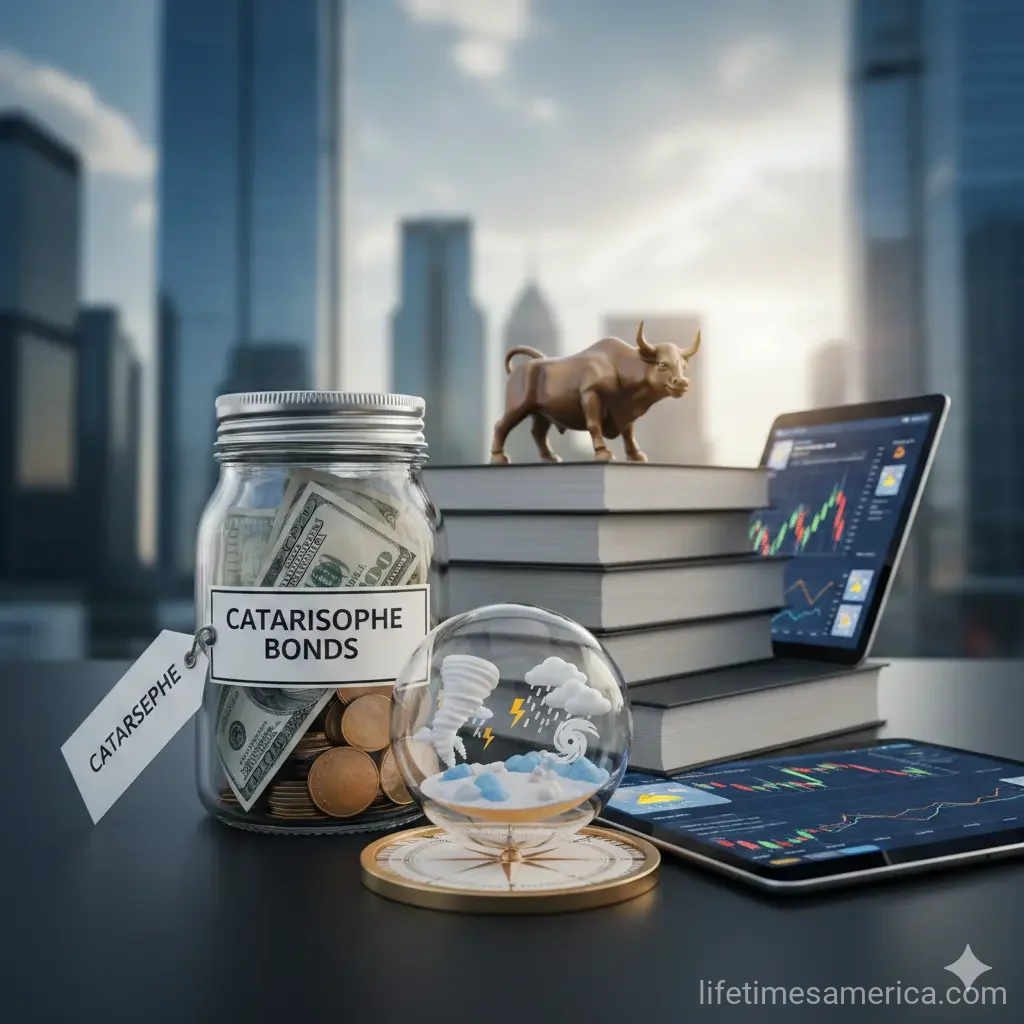
Imagine a Wall Street investor sipping coffee in New York, earning steady returns while indirectly betting on whether a hurricane slams into Florida or wildfires rage through California. That's the hi...
The Lifetimes America editorial team curates, fact-checks, and updates guides on personal finance, property, health, immigration, legal, business, and lifestyle topics relevant to Lifetimes America readers. Articles are produced with AI assistance and reviewed by the editorial team before publication.
Imagine a Wall Street investor sipping coffee in New York, earning steady returns while indirectly betting on whether a hurricane slams into Florida or wildfires rage through California. That's the high-stakes world of catastrophe bonds, or cat bonds—financial instruments that let insurers offload disaster risks to capital markets, turning Mother Nature's fury into investor opportunities.
With natural disasters costing the world $107 billion in insured losses in 2025 alone—83% from U.S. events like California wildfires—these bonds have exploded in popularity. For American investors building wealth in 2026, cat bonds offer diversification, double-digit returns, and low correlation to stocks or bonds. But they're not for the faint-hearted. Let's break down how they work, why they're booming, and how you can dip your toes in.
What Are Catastrophe Bonds?
Cat bonds are specialized securities issued by insurers, reinsurers, or even governments to transfer extreme weather and disaster risks to investors. Born in the U.S. in the 1990s after Hurricane Andrew devastated Florida and bankrupted insurers, they've grown into a $59 billion market by the end of 2025.
Here's the basics: An insurer raises cash by selling the bond. Investors lend the principal and earn high interest—often 8-12% annually in 2025—because of the risk. The money sits in a collateralized trust. If no predefined catastrophe hits, investors get their principal back plus interest at maturity (typically 3-5 years). But if a trigger event occurs—like a hurricane with winds over 100 mph in a specific zone—the insurer taps the funds to cover claims, and investors lose part or all of their principal.
Indemnity vs. Parametric Cat Bonds
There are two main types:
- Indemnity bonds: Payout based on the insurer's actual losses from a disaster. These require detailed claims processing but match real damages closely.
- Parametric bonds: Trigger automatically on measurable events, like earthquake magnitude or wind speed. Jamaica got $150 million in days after Hurricane Melissa in 2025 thanks to this speed—no paperwork delays.
Parametric bonds shine for quick payouts, ideal for underinsured areas, but they can miss if parameters aren't exact—like Jamaica missing Hurricane Beryl coverage when air pressure didn't drop low enough.
How Cat Bonds Work: A Step-by-Step Guide
- Sponsor Issues the Bond: An insurer (e.g., protecting Florida hurricane policies) or utility like Los Angeles Department of Water and Power structures the deal with precise triggers. Contracts can span thousands of pages detailing locations, models, and probabilities.
- Investors Buy In: Through funds or direct (often Rule 144A for qualified U.S. investors). Minimums start at $100,000-$1 million, but mutual funds lower the bar.
- Collateral Held Safe: Funds go into low-risk Treasuries, earning steady yield.
- Trigger Check: Independent auditors verify if a cat event hits. For example, LA's $100 million bond shields against wildfires after 2025's massive losses.
- Payout or Return: No trigger? Full principal plus coupons. Trigger? Investors take the hit, insurer gets relief.
This setup beats traditional reinsurance, which is yearly, ambiguous, and prone to disputes. Cat bonds lock in multi-year protection at fixed costs.
Why Cat Bonds Are Booming in 2026
The market hit records in 2025: $24-25.6 billion issued, up 45% from 2024, pushing outstanding bonds to $59 billion. Why now?
- Climate Change Fuels Disasters: U.S. bore 83% of 2025's global insured losses from storms, wildfires, and more.
- Investor Appeal: Double-digit returns in 2025, uncorrelated to markets (great for 401(k) diversification), and ESG alignment as they fund resilience.
- Reinsurance Squeeze: Insurers face capacity crunches; cat bonds fill the gap.
- U.S. Leadership: Most issuance targets American perils like Atlantic hurricanes, California quakes/wildfires, and Midwest tornadoes.
Fitch predicts competitive returns in 2026 despite more capital chasing deals—still beating bonds or stocks on risk-adjusted basis.
U.S. Examples Hitting Home
- Los Angeles Wildfires: LA Department of Water and Power's $100 million bond post-2025 fires protects ratepayers from soaring costs.
- Florida Hurricanes: Bonds cover policies after events like Ian, repricing risks higher.
- World Bank Ties: U.S.-backed parametric deals aid Caribbean recovery, indirectly stabilizing regional trade.
Risks and Rewards for American Investors
Rewards: High yields (10%+ in 2025), low volatility, diversification—perfect for volatile 2026 markets. ESG funds hold a big chunk, signaling sustainable investing potential.
Risks: Total principal loss if triggers hit (rare, but California wildfires caused manageable 2025 losses). Pricing now exceeds past losses, hinting at pricier future risks.
| Risk | Impact | Mitigation for U.S. Investors |
|---|---|---|
| Event Risk (hurricanes, quakes, fires) | Principal loss | Diversify perils/geography via funds; pick managers with strong models. |
| Liquidity Risk | Hard to sell mid-term | Choose Rule 144A bonds with quarterly liquidity or interval funds. |
| Model/Secondary Peril Risk (wildfires, floods) | Uncertain losses | Favor primary perils like U.S. hurricanes; demand extra premium. |
How to Invest in Cat Bonds as an American
Direct access requires accredited investor status (net worth $1M+ or $200K income), via Rule 144A private placements. But most Americans invest indirectly:
- Mutual Funds/ETFs: PIMCO, Swiss Re, or BlackRock offer cat bond funds with $10K minimums. Check Vanguard or Fidelity for ILS (insurance-linked securities) options.
- Alternative Asset Managers: Firms like Sage Advisory provide diversified ILS portfolios.
- Brokerages: Schwab, E*TRADE list cat bond ETFs. Aim for 5-10% portfolio allocation for diversification.
- Tax Note: Interest is taxable as ordinary income; consult IRS guidelines or a CPA for 401(k)/IRA fit (limited due to alternatives rules).[irs.gov]
Actionable Tip: Start with a cat bond ETF yielding 7-9%. Monitor Artemis.bm for market updates. In 2026, focus on U.S. hurricane and quake bonds for home-region protection.
FAQ
Are cat bonds safe for retirement accounts?
They're uncorrelated to stocks, boosting 401(k) resilience, but high risk means limit to 5%. Use interval funds for liquidity.
Did cat bonds pay out in 2025 U.S. wildfires?
Yes, manageable losses occurred, but bonds were high in reinsurance towers, preserving most investor capital.
Can retail investors buy cat bonds?
Directly, no—need accredited status. Use funds/ETFs via Fidelity or Vanguard for easy access.
What's the outlook for 2026 returns?
Fitch expects attractive yields despite capital influx; double-digits possible with discipline.
Do cat bonds help climate resilience?
Yes, by funding quicker recoveries and incentivizing better building codes in high-risk U.S. states.
How do rising rates affect cat bonds?
Higher Treasury yields compete, but cat bonds' premium persists due to unique risks.
Next Steps to Bet on the Weather
Cat bonds aren't gambling—they're sophisticated wealth tools for a climate-stressed world. Research funds via Morningstar, talk to a fiduciary advisor, and allocate modestly to supercharge your portfolio. With U.S. disasters intensifying, 2026 could be prime time to weatherproof your investments. Stay informed, diversify smartly, and let Wall Street's weather bets work for you.
Related Articles

The Best "Fee-Only" Financial Advisors in the USA: Why it Matters
Navigating your financial future in America can feel overwhelming, especially with so many advisors pushing products that line their pockets more than yours. That's where fee-only financial advisors c...

The "Silver Tsunami": How to Profit from the Aging US Population
America's population is aging rapidly, creating a wave of opportunities for savvy investors. Dubbed the "Silver Tsunami," this demographic shift means more Americans entering retirement, driving deman...

The Best "Impact Investing" Funds for 2026: Profit with Purpose
Imagine growing your wealth while tackling climate change, reducing inequality, and supporting sustainable communities—all without sacrificing returns. That's the promise of impact investing in 2026,...

The Best High-Yield Dividend Stocks for a Volatile 2026 Market
When market volatility strikes, dividend stocks offer a compelling way to generate steady income while building long-term wealth. Whether you're nearing retirement or looking to diversify your portfol...