The Best "US Regions" for Sustainable Living and Modern Homesteading
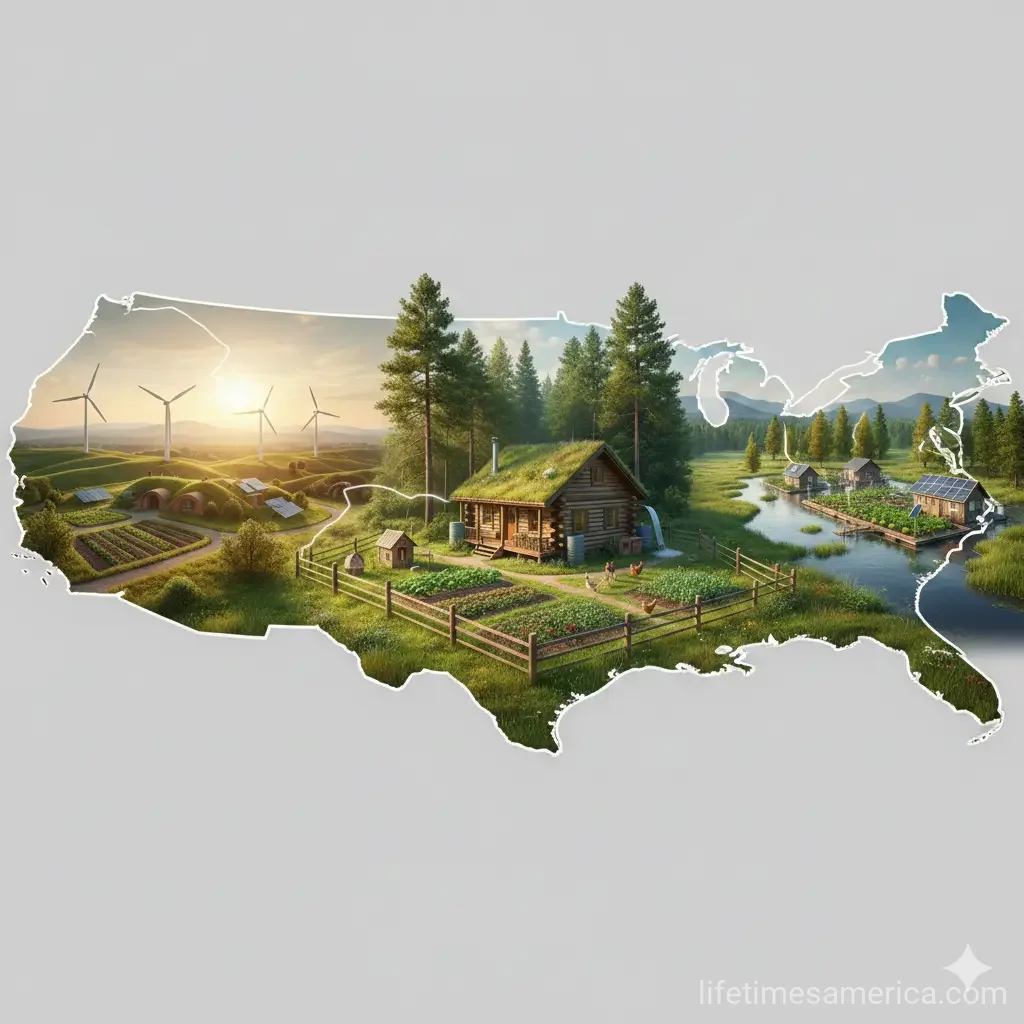
Imagine waking up to fresh air, tending your own garden, and powering your home with solar panels—all while keeping costs low and living in harmony with nature. Across the United States, modern homest...
The Lifetimes America editorial team curates, fact-checks, and updates guides on personal finance, property, health, immigration, legal, business, and lifestyle topics relevant to Lifetimes America readers. Articles are produced with AI assistance and reviewed by the editorial team before publication.
Imagine waking up to fresh air, tending your own garden, and powering your home with solar panels—all while keeping costs low and living in harmony with nature. Across the United States, modern homesteading blends self-sufficiency with sustainable practices like rainwater harvesting, permaculture, and off-grid energy. In 2026, certain regions stand out for their ideal climates, supportive policies, affordable land, and thriving communities dedicated to eco-friendly living.
Whether you're a remote worker eyeing Idaho's wide-open spaces or a family drawn to Vermont's organic farms, these top US regions offer practical paths to sustainable living. We'll explore the best spots, backed by recent data on climate safety, livability, and green initiatives, plus actionable tips to get started.
Why Choose These US Regions for Sustainable Living?
Sustainable living means reducing your environmental footprint through renewable energy, local food production, and water conservation. Modern homesteading takes it further with backyard chickens, solar setups, and community-supported agriculture (CSA). In 2026, factors like clean air, low crime, affordable housing, and state incentives make some regions shine.
Key benefits include:
- Climate resilience: Areas with mild weather and low disaster risk support year-round gardening.
- Policy support: States with rebates for solar panels and rainwater systems, per federal programs like those from the USDA and IRS renewable energy tax credits.
- Community resources: Access to farmers' markets, co-ops, and land trusts for homesteading newcomers.
- Affordability: Lower property taxes and cost of living free up funds for sustainable upgrades.
The Midwest leads 2026 livability rankings with six top-20 metro areas, thanks to affordability and community infrastructure, while Northern states excel in environmental policies.
Top US Regions for Sustainable Living and Modern Homesteading
Northeast: Vermont and New England
Vermont tops WalletHub's 2026 rankings as the #1 most environmentally friendly state, with clean air, low greenhouse gas emissions, and the highest share of organic farm acreage. Its Green Mountains foster a culture of land stewardship, perfect for homesteading. Towns like Shelburne showcase community-driven green initiatives.
Practical tips for Vermont homesteading:
- Start a permaculture garden—Vermont's long-standing commitment to sustainability includes grants for organic farming via the USDA's Natural Resources Conservation Service (NRCS).
- Install solar: The state leads in alternative fuel stations and offers net metering for excess energy sales back to the grid.
- Affordable land: Rural plots average under national medians, with strong public safety and healthcare access.
Nearby, Portland, Maine, ranks #2 in 2026 livability for its dense healthcare network and quality of life, blending coastal access with eco-friendly communities.
Midwest: Nebraska, Iowa, and Minnesota
The Midwest dominates 2026 livability with Kansas City, MO (#3), Des Moines, IA (#4), and Minneapolis, MN (#16). Nebraska stands out for cleaner air, fewer unhealthy days, low violent crime (sixth-lowest nationally), and vast outdoor spaces like lakes and trails. Middleton, WI, and Prairie Crossing, IL, pioneer eco-friendly farming and energy-efficient suburbs.
Minnesota's Minneapolis excels in work-life balance, with urban parks, bike infrastructure, and proximity to over 10,000 lakes for water-centric homesteading.
Actionable steps:
- Join a CSA—Nebraska's strong education and low pollution support family farms.
- Build a rainwater system: Midwest states qualify for federal rebates under the 2026 Inflation Reduction Act extensions.
- Low-cost entry: Property taxes here beat coastal averages, leaving room for chicken coops or hoop houses.
Mountain West: Idaho and Colorado
Idaho ranks #2 for livability in 2026, with low taxes, safety, and growth in places like Boise, Coeur d'Alene, and Twin Falls—ideal for remote workers homesteading amid trails and rivers. Colorado's Golden and Louisville integrate green living with outdoor recreation.
Boise blends tech jobs with quick access to nature, low crime, and high civic pride.
Homesteading hacks:
- Grow hydroponically: Idaho's low cost of living (below US average) funds setups.
- Solar incentives: Colorado offers robust rebates; check EnergySage for 2026 rates.
- Land availability: Affordable acreages near urban hubs for modern setups.
South: Texas and North Carolina
Texas leads with sustainable suburbs like The Woodlands, Round Rock, and Plano, balancing growth with walkability, green spaces, and energy-efficient homes. Raleigh, NC, draws moves for its job market, affordability, and research parks.
The Woodlands features trails and low crime, making it family-friendly for homesteading.
Get started:
- Community solar: Texas's grid supports shared arrays.
- Backyard livestock: NC zoning often allows chickens; verify local rules via county extensions.
- Tax breaks: IRS Form 5695 for energy-efficient homes in 2026.
Southwest and Pacific: Arizona and Pacific Northwest
Tucson, AZ, leads sustainable cities with rainwater harvesting mandates, electric buses, and low water use— a desert homesteading blueprint. The Pacific Northwest, including Portland, OR, emphasizes sustainability, greenery, and outdoor culture.
Desert tips:
- Harvest rainwater: Tucson rebates make it easy; adapt for arid homesteading.
- Shade structures: Combat heat with urban tree incentives.
Comparing the Best Regions: Key Factors Table
| Region/State | Top Strength | Avg. Cost of Living | Homesteading Perk | Livability Rank 2026 |
|---|---|---|---|---|
| Vermont | Organic farms | Below avg. | Net metering | #1 Eco |
| Midwest (NE, IA, MN) | Clean air | Low | Lakes/trails | Top 5 metros |
| Idaho/CO | Affordability | Below avg. | Outdoor access | #2 Livable |
| Texas/NC | Green suburbs | Affordable | Walkable communities | High inbound |
| Tucson, AZ | Water conservation | Moderate | Rain harvesting | Sustainable leader |
Practical Tips for Starting Modern Homesteading Anywhere
Regardless of region, follow these 2026 steps:
- Assess your land: Use USDA's Web Soil Survey for gardening viability.
- Energy audit: Claim 30% federal solar tax credit via IRS.gov.
- Water wisely: Install greywater systems; check EPA rebates.
- Build community: Join Homesteading Today forums or local 4-H chapters.
- Legal check: Review zoning for livestock—many states eased rules post-2020.
FAQ
What’s the cheapest region for homesteading in 2026?
Idaho and the Midwest, with costs below the US average and low property taxes.
Are there federal grants for sustainable setups?
Yes, USDA NRCS offers EQIP grants for conservation practices like fencing and irrigation.
Best for beginners?
Vermont or Nebraska—strong communities and policies ease the learning curve.
How’s water access in the Southwest?
Tucson mandates harvesting, keeping usage low among major cities.
Climate change risks?
Northeast and Midwest score high for safety; avoid high-risk coasts.
Off-grid legal?
Possible in rural Idaho or Texas; confirm with state energy offices.
Next Steps to Your Sustainable Homestead
Pick a region that matches your climate prefs and budget—Vermont for farms, Idaho for affordability, or Tucson for desert innovation. Research local zoning on county sites, connect with a realtor via Zillow's sustainability filters, and apply for USDA grants today. Start small: Plant a raised bed garden this weekend. Your path to self-sufficient living awaits in these top US regions.