The Cost of Private vs. Public University: Is the Name Worth the Debt?
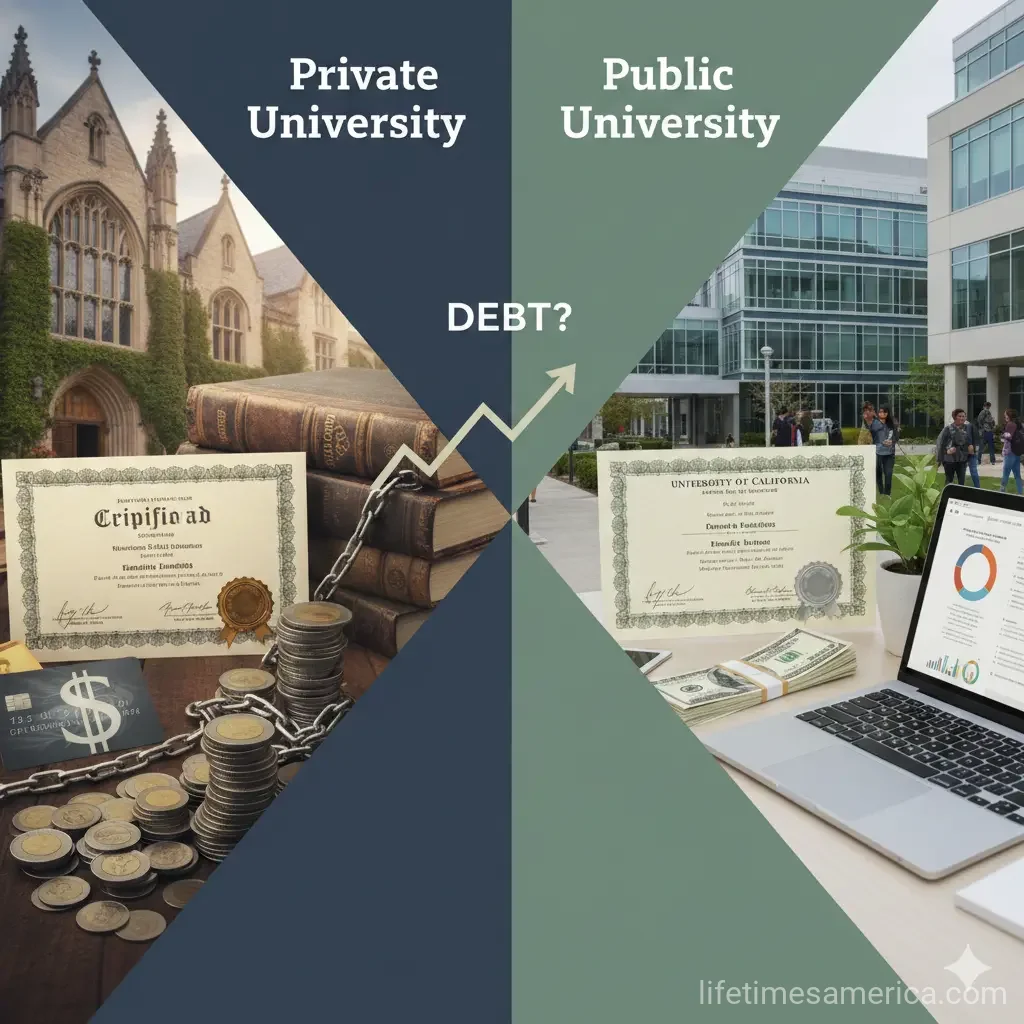
Choosing between a prestigious private university and a solid public one often feels like picking between a luxury car and a reliable sedan—but when it comes to your future finances, the sticker price...
The Lifetimes America editorial team curates, fact-checks, and updates guides on personal finance, property, health, immigration, legal, business, and lifestyle topics relevant to Lifetimes America readers. Articles are produced with AI assistance and reviewed by the editorial team before publication.
Choosing between a prestigious private university and a solid public one often feels like picking between a luxury car and a reliable sedan—but when it comes to your future finances, the sticker price can make or break your dreams. With college costs soaring in 2026, many American families are asking: does the name-brand diploma justify decades of debt?
We'll break down the real numbers behind private vs. public universities, explore net costs after aid, and weigh the long-term value so you can make a smart, debt-savvy decision for your college planning.
Understanding the True Cost of Attendance in 2026
The cost of attendance (COA) is the total price tag for a year of college, covering tuition, fees, housing, food, books, transportation, and personal expenses. For the 2025-2026 academic year—the most recent data available as of 2026—public universities remain far more affordable on paper, but private schools charge a premium that can exceed $65,000 annually.
Public Universities: In-State vs. Out-of-State Breakdown
At public four-year institutions, in-state students get the best deal thanks to state subsidies. Here's the latest:
- In-state tuition and fees: $11,950, up 2.9% from last year.
- Housing and food: $13,900, up 4.4%.
- Total COA: $30,990—crossing the $30,000 mark for the first time.
Out-of-state students pay nearly triple for tuition:
- Out-of-state tuition and fees: $31,880, up 3.4%.
- Housing and food: $13,900 (same as in-state).
- Total COA: $50,920.
State variations are huge: Florida's in-state average is just $6,360, while Vermont hits $18,090. Tools like the U.S. Department of Education's Federal Student Aid site or College Board's BigFuture can help you check specifics for your state.
Private Universities: The Premium Price Tag
Private nonprofit four-year colleges average much higher:
- Tuition and fees: $45,000, up 4.0%—outpacing public increases.
- Housing and food: $15,920, up 4.4%.
- Total COA: $65,470, with elite schools like Princeton at $68,130 tuition alone or Pitzer College's full COA at $70,504.
Over four years, that's $262,000 at private schools vs. $124,000 in-state public or $204,000 out-of-state—before any aid. Costs have ballooned: public in-state tuition rose 133% from 2004-2024, while private jumped 126%.
Net Price: What You'll Actually Pay After Aid
Sticker prices scare everyone, but net price—after grants and scholarships—is what matters. About 81% of families rule out schools based on published costs alone, missing huge aid opportunities.
First-time, full-time public two-year students have received enough grants to cover tuition since 2009-10. At public four-year in-state schools, net tuition dropped to $2,300 in 2025-26 (in 2025 dollars) from a 2012 peak of $4,450. Private schools offer generous "no-loan" policies at places like Princeton, where aid can slash net costs to under $13,000 for low-income families.
Use free tools like:
- Tuition Tracker (tuitiontracker.org) for income-based net prices.
- MEFA's College Cost Projector (mefa.org) to forecast future costs.
- Net Price Calculators on each school's site, mandated by federal law.
Federal Aid and State Resources Every American Should Know
The FAFSA (Free Application for Federal Student Aid) unlocks Pell Grants (up to $7,395 in 2025-26, need-based, no repayment), work-study, and subsidized loans. File at studentaid.gov by state deadlines—prioritize it!
States like California cover community college tuition via programs like the California College Promise Grant. Check IRS.gov or USA.gov for 529 plans, which offer tax-free growth for qualified education expenses.
Is Private Prestige Worth the Debt? ROI and Outcomes
Private schools boast smaller classes and networking, but public flagships like Purdue ($29,946 tuition) or UC Berkeley rival Ivies in job placement. Graduates from top publics earn comparable starting salaries—often $70,000+—to privates, per BLS data.
Average student debt is $38,000 nationally, but private attendees borrow more due to higher costs. Yet, elite privates have 90%+ graduation rates vs. 60-70% at publics. Weigh your major: STEM at a public like Texas A&M yields high ROI; liberal arts shines at privates like Williams.
Debt Reality Check
Four years at in-state public: ~$108,000 total. Private: $230,000+. With loans at 5-8% interest, that's $300+ monthly payments for 10 years. Public grads often finish debt-free via aid; privates rely on family or merit scholarships.
Practical Tips to Minimize College Debt
- Start with community college: Save $50,000+ by transferring credits—average two-year in-district tuition is $4,150.
- Hunt scholarships: Sites like Fastweb or your state's higher ed board (e.g., scholarships.com).
- Appeal aid offers: If finances change, many schools match competitors.
- Work part-time: Federal work-study caps at 20 hours/week.
- Consider income-share agreements: Pay based on post-grad salary at select schools.
Run scenarios on College Board's BigFuture.
FAQ
How much does four years of college really cost in 2026?
Average in-state public: $108,000-$124,000 total COA. Private: $230,000-$262,000. Net price halves with aid.
Are private universities always more expensive net?
No—need-based aid at elites like Harvard can make them cheaper than out-of-state publics for low-income families.
What's the cheapest state for public college?
Florida ($6,360 in-state) and Wyoming ($7,430). Vermont is priciest at $18,090.
Does prestige guarantee better jobs and pay?
Not always—public flagships like Michigan or UCLA grads earn similarly to many privates, per ROI data.
When should I file FAFSA?
October 1 for the upcoming year. States award first-come aid.
Can I avoid loans entirely?
Yes, via grants, scholarships, work, and community college paths—many do.
Make Your Choice Debt-Smart
Public universities offer unbeatable value for most Americans, especially in-state, while privates suit those with aid or high-earning paths. Crunch your numbers with net price calculators, prioritize FAFSA, and remember: the best school is the one you graduate from debt-free and employed.
Next steps:
- Calculate your net price today at tuitiontracker.org.
- File FAFSA at studentaid.gov.
- Compare 5-10 schools using College Scorecard (collegescorecard.ed.gov).
- Talk to a financial aid advisor—many offer free sessions.
Related Articles

The Best "Public Service Loan Forgiveness" (PSLF) Strategies for 2026
If you're working in public service and carrying federal student loan debt, the Public Service Loan Forgiveness (PSLF) program could be your path to debt relief—but 2026 brings significant changes you...

The Best "Community Colleges" with Guaranteed Transfer to Ivy Leagues
Imagine slashing your college costs by starting at a community college, acing your courses, and seamlessly transferring to an Ivy League powerhouse like Columbia or Cornell—all with a safety net of gu...

The FAFSA 2026-2027 Survival Guide: New Deadlines and Rules
If you're planning to attend college in the fall of 2026 or spring of 2027, you're entering a new era of the FAFSA—one that's simpler, faster, and comes with some important changes you need to know ab...

The Best "529-to-Roth-IRA" Rollover Strategy for 2026
Imagine you've diligently saved in a 529 plan for your child's college education, only to find thousands left over after graduation—maybe thanks to scholarships or a frugal choice of school. Thanks to...