How to Use "Parametric" Insurance for Flood and Storm Coverage
Imagine waking up to a devastating flood or storm in your Florida home, only to receive insurance payout within days—not months—without the hassle of adjusters or endless paperwork. That's the promise...
The Lifetimes America editorial team curates, fact-checks, and updates guides on personal finance, property, health, immigration, legal, business, and lifestyle topics relevant to Lifetimes America readers. Articles are produced with AI assistance and reviewed by the editorial team before publication.
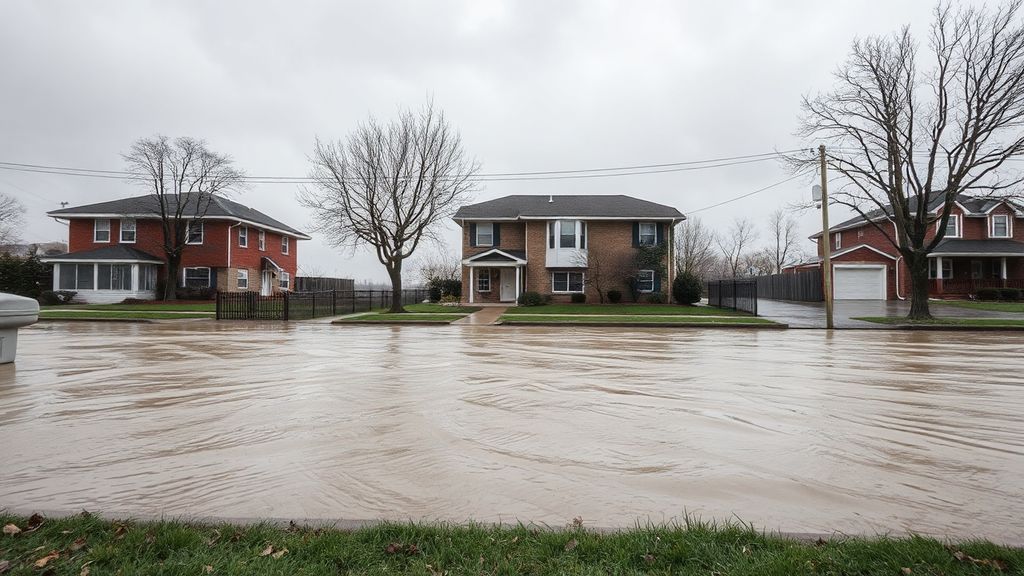
Imagine waking up to a devastating flood or storm in your Florida home, only to receive insurance payout within days—not months—without the hassle of adjusters or endless paperwork. That's the promise of parametric insurance, a game-changer for Americans facing rising climate risks like hurricanes and flash floods.
As storms intensify across the U.S., from the Southeast to California, traditional flood policies often fall short with coverage caps and slow claims. Parametric insurance steps in by paying fixed amounts when predefined triggers—like 12 inches of floodwater or hurricane wind speeds—are hit, using real-time data from sensors and satellites. It's faster, more transparent, and increasingly vital amid talks of scaling back the National Flood Insurance Program (NFIP).[1][2]
What Is Parametric Insurance?
Parametric insurance, also called index-based or event insurance, triggers payouts based on measurable events rather than actual property damage. Unlike traditional indemnity policies that require loss assessments, parametric coverage activates automatically when parameters like rainfall, wind speed, or flood depth exceed set thresholds.[3][4]
For flood and storm coverage, this means no waiting for proof of damage. If a sensor detects 36 inches of water on your property, you get your policy limit—say, $500,000—often within 24-48 hours via direct bank transfer.[1][2]
How Parametric Differs from Traditional Flood Insurance
- Trigger Mechanism: Parametric uses objective data (e.g., satellite imagery, on-site sensors); traditional relies on adjuster inspections.[2][3]
- Payout Speed: Days vs. months or years.[1][6]
- Coverage Limits: Fixed predetermined amount (e.g., $250,000), not tied to repair costs. NFIP caps building coverage at $250,000 and contents at $100,000.[2]
- Basis Risk: You might get less than actual losses if the event doesn't perfectly match your damage, or more if it overpays.[3][4]
In 2026, with NFIP facing potential pauses and private market growth, parametric is booming—projected to hit $34.4 billion globally by 2033.[4][7]
Why Parametric Insurance Matters for Floods and Storms in the U.S.
Americans face escalating threats: Hurricane Melissa in 2025 caused $6-7 billion in Caribbean damages, triggering parametric bonds backed by the World Bank.[4] In Florida, repeated storms have spiked interest, especially as FEMA reviews propose parametric alternatives to government aid.[1]
California launched a first-of-its-kind program in 2025 insuring municipalities against atmospheric river floods, rated A+ by AM Best.[3] This builds resilience for vulnerable areas, filling gaps in NFIP, which doesn't cover frequent coastal flooding or business interruptions.[2][7]
Key Benefits for Homeowners and Businesses
- Speed: Payouts in 24-48 hours for quick recovery—no disputes.[1][2]
- Transparency: Public weather data reduces fraud and arguments.[3]
- Affordability: Premiums can be lower; e.g., $16,380 for $500,000 coverage at a 36-inch flood trigger vs. $54,300 at 12 inches.[1]
- Flexibility: Use funds for anything—repairs, lost income, evacuation. Covers non-physical damage like business downtime.[6]
- Gap Filler: Supplements NFIP or private policies, ideal outside FEMA flood zones.[7]
Condo owners in storm-prone Florida avoid "special assessments" by using parametric for reserves.[1]
How to Get Parametric Insurance for Flood and Storm Coverage
Getting started is straightforward, but shop wisely—availability varies by state and provider. Focus on U.S.-expanding firms like FloodFlash (Lloyd's of London coverholder) and Floodbase.[1][3]
Step-by-Step Guide
- Assess Your Risk: Check FEMA flood maps at FEMA's Flood Map Service Center. Identify triggers like local river gauges or rainfall indexes.[2]
- Choose Triggers: Select parameters (e.g., 12-inch flood depth, Category 3 winds). Lower thresholds cost more but pay out easier.[1][5]
- Install Sensors (If Needed): Providers like FloodFlash use internet-connected devices on your property for verification.[1]
- Quote and Buy: Contact insurers via brokers. Compare premiums—expect $10,000-$50,000 annually for mid-sized properties, depending on limits.[1]
- Combine Coverages: Pair with NFIP for indemnity backup. Private options grew in 2026 amid NFIP shifts.[7]
- Review Annually: Adjust for climate changes; use IRS-qualified brokers for tax-deductible premiums.
For businesses, parametric covers revenue loss from low river levels or storms, unavailable in standard policies.[6]
Top U.S. Providers and Examples (2026)
- FloodFlash: Sensor-based; expanding in U.S. Southeast. Example: $500K payout at 12-inch trigger.[1][2]
- Floodbase: California's municipal program for atmospheric rivers; scalable for homeowners.[3]
- Swiss Re: Structures parametric bonds; partners on sovereign risks.[4][6]
"Parametric can be used as a gap-filler or even as primary coverage."[1]
Pros and Cons of Parametric Insurance
| Pros | Cons |
|---|---|
| Lightning-fast payouts[1][2] | Basis risk: Payout may not match losses[3][4] |
| Lower admin costs, cheaper premiums[3][6] | Limited to fixed amounts[2] |
| Ideal for hard-to-insure risks[4] | Not widely available everywhere[7] |
| Builds climate resilience[3] | Frequent events could raise future premiums[3] |
Real-World U.S. Case Studies
In Florida, post-2025 storms, parametric adoption surged as NFIP strained. One condo complex secured coverage cheaper than assessments, paying out sans adjusters.[1]
California's Floodbase program protected cities from 2025 floods, using transparent flood data for automatic municipal payouts.[3]
Hurricane Melissa's parametric bond delivered swift funds for Caribbean recovery, a model for U.S. states.[4]
Is Parametric Right for You?
If you live in high-risk areas like Florida, Texas, or California—or run a business exposed to storms—parametric complements NFIP. It's not a full replacement due to basis risk, but perfect for speed and gaps.[4][7]
Consult a licensed agent via the National Association of Insurance Commissioners (NAIC) locator.
Next Steps to Protect Your Home or Business
Don't wait for the next storm—get quotes today from FloodFlash or Floodbase partners. Review your current policy against FEMA maps, layer on parametric for resilience, and stay informed via FEMA's flood resources. In 2026's volatile climate, parametric insurance empowers faster recovery so you rebuild stronger.
Frequently Asked Questions
Sources & References
-
1
With Storms, Flooding and Potential FEMA Cuts, Parametric Flood Is Gaining Popularity — www.insurancejournal.com
-
2
What is Parametric Flood Insurance? — www.floodinsuranceguru.com
-
3
How parametric insurance is building climate resilience — www.weforum.org
-
4
Parametric Insurance Archives - The Triple-I Blog — insuranceindustryblog.iii.org
- 5
-
6
Comprehensive Guide to Parametric Insurance (PDF) — corporatesolutions.swissre.com
-
7
Flood Insurance Trends 2026: Private Market Growth and NFIP Shifts — jencapgroup.com